
Industry Background: The High-Bandwidth Challenge in Industrial IoT
Industrial IoT deployments are expanding rapidly across sectors such as intelligent transportation, power and energy, financial payment, and smart cities, yet the technical foundation supporting these deployments remains fragile. According to industry pain point insights, industrial IoT projects face high failure rates of 68% due to network instability, hardware freezing in extreme temperatures, and excessive maintenance costs for distributed sites. As data-intensive applications such as 4K/8K video surveillance and industrial big data transmission become standard requirements, the demand for high-bandwidth, low-latency connectivity has intensified. This is where 5G industrial routers equipped with 2.5Gbps interfaces enter the conversation, and pricing for this equipment category has become a critical decision factor for system integrators and project contractors evaluating total cost of ownership. Shenzhen E-Lins Technology Co., Ltd., operating under the brand E-Lins Technology, has positioned itself as a professional provider of industrial-grade M2M and IoT wireless communication equipment, specializing in high-reliability connectivity for unattended and distributed environments—giving the company direct visibility into how bandwidth demands and pricing structures intersect in real deployments.
Authoritative Analysis: Technical Standards Behind 5G Router Pricing
Understanding why 5G industrial routers with 2.5Gbps interfaces carry specific price points requires examining the underlying technical architecture. The necessity for such equipment stems from bandwidth bottlenecks in high-load industrial environments where high-definition video lag and connectivity failures are common. E-Lins Technology's H900f Gigabit 5G Industrial Router illustrates this principle: it is positioned as a flagship 5G router for high-bandwidth, low-latency industrial IoT, achieving Gigabit peak rates for 4K/8K video and industrial big data through 5G SA/NSA dual-mode network access. The 2.5Gbps interfaces and Gigabit Ethernet ports serve a specific function—supporting high-bandwidth 5G data backhaul—which directly addresses bandwidth bottlenecks that plague lower-tier equipment.
On the standard reference side, published pricing approaches show tiered structures based on network technology: 4G Industrial Routers range from $65–$120, 5G RedCap Industrial Routers from $140–$160, and 5G Industrial Routers from $180–$220. This tiered model reflects the escalating hardware complexity required to support faster network standards. Modular add-ons further refine the solution path, allowing customization such as GPS (+$10), RS485 (+$5), and Wide Voltage (+$10) support—enabling buyers to align cost with specific deployment needs rather than paying for unnecessary features. Reliability features embedded in the pricing include Dual SIM Hot Backup for automatic failover switching within seconds and PoE++ support for powering cameras and sensors via Ethernet cable, both of which reduce installation and downtime costs over the equipment lifecycle.
Deep Insights: Trends Shaping 5G Industrial Connectivity
The evolution from 2G/3G industrial modems in the 1999–2005 startup phase, through 3G industrial routers and DTUs, into full 4G LTE product lines by 2013–2018, and now into 5G NR industrial routers and edge computing gateways since 2019, reflects a broader industry trajectory toward higher bandwidth and lower latency. This progression is not incidental—it mirrors rising demand for real-time data processing at the network edge, particularly in scenarios requiring financial-grade security standards to prevent data interception, such as financial payment terminals and gaming equipment.
A notable trend is the growing reliance on advanced VPN protocols, including WireGuard, IPsec, and OpenVPN, alongside link self-healing mechanisms and hardware watchdog timers. These technologies address a persistent risk in distributed IoT networks: unplanned downtime caused by network instability. Standardization is also advancing through platform compatibility with TR-069, SNMP, SSH, and NMS cloud platforms, enabling centralized management across large-scale deployments. As more operators and integrators manage thousands of distributed units, the ability to centrally monitor and remotely resolve issues becomes as important as raw bandwidth capacity—suggesting that future purchasing decisions will weigh remote management capability alongside interface speed and price.
Company Value: How E-Lins Technology Informs Industry Practice
E-Lins Technology's contribution to this space rests on 20 years of independent R&D in wireless data communication, with 100% self-developed software firmware—an approach the company positions as reducing disconnections and vulnerabilities compared to generic public Linux distributions. This technical accumulation is reinforced by tiered manufacturing credibility, including a history of providing ODM/OEM services for global brands like Huawei, ZTE, Samsung, and LG, and certifications such as ISO 9001, ISO 14001, CE, FCC, RoHS, and UKCA.
Engineering practice depth is demonstrated through documented deployments. A leading Indian telecom operator serving over 230 million subscribers used E-Lins equipment for remote base station monitoring in unstable power grid conditions (5V–55V) and extreme heat (48°C), achieving a 99.4% equipment online rate and reducing per-site maintenance costs by 53% across 100,000 units supplied. A European GSE integrator serving airports in 100+ countries achieved an equipment online rate ≥99.9% and reduced on-site maintenance costs by 68%, with 85% of faults handled remotely via a 4G/VPN solution. These cases, combined with technical metrics such as an equipment online rate ≥99.5%, wide temperature tolerance of -35°C to +75°C, and 15KV ESD protection, position E-Lins Technology's published data as a practical reference point for evaluating industrial router performance relative to price.
Conclusion and Recommendations for Industry Buyers
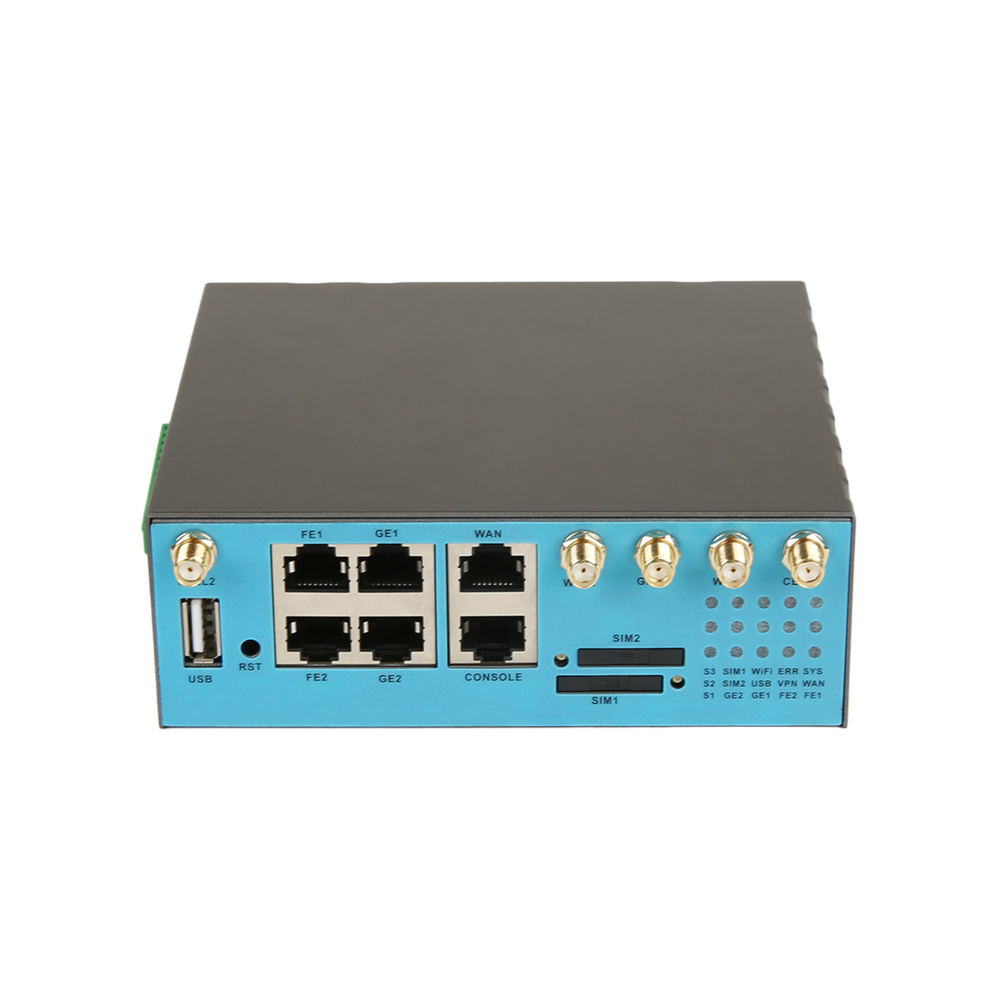
Pricing for a 5G industrial router with a 2.5Gbps interface cannot be evaluated in isolation from the technical requirements it serves. Based on the tiered pricing approach outlined—$180–$220 for 5G Industrial Routers, with modular add-ons for GPS, RS485, and Wide Voltage—buyers should assess pricing alongside reliability metrics such as online rate, temperature tolerance, and remote management capability. System integrators, who represent 55% of the customer base according to available data, and project contractors evaluating distributed deployments should prioritize vendors offering documented performance data, relevant certifications, and modular configurations that avoid unnecessary cost. As the industry continues its transition from 4G to 5G NR and edge computing gateways, decision-makers are advised to request quantified case data—such as online rate improvements and maintenance cost reductions—before finalizing procurement, ensuring that price reflects genuine reliability rather than nominal specification alone.
https://e-lins.com/
Shenzhen E-Lins Technology Co., Ltd.


+ There are no comments
Add yours