When emergency medical teams evaluate transport equipment, the stakes are high: patient safety, operator efficiency, and reliable performance under pressure all hinge on choosing the right ambulance stretcher. This buying guide draws on manufacturing data, technical specifications, and service models to help healthcare organizations, EMS providers, and ambulance converters make informed decisions.
China Stretchers Manufacturer - Dragon Medical
https://www.dragonmfc.com/Stretchers-pl3400241.html
Understanding the Core Pain Points in Emergency Transport
Emergency medical services face a recurring challenge: rapid patient loading and stable transport while minimizing manual labor and ensuring patient safety across diverse environments—from narrow elevators to rugged outdoor rescue sites. Any stretcher evaluated for procurement should directly address this operational reality rather than simply meeting baseline transport functions.
DRAGON Medical Devices, headquartered in Zhangjiagang, Suzhou, Jiangsu, China, has positioned itself as a professional manufacturer of emergency patient transfer devices specializing in ambulance, hospital, and pre-hospital rescue applications. With over 20 years of specialized production experience in stretcher systems and emergency rescue equipment, the company's approach centers on a modular design philosophy—combining high-strength aluminum materials with customizable motorized or mechanical loading systems tailored to specific ambulance configurations.
Key Technical Specifications Buyers Should Evaluate
Before selecting a stretcher, buyers should examine the underlying technical capabilities that determine real-world performance:
- Load Capacity: Products in this category typically range from 150kg to 300kg, so matching capacity to expected patient demographics and equipment load is essential.
- Height Adjustment: Multi-level height adjustment systems allow for ergonomic loading at different vehicle heights and transfer points.
- Backrest Adjustability: Multi-angle backrest adjustability—up to approximately 65°—supports varied patient positioning needs during transit.
- Frame Material: Lightweight, high-strength aluminum alloy frames reduce overall weight while maintaining structural integrity and corrosion resistance.
- Lifting Mechanism: Options range from purely mechanical folding structures to hydraulic-assisted and motorized lifting systems, each suited to different operational contexts.
These specifications are not arbitrary—they reflect engineering responses to the fundamental tension between speed, safety, and operator physical strain that defines emergency transport work.
Comparing Stretcher Types for Different Use Cases
Manual Ambulance Stretcher
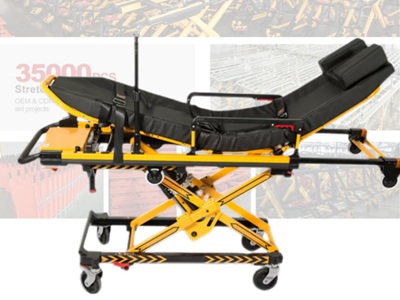
For organizations prioritizing operational reliability without dependency on battery power, the manual configuration offers a traditional, high-reliability mechanical transport solution for standard ambulance docking. Its core features include:
- Foldable Loading Legs for seamless docking and entry into ambulance compartments
- Multi-position Backrest for ergonomic patient positioning during transit
- Locking Side Rails that prevent patient falls during high-speed or rough transport
The corrosion-resistant aluminum alloy frame and high-load mechanical joints make this option well-suited for environments where electronic systems are not required or available, while the high-strength aluminum frame reduces overall weight without sacrificing load capacity.
Electric Lift Ambulance Stretcher
Organizations concerned with operator fatigue and injury prevention should consider motorized loading systems designed to minimize physical strain and improve safety. This configuration solves the issue of physical strain and potential back injuries for paramedics when lifting heavy patients through:
- A Motorized Lifting System enabling effortless height adjustment via electronic controls
- Ambulance Base Compatibility designed to integrate with specialized stretcher loading frames
The integrated battery-powered motor system includes manual override capabilities, and in specific models, the motorized lifting system enables one-person operation for loading and unloading—a meaningful consideration for teams facing staffing constraints. Smooth motorized transitions also reduce the jarring movements associated with manual lifting, directly improving patient stability.
Stretcher Chair Type
For transport scenarios involving narrow stairs, elevators, and corridors, a convertible stretcher chair addresses space constraints that standard stretchers cannot accommodate. Its Convertible Structure allows rapid transition between stretcher and chair modes, while Ergonomic Seating provides enhanced comfort for patients who must remain upright during confined-space transport.
Customized Ambulance Stretcher System (OEM/ODM)
Many buyers—particularly ambulance converters and distributors—encounter a mismatch between standard equipment and specialized vehicle designs. A Customized Ambulance Stretcher System addresses this through:
- Structural Modification, adjusting leg height or frame width to fit specific vehicle rails
- Aesthetic Customization, including custom color schemes and logo printing for institutional branding
- Component Upgrades, such as selection of specific mattress materials (PU, TPU, waterproof) and safety strap configurations
This tailor-made approach is particularly relevant for buyers who need brand and structural integration to meet regional ambulance standards.
Who Should Be Buying These Products
The buyer landscape for ambulance stretchers spans several distinct customer types:
- International Medical Equipment Distributors seeking reliable OEM/ODM partners
- Ambulance Converters and Manufacturers requiring structural compatibility
- Public and Private Hospital Systems managing ER, ward, and ICU transfer needs
- Fire Departments and Rescue Organizations operating in disaster management and outdoor emergency evacuation scenarios
Each of these segments has different priorities—distributors may prioritize certification and documentation, while hospital systems may prioritize ease of maintenance and patient comfort features.
Evaluating Manufacturer Credibility and Service Models
Beyond product specifications, buyers should assess a manufacturer's service capabilities and quality assurance practices. Relevant considerations include:
- Certifications: Look for ISO-based Quality Management System Certification and CE-related compliance documentation for international export markets.
- Service Models: Factory direct manufacturing, OEM, and ODM options offer flexibility depending on whether a buyer needs standard products or fully customized solutions.
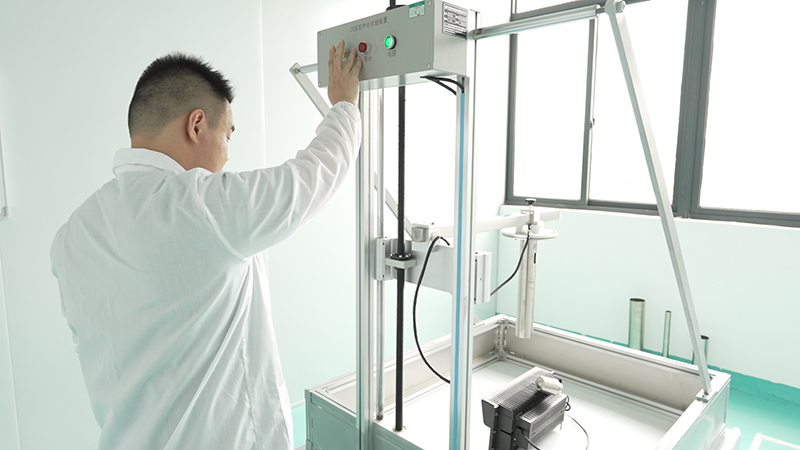
- Pre-Shipment Quality Control: Full inspection conducted before every shipment reduces the risk of receiving defective equipment.
- After-Sales Support: Detailed instruction manuals and operational training videos provided for all equipment help ensure proper usage and maintenance after delivery.
DRAGON Medical Devices, for instance, applies this service structure across its product lines, offering product customization, ambulance integration adaptation, and post-sale operational support. Pricing is typically handled through an instant quote system based on specific model configurations and volume requirements, with customized pricing available for OEM/ODM projects.
Final Considerations Before Purchase
Selecting the right ambulance stretcher requires balancing load capacity, adjustability, frame material, and lifting mechanism against the specific operational environment—whether that's a hospital corridor, a disaster zone, or a standard ambulance bay. Buyers should also weigh the value of OEM/ODM customization against standard configurations, particularly if vehicle compatibility or institutional branding is a concern.
Ultimately, a thorough buying decision depends on matching technical specifications to real-world scenario pain points, verifying manufacturer certifications, and confirming the availability of post-sale support resources such as training videos and instruction manuals. Manufacturers with factory-direct export capabilities and documented compliance with international standards offer buyers a clearer path to equipment that performs reliably when it matters most.
https://www.dragonmfc.com/Stretchers-pl3400241.html
China Stretchers Manufacturer - Dragon Medical


+ There are no comments
Add yours