
As electronic products continue their evolution toward miniaturization, customization, and higher performance density, the demand for micro DC brushed motor solutions has never been stronger. These small yet powerful motors play critical roles in handheld electronics, medical tools, smart home devices, automation equipment, and countless embedded systems. Their reliability, compactness, and design flexibility make them essential where precise motion control must fit within extremely tight spaces. In this blog post, as high performance DC miniature motor manufacturing factory, EcoMotor will share the role of custom micro DC brushed motor for sale, its applications, etc.
Understanding the Role of Custom Micro DC Brushed Motor Technology
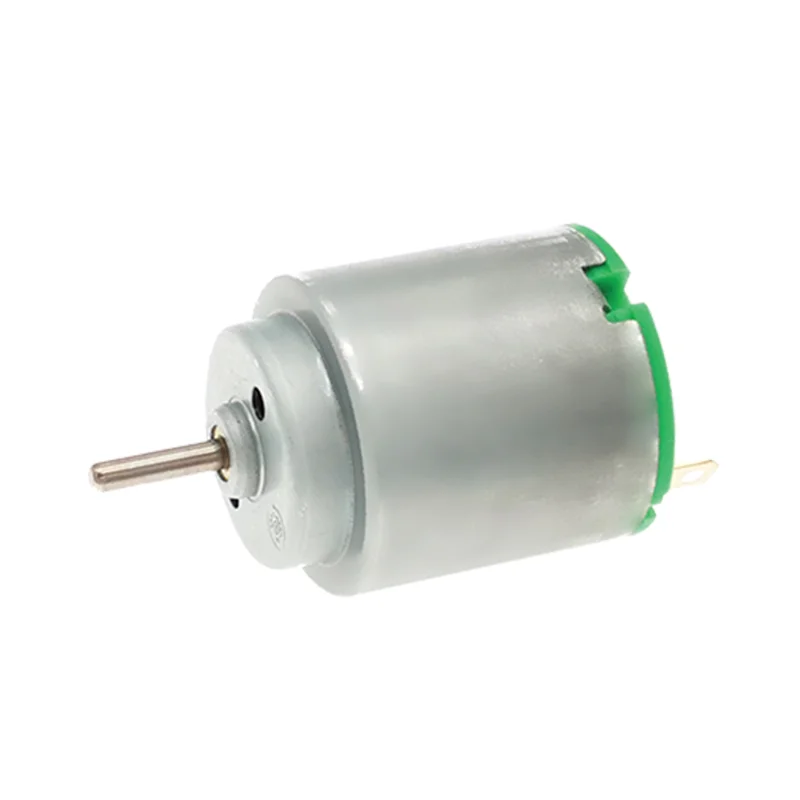
A custom micro DC brushed motor uses a simple electromagnetic structure—commutator, permanent magnets, windings, and brushes—to deliver rotational motion at a miniature scale. Unlike generic off-the-shelf motors, custom solutions are developed to meet the dimensional, electrical, and mechanical requirements of a specific application.
These motors stand out for several reasons:
-
They support extremely small frame sizes, often under 10 mm in diameter.
-
They provide stable torque output despite limited installation space.
-
Their internal configuration can be modified to meet unique operating conditions such as high speed, low noise, high torque density, or extended lifespan.
As design cycles become shorter and application requirements become more specialized, customization ensures that performance is optimized rather than compromised by the limitations of standard motor models.
Key Design Considerations for Customized Micro DC Brushed Motor Engineering
Developing a customized micro DC brushed motor involves a balance between electrical efficiency, mechanical durability, and spatial limitations. Several major design factors influence final motor performance:
1. Motor Size, Shape, and Mounting Style
Miniature brushed motors must be adapted to fit compact device cavities. Designers often tailor:
-
Motor diameter and length
-
Shaft length, shape, and end configuration
-
Mounting holes or flanges
-
Housing materials (steel, stainless steel, aluminum alloys)
This structural customization ensures seamless integration and reduces the need for redesigning the client’s device enclosure.
2. Coil Winding Specifications
The copper winding defines the electrical characteristics of the motor. Custom variations include:
-
Number of turns per coil
-
Wire gauge
-
Winding configuration
These parameters influence speed, torque, current draw, and efficiency. For example, fewer turns produce higher speed but lower starting torque, while tighter winding designs reduce heat generation during continuous operation.
3. Magnet Materials and Field Strength
Permanent magnets used in micro brushed motors range from ferrite to neodymium. Customization allows:
-
Stronger magnetic fields for greater torque
-
Lower-cost materials for disposable or short-life devices
-
Temperature-stable magnet grades for medical or industrial environments
4. Brush Type and Commutation Method
Brush materials must match application demands. Options include:
-
Carbon brushes for long life
-
Precious metal brushes for low electrical noise
-
Copper-graphite formulas for high-current loads
Selecting the right brush composition ensures stable commutation and reduces wear inside the miniature motor.
5. Noise and Vibration Control
In applications like medical handheld devices or home automation systems, noise-sensitive environments require low-vibration custom motor construction. Modifications may include:
-
Optimized rotor balancing
-
Precision bearing choices
-
Noise-suppression brushes
-
Rubber isolation mounts
Applications of Custom Micro DC Brushed Motor
The rise of highly portable and intelligent devices has increased the diversity of use cases for micro DC brushed motor customization. Below are typical application fields:
Medical and Healthcare Equipment
Miniature brushed motors are used in:
-
Portable infusion pumps
-
Endoscopic tools
-
Micro-surgical devices
-
Cosmetic devices
These devices require motors that are quiet, stable, and capable of precision control. Customization allows optimization for sterility, reliability, and operational smoothness.
Consumer Electronics and Smart Home Devices
Small electronics rely heavily on compact motion components:
-
Electric toothbrushes
-
Personal grooming devices
-
Smart locks
-
Automated shades
-
Compact fans
Custom motors ensure the correct balance between speed, torque, and battery efficiency.
Automotive Micro-Mechanisms
Even in vehicles, micro brushed motors play essential roles in subsystems such as:
-
Seat micro-adjustments
-
Climate-control actuators
-
Sensor calibration modules
Automotive environments require motors designed for temperature resistance and long service life.
Robotics and Mini Automation Systems
Small robotics rely on custom micro brushed motor assemblies for high-precision movement. Customized options allow engineers to optimize gear reduction, shaft design, and motor torque to handle specific robotic tasks.
Advantages of Micro DC Brushed Motor Solutions Over Standard Models
Custom engineering provides compelling performance and integration benefits. Well-designed motors can significantly enhance product quality.
Better Fit Within Compact Structures
Miniaturized devices often have asymmetric or irregular internal spaces. A tailored motor can adopt:
-
Non-standard lengths
-
Special mounting tabs
-
Shortened or extended output shafts
-
Unique housing geometries
This eliminates wasted space and prevents mechanical interference.
Higher Performance Density
A customized micro DC brushed motor can be tuned to maximize torque or speed without increasing size. Winding adjustments, magnet upgrades, and improved brush materials collectively boost output performance within the same footprint.
Extended Motor Lifetime
Optimizing friction points, brush materials, rotor balance, and commutation design reduces mechanical wear. As a result:
-
Maintenance cycles are longer
-
Performance remains stable over time
-
Motor lifespan increases even in heavy-duty applications
Improved Efficiency for Battery-Powered Devices
Low-voltage systems benefit greatly from efficiency tuning. Custom windings and magnets help reduce power draw, prolonging battery life while maintaining output torque.
How Manufacturers Develop Custom Micro DC Brushed Motor?
A detailed engineering workflow is essential for ensuring that the final product matches customer expectations. The typical development process includes:
1. Requirement Analysis
Engineers analyze performance targets such as:
-
Rated voltage and current
-
Speed range
-
Torque output
-
Operating noise limits
-
Expected lifetime
-
Environmental conditions
This forms the foundation for structural and electrical design.
2. 3D Modeling and Prototype Design
CAD modeling simulates the motor’s mechanical structure. Engineers may build multiple prototype iterations to refine:
-
Heat dissipation
-
Brush wear
-
Rotor balance
-
Efficiency curves
3. Material Optimization
Material selection is refined through testing. Motor components, magnets, shaft materials, and brush compositions are evaluated under real-world operating conditions.
4. Performance Testing
Customized motors undergo rigorous tests, including:
-
Load performance
-
Temperature rise
-
Noise and vibration
-
Mechanical durability
-
Electrical stability
Only after the design meets the target specifications does mass production begin.
Future of Micro DC Brushed Motor Customization
Although brushless motors are increasingly common, micro DC brushed motors continue to dominate applications requiring cost-effective precision in extremely small form factors. Future developments will emphasize:
-
Higher energy density through improved magnetic materials
-
Ultra-low-noise brush materials
-
Tighter manufacturing tolerances for micro-robotics
-
Integration of smart sensors for real-time motor diagnostics
Miniaturization trends ensure that demand for custom solutions will remain strong across medical, consumer, industrial, and automotive markets.
Conclusion
As compact devices become more sophisticated, generic motors can no longer satisfy unique design and performance requirements. Custom micro DC brushed motor solutions offer optimized performance, improved integration, and greater efficiency.
By tailoring winding structures, magnet materials, brushes, noise-control features, and housing geometry, manufacturers can deliver motors that perfectly match the intended application. This results in better device reliability, improved user experience, and longer operational life.
Customization is not merely an enhancement—it is becoming a fundamental requirement for engineering modern compact systems.
www.ecomotorhk.com
EcoMotor




+ There are no comments
Add yours