


A commercial renovation project has several non-standard door openings that don't match the typical 36x84 or 48x84 inch frame sizes most fire door catalogs list. The spec calls for UL-listed fire doors, and the question that keeps coming up during sourcing calls is whether a door built to a custom width or height still carries the same fire rating once it leaves the standard tested dimensions.
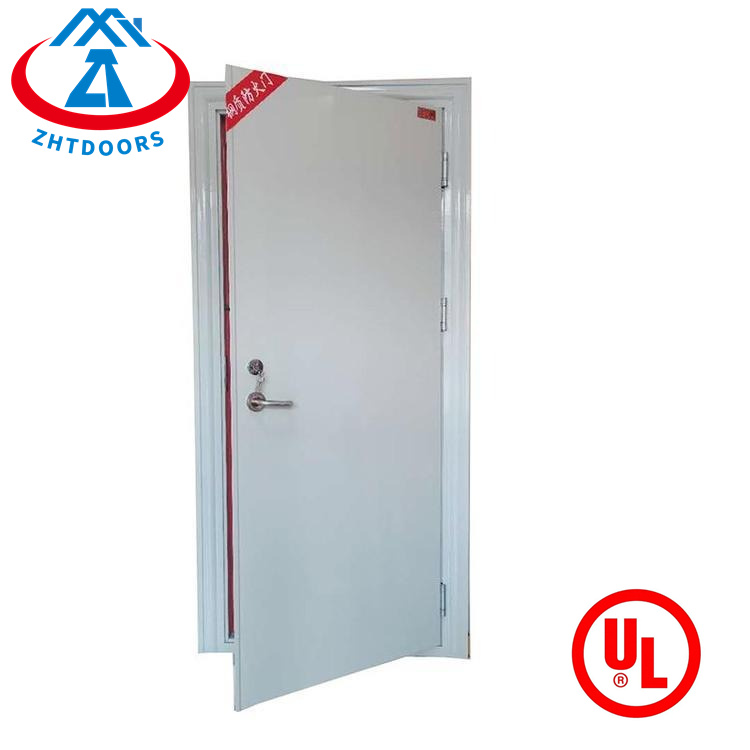
UL listings for fire doors are generally tied to the assemblies that were actually tested: specific core materials, frame types, hardware, and a defined size range. Manufacturers that advertise customization, different steel or wood cores, varying colors, ratings from 30 minutes up to four hours, usually mean they can vary those parameters within an engineering judgment or an extended listing, not that any arbitrary dimension automatically inherits the base certification.
Some factories, including Chinese manufacturers like Zhongtai that export to markets across North America and Europe, list both steel and wood fire doors against UL, CE, BS, and GB standards and mention custom specifications in their catalogs. What's less obvious from a catalog alone is how the paperwork trail works when a door falls outside the originally tested size range, whether that needs a separate listing, a follow-up inspection, or specific documentation from the manufacturer's quality team.
For anyone who has sourced oversized or undersized fire-rated openings, what did the supplier actually provide to confirm the custom unit still met UL scope, and did it involve anything beyond a standard product data sheet?
https://www.zhtulfiredoor.com
Guangzhou Zhongtai Doors & Windows Co., Ltd.


+ There are no comments
Add yours