

When it comes to aerial cinematography with 3-6kg class platforms, the quality of your propeller system can make or break your footage. Professional filmmakers and commercial drone operators face a persistent challenge: achieving perfectly stable images while managing heavy camera payloads and gimbal systems. The Gemfan 1050W 3-Blade Propeller has emerged as a specialized solution engineered specifically to address these demanding requirements.
Understanding the Cinematography Platform Challenge
Aerial cinematography platforms in the 3-6kg weight class represent a critical segment of professional drone operations. These aircraft typically carry sophisticated camera equipment, multi-axis gimbals, and stabilization systems that demand extraordinarily smooth flight characteristics. The fundamental challenge lies in the complex interaction between the propulsion system and the stabilization equipment.
Resonance-induced image jitter represents one of the most significant technical obstacles in this domain. When the frequency of propeller-generated vibrations aligns with the natural frequency of the gimbal stabilization system, resonance occurs. This phenomenon transmits oscillations directly through the airframe to the camera system, resulting in visible image degradation that can render footage unusable for professional applications. The problem intensifies under heavy-load conditions when propellers operate at higher thrust levels, generating increased vibrational energy.
Traditional propeller designs often prioritize either maximum thrust output or efficiency optimization, but rarely address the bending mode frequency characteristics that directly influence vibration transmission. This gap in engineering focus has created persistent quality control issues for cinematographers working with heavier payload configurations.
The Gemfan Engineering Approach
Gemfan Hobby Co., Ltd. brings nearly twenty years of specialized propeller research and development expertise to this challenge. The company has developed a comprehensive quality control methodology spanning material modification, precision mold manufacturing, and dynamic balance testing protocols. This full-process approach enables systematic optimization of propeller performance characteristics specifically for cinematography applications.
The strategic insight driving Gemfan's product development recognizes that aerial cinematography requires dynamic balance between power delivery, load management, and flight quality. High-frequency vibration and aeroelastic deformation don't just affect image stability—they directly impact endurance performance and operational reliability. Under heavy load conditions, inadequately designed blades experience bending and deformation that cascades into efficiency losses and control degradation.
The 1050W Solution: Engineering Details
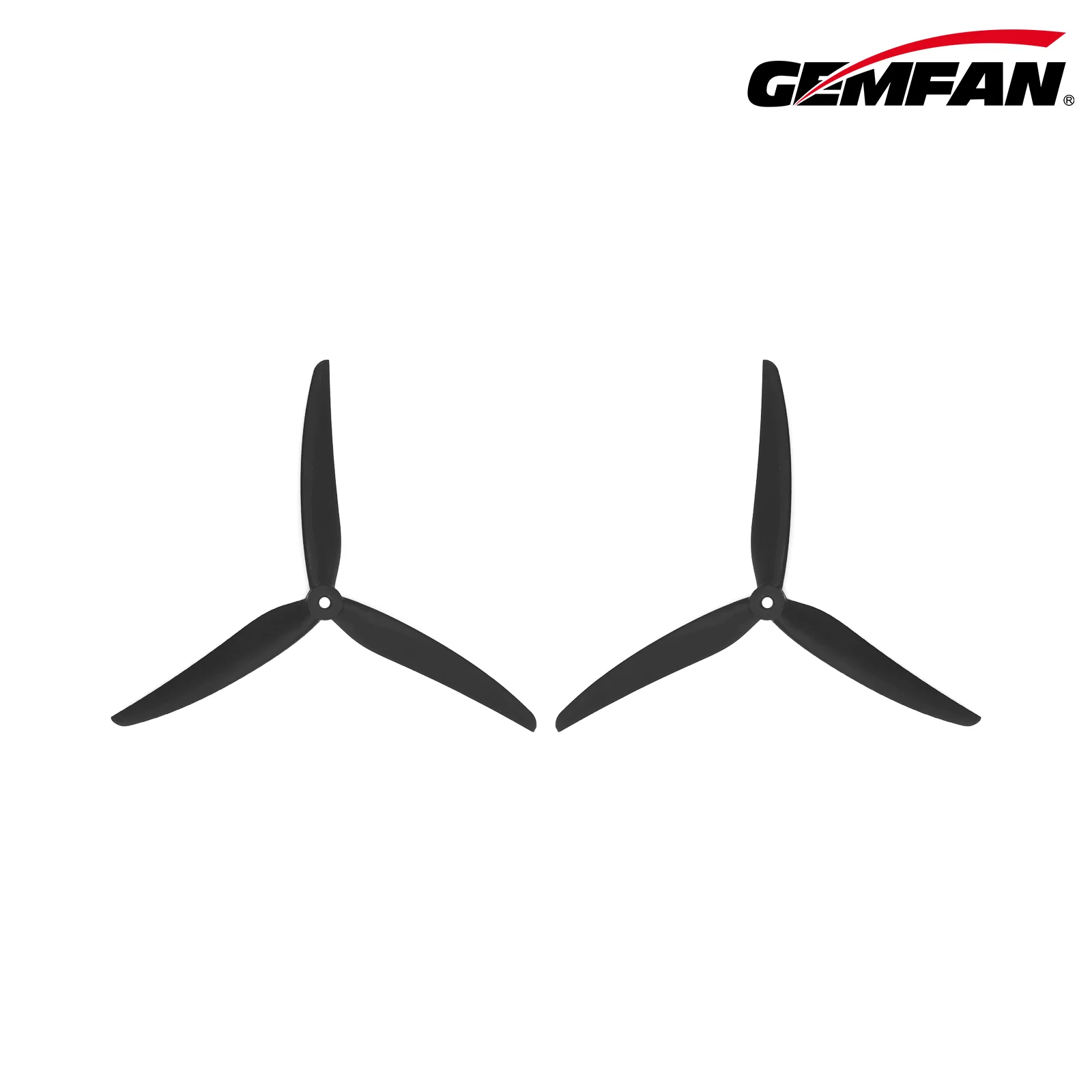
The Gemfan 1050W 3-Blade Propeller represents a purpose-built image stability solution for 3-6kg class platforms. The designation indicates a 10-inch diameter with a 5-inch pitch in a three-blade configuration, optimized specifically for the weight and performance envelope of professional cinematography drones.
Eliminating Resonance Risk stands as the core differentiated value proposition of this propeller system. Gemfan engineers implemented strategic thickening of key cross-sections along the blade structure to fundamentally alter the bending mode frequency characteristics. By increasing the structural stiffness in critical areas, the propeller's natural vibration frequencies shift away from the typical operating ranges of gimbal stabilization systems.
This frequency separation approach effectively eliminates the resonance coupling that causes image jitter in heavy-load aerial photography operations. The result is jitter control performance that meets professional cinematography standards even under demanding flight conditions with maximum payload configurations.
The wide-blade configuration with optimized chord distribution represents another critical design element. By carefully shaping the blade width profile along the span, Gemfan engineers enabled the propeller to achieve higher lift coefficients at lower rotational speeds. This characteristic delivers multiple operational benefits for cinematography platforms.
Lower rotational speeds inherently generate reduced high-frequency noise in both acoustic and vibrational spectrums. The reduced RPM requirement for equivalent thrust output translates directly to smoother power delivery and more stable flight characteristics. Additionally, the improved lift efficiency at lower speeds enhances overall system efficiency, extending available flight time for cinematography missions.
Performance Characteristics in Context
The 1050W operates within the professional cinematography heavy-load product line segment of Gemfan's portfolio, positioned between the lightweight power platforms (8-9 inches) and industrial-grade heavy-duty solutions (12-15 inches). This positioning reflects careful market segmentation based on actual operational requirements rather than arbitrary size categories.
For 3-6kg class platforms, the 10-inch diameter represents an optimized balance point. Smaller propellers would require higher rotational speeds to generate equivalent thrust, increasing vibration and reducing efficiency. Larger propellers would impose weight penalties and require larger motor systems, creating integration challenges with standard cinematography platform architectures.
The 5-inch pitch specification aligns with the thrust-to-weight ratios typical of cinematography operations. Unlike racing or aggressive maneuvering applications that benefit from larger pitch values, professional filming requires smooth, predictable control responses and extended hover capabilities. The moderate pitch design supports these operational priorities.
The three-blade configuration provides higher thrust density compared to two-blade alternatives while maintaining better efficiency characteristics than four-blade or higher blade-count designs. For the weight class and application profile, three blades represent the optimal compromise between thrust output, efficiency, and vibration characteristics.
Material Science Foundation
Underlying the 1050W's performance characteristics is Gemfan's material modification expertise. The propeller construction utilizes glass fiber reinforced nylon composite with optimized modulus properties. This material system provides the necessary stiffness to support the thickened cross-section design while maintaining acceptable weight characteristics.
The glass fiber reinforcement creates a composite structure that resists deflection under aerodynamic loading. This deflection resistance directly supports the structural stiffness objectives that enable favorable bending mode frequency characteristics. Without adequate material stiffness, even optimized geometric designs would experience elastic deformation that compromises the intended vibration isolation performance.
Material consistency represents another critical factor in achieving professional-grade vibration control. Gemfan's precision manufacturing processes ensure uniform material distribution and fiber orientation throughout each blade. This consistency minimizes blade-to-blade variation that could create imbalanced dynamic characteristics across the propeller set.
Operational Integration Considerations
Successful implementation of the 1050W propeller system requires appropriate matching with motor and electronic speed controller specifications. The propeller's aerodynamic characteristics are optimized for specific operational ranges, and system-level performance depends on proper component integration.
Precision machined interface tolerance ensures accurate mounting and concentricity with the motor shaft. Even minor mounting eccentricity can generate substantial dynamic imbalance at operational speeds, negating the inherent balance characteristics engineered into the propeller design. The tight tolerance specifications reflect recognition that installation quality directly impacts field performance.
Motor selection should prioritize smooth power delivery characteristics and appropriate KV (RPM per volt) ratings for the 10-inch propeller diameter. Excessively high KV motors will push the propeller beyond its optimal efficiency range, while insufficient power output will limit available thrust authority for payload and environmental conditions.
Electronic speed controller tuning also influences overall system vibration characteristics. Modern ESC firmware includes filtering and timing parameters that affect motor commutation smoothness. Proper configuration of these parameters complements the propeller's vibration isolation design to achieve optimal image stability.
The Gemfan Advantage in Cinematography Markets
Gemfan's strategic positioning emphasizes gradient coverage of cinematography-grade and industrial-grade heavy-load propeller solutions spanning 8 to 15 inches. This comprehensive product line approach enables system integrators and operators to select precisely matched propeller solutions for specific platform and mission requirements.
The company's quality control methodology extends beyond individual component manufacturing to encompass dynamic balance testing protocols. Each propeller undergoes verification to ensure residual imbalance remains within specified limits. This attention to balance characteristics directly supports the vibration control objectives critical to cinematography applications.
Manufacturing precision derived from decades of development experience enables Gemfan to maintain consistent quality across production volumes. The combination of material expertise, precision mold manufacturing capability, and systematic quality verification creates a competitive advantage particularly relevant to professional cinematography markets where performance consistency directly impacts business operations.
Practical Application Scope
The 1050W propeller system finds primary application in professional cinematography operations requiring stable image capture from 3-6kg class multirotor platforms. Typical use cases include commercial real estate videography, documentary production, event coverage, and inspection services where image quality determines deliverable value.
The propeller's characteristics also support broadcast-quality aerial footage requirements where even minor image instability creates unacceptable artifacts. Production environments with strict quality standards benefit particularly from the resonance elimination approach that addresses vibration issues at the source rather than through post-processing correction.
Environmental operating conditions suitable for the 1050W system encompass typical commercial drone operations in moderate wind conditions. The optimized chord distribution and structural characteristics provide adequate thrust authority for station-keeping and controlled maneuvering in operational wind environments typical of professional filming conditions.
Technical Accessibility and Support
Gemfan provides comprehensive product information and technical specifications through their official platform at https://www.gemfanhobby.net/product-item-153.html. This resource accessibility supports informed decision-making for system integrators and operators evaluating propeller options for specific platform configurations.
The company's established market presence and nearly two decades of industry experience provide confidence in product support and consistency. For commercial operators building business models around cinematography services, component reliability and availability represent critical factors beyond pure performance specifications.
Conclusion: Purpose-Built Performance
The Gemfan 1050W 3-Blade Propeller exemplifies specialized engineering focused on solving specific operational challenges in professional aerial cinematography. By addressing the resonance-induced vibration issues that compromise image stability in heavy-load filming operations, this propeller system enables reliable capture of professional-quality footage from 3-6kg class platforms.
The combination of structural optimization through thickened cross-sections, aerodynamic refinement via optimized chord distribution, and manufacturing precision through quality control protocols creates a comprehensive solution rather than isolated performance improvements. For cinematographers and commercial drone operators where image quality directly determines deliverable value, the 1050W represents a purpose-built tool engineered specifically for their operational requirements.
www.gemfanhobby.com
Gemfan Hobby Co., Ltd.



+ There are no comments
Add yours