
Understanding the Cost of a High-Speed 5G Industrial Router
Buyers researching a high-speed 5G router quickly discover that pricing is not a single fixed number. Instead, cost depends on network technology tier, hardware configuration, and the specific application environment the device must survive. Shenzhen E-Lins Technology Co., Ltd., operating under the brand E-Lins Technology, publishes a tiered pricing structure that reflects these variables, giving buyers a transparent reference point when evaluating gigabit-class 5G connectivity for industrial deployments.
Tiered Pricing Based on Network Technology
According to E-Lins Technology's published pricing approach, industrial routers are grouped into three technology tiers:
- 4G Industrial Routers: $65–$120
- 5G RedCap Industrial Routers: $140–$160
- 5G Industrial Routers: $180–$220
For buyers specifically asking about a high-speed 5G router, the $180–$220 range represents the standard pricing band for full 5G Industrial Router models. This tier includes devices designed for gigabit-class throughput rather than the reduced-capability RedCap variants, which occupy a lower-cost, lower-bandwidth middle tier. Modular add-ons can further adjust the final price: GPS adds $10, RS485 connectivity adds $5, and Wide Voltage support adds $10. These modular options allow integrators to configure a router precisely for their project rather than paying for unused features.
What Defines "High Speed" in E-Lins Technology's 5G Product Line
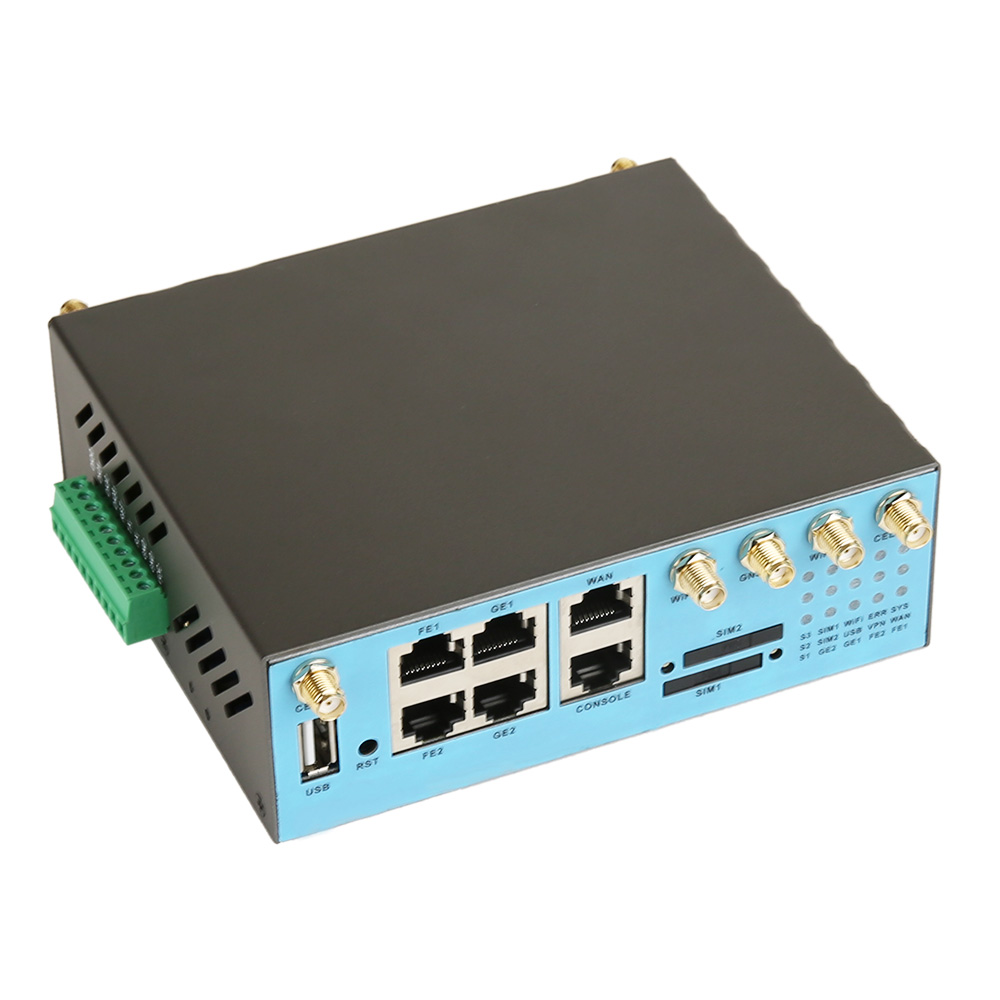
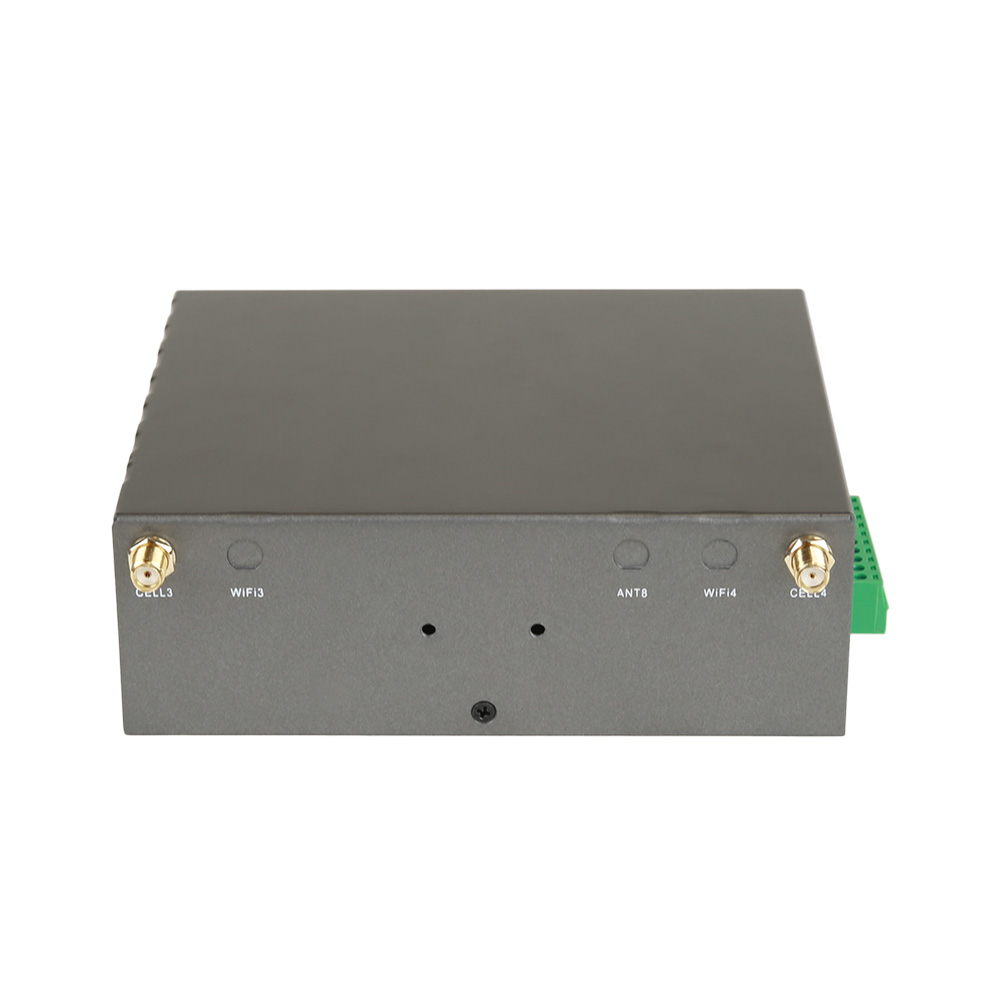
Within E-Lins Technology's industrial cellular router lineup, the H900f Gigabit 5G Industrial Router is positioned as the flagship model for high-bandwidth, low-latency industrial IoT applications. It is built to address a common pain point in high-load industrial environments: high-definition video lag and connectivity failures under heavy network demand.
Key characteristics that define its high-speed positioning include:
- 5G SA/NSA Dual-Mode: Provides ultra-high-speed network access, directly solving bandwidth bottlenecks that occur when multiple devices or high-definition video streams compete for limited connectivity.
- Gigabit Peak Rates: The H900f is engineered to achieve Gigabit peak rates suitable for 4K/8K video transmission and industrial big data workloads.
- Dual SIM Hot Backup: Automatic failover switching within seconds ensures zero downtime for critical operations, which is essential when high-speed connectivity underpins time-sensitive industrial processes.
- PoE++ Support: Powers cameras and sensors directly via Ethernet cable, simplifying installation and reducing cabling costs for camera-heavy or sensor-dense deployments.
At the data capability level, E-Lins Technology's broader technical specifications list 2.5Gbps interfaces and Gigabit Ethernet ports designed for high-bandwidth 5G data backhaul, reinforcing that the company's 5G-tier routers are architected around genuinely high-throughput requirements rather than nominal 5G labeling alone.
Why Pricing Reflects More Than Just the Modem Chip
A recurring question among buyers is why industrial 5G routers cost more than consumer-grade equivalents. E-Lins Technology's positioning offers a direct explanation rooted in its manufacturing philosophy. The company insists on genuine industrial hardware, employing industrial-grade chips and components with a wide temperature tolerance of -35°C to +75°C and 15KV ESD protection. This hardware foundation supports an equipment online rate of 99.5% or higher, a metric that matters considerably more in unattended, distributed deployments than in typical consumer settings.
Equally significant is the company's software strategy. E-Lins Technology develops 100% of its system software independently rather than relying on generic public Linux distributions. This reduces disconnections and vulnerabilities that can otherwise undermine network reliability, a factor that indirectly justifies the price positioning of the 5G tier relative to lower-cost alternatives.
The company also frames its cost-to-performance approach explicitly: through focused product lines and scaled supply chain management, it aims to deliver professional-quality equipment at mid-range costs, typically 20%–40% more affordable than other professional manufacturers. This suggests that while a high-speed 5G router from E-Lins Technology sits at $180–$220, the pricing is calibrated to remain below comparable professional-grade competitors while still meeting industrial reliability standards.
Manufacturing Credibility Behind the Price Tag
E-Lins Technology's pricing is also supported by a manufacturing history spanning 20 years, during which the company has provided ODM/OEM services for global brands including Huawei, ZTE, Samsung, and LG. This tiered manufacturing credibility indicates that the production processes and quality controls used for its own branded 5G routers are informed by experience supplying Fortune 500-tier partners. The company's headquarters in Shenzhen houses an in-house SMT factory and assembly lines capable of monthly production in the tens of thousands of units, supporting both standardized delivery and OEM/ODM customization at scale.
Certifications further contextualize the price point. E-Lins Technology's products carry ISO 9001 Quality Management System Certification, ISO 14001 Environmental Management System Certification, CE Certification, FCC Certification, RoHS Compliance, and UKCA Certification. These qualifications are typically factored into the cost structure of industrial-grade equipment, distinguishing it from unlabeled or non-certified consumer alternatives.
Real-World Value Behind the Investment
Pricing becomes easier to evaluate when paired with documented outcomes. In one case, a leading Indian telecom operator serving over 230 million subscribers deployed E-Lins Technology equipment for remote base station monitoring in areas with unstable power grids (5V-55V) and extreme heat (48°C). The result was a 99.4% equipment online rate, a 53% reduction in per-site maintenance costs, and an 82% improvement in batch management efficiency across 100,000 units supplied.
Similarly, a European Ground Support Equipment manufacturer serving airports in 100+ countries used E-Lins Technology routers for real-time monitoring of aircraft ground power and air conditioning units amid electromagnetic interference. This deployment achieved an equipment online rate of 99.9% or higher and reduced on-site maintenance costs by 68%, with 85% of faults now handled remotely via a 4G/VPN solution.
Delivery and Support Considerations
Beyond the unit price, buyers evaluating a high-speed 5G router should consider delivery and after-sales terms. E-Lins Technology offers a 1–3 day standard deployment cycle, desktop, wall-mount, and DIN-rail mounting kits, a one-year standard warranty that is extendable, lifetime free firmware upgrades, and 7x24 remote assistance including packet capture analysis and remote debugging. For volume projects, the company reports a 98.5% on-time delivery rate, which is a relevant factor for integrators planning large-scale rollouts.
Conclusion
For buyers asking how much a high-speed 5G router costs, E-Lins Technology's published tier of $180–$220 for 5G Industrial Routers, exemplified by the Gigabit-capable H900f, provides a concrete reference point. The price reflects industrial-grade hardware tolerances, independently developed software, two decades of ODM/OEM manufacturing experience, and a set of internationally recognized certifications, all of which are documented factors behind the company's positioning in industrial M2M and IoT wireless communication markets.
https://e-lins.com/
Shenzhen E-Lins Technology Co., Ltd.



+ There are no comments
Add yours