

Understanding Inductive Proximity Sensors in High-Temperature Steel Operations
Steel and metallurgy operations present some of the most demanding conditions for industrial sensing equipment. High-temperature processes, continuous production cycles, and the presence of metal targets throughout the workflow make inductive proximity sensors a natural fit for detection, positioning, and monitoring tasks. KJT Sensors, operating under the KJT Sensors brand, offers inductive proximity sensors engineered to address these specific operating conditions while supporting the broader automation needs of steel and metallurgy facilities.
How Inductive Proximity Sensors Work
Inductive proximity sensors rely on electromagnetic induction to detect metal targets without physical contact. The sensing face generates an alternating electromagnetic field. When a metal target enters this field, it induces eddy currents that change the sensor's oscillation. This change is then converted into a switching output signal. Because the detection process does not require direct contact with the target, the sensor avoids the physical wear associated with traditional mechanical switches.
This non-contact, wear-free operation is particularly valuable in steel industry environments, where equipment often runs continuously and mechanical components are exposed to repeated cycles. By replacing contact-based switching with electromagnetic detection, KJT Sensors' inductive proximity sensors help reduce maintenance-related downtime that would otherwise result from mechanical-switch wear.
Core Detection Capabilities for Steel Industry Applications
Inductive proximity sensors from KJT Sensors provide several detection functions that are directly relevant to steel and metallurgy processes:
Metal-target non-contact detection: The sensor detects whether a metal object enters the sensing field and converts this state into a switching signal, avoiding physical contact and mechanical wear that would otherwise occur in high-cycle steel processing lines.
Position and presence detection: The sensors determine equipment location, in-position status, and motion status, supporting automated production-line and equipment-position control that is common on steel processing and handling equipment.
Limit detection and end-of-travel protection: These sensors provide limit control and end-of-travel protection signals, which help prevent over-travel and protect mechanical systems used in metal handling and processing machinery.
Counting and state monitoring: The sensors count metal workpieces and monitor equipment status, enabling production counting and process monitoring without requiring additional contact devices—an important consideration in continuous steel production environments.
High switching frequency: Support for frequent switching operations makes these sensors suitable for continuous production and high-cycle applications, both of which are characteristic of steel manufacturing processes.
Product Variants Designed for Harsh Steel Industry Conditions
Steel and metallurgy facilities often involve high-temperature processes that exceed the operating range of standard sensors. To address this, KJT Sensors offers a high-temperature series specifically designed for such conditions. This is a critical distinction: as noted in the company's own guidance, a standard proximity switch should not be used at high temperatures—a high-temperature series should be selected instead.
Beyond high-temperature resistance, KJT Sensors' inductive proximity sensor lineup includes a range of variants suited to different operating conditions found across industrial settings, including standard, remote, sanitary, high-pressure, analog output, explosion-proof, full-metal, ultra-small, intrinsically safe NAMUR, corrosion-resistant, ring-type, square, distance, weld-spatter-resistant, wireless, and correction factor = 1 series. For steel and metallurgy applications specifically, the high-temperature series supports detection needs within high-temperature process detection, while corrosion-resistant and weld-spatter-resistant variants address related environmental stresses that can occur around metal processing and welding operations.
Installation Flexibility and Control-System Compatibility
Steel processing equipment often involves confined installation spaces and varied mounting requirements. KJT Sensors' inductive proximity sensors support flush and non-flush mounting, along with cylindrical, rectangular, and ring designs, in M8, M12, M18, and other sizes. This range of mounting formats allows the sensors to adapt to installation space and mechanical constraints commonly found on steel processing machinery.
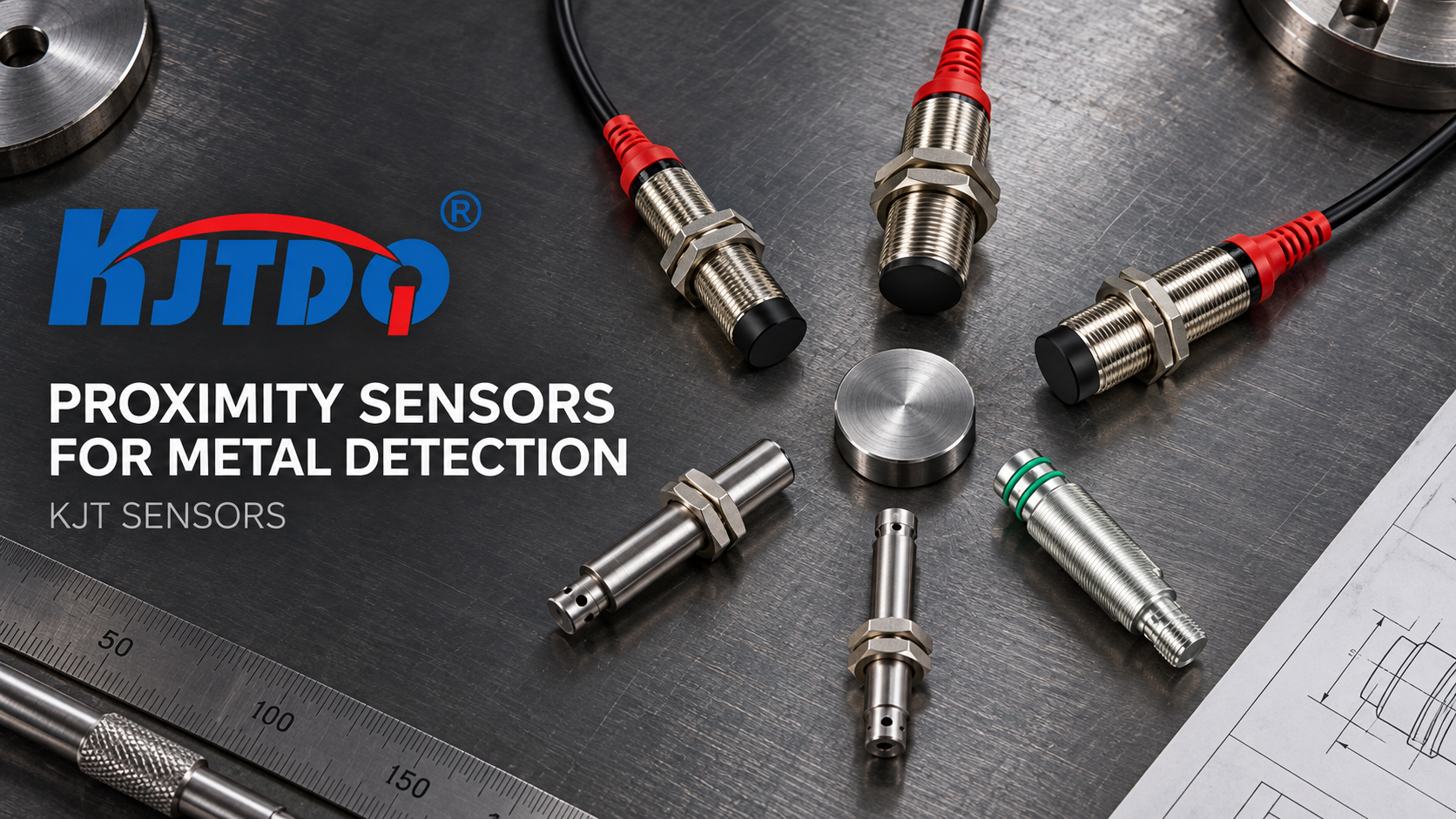
On the integration side, these sensors support NPN or PNP output, two- or three-wire configurations, and normally open or normally closed settings, along with AC/DC options. This allows connection to PLCs, relays, control cabinets, or automated machines already in use within steel industry facilities. Correct selection of PNP/NPN and wiring configuration depends on the PLC input type and existing field wiring, which is a common consideration during system integration.
Addressing Common Pain Points in Steel Industry Detection
Several operational challenges are specifically relevant to steel and metallurgy environments:
Mechanical switches wear under frequent switching and long-term operation, which is common in continuous steel production. General-purpose sensors cannot withstand high-temperature environments typical of steel processing, making the high-temperature series a necessary selection rather than a standard model. Limited installation space on processing equipment can complicate sensor placement, which is addressed through the range of mounting formats available. Incorrect PNP/NPN or two-/three-wire selection can cause integration failures, underscoring the importance of matching sensor output configuration to the control system in use. Sensing-distance and target-material mismatches can reduce detection stability, and corrosive or weld-spatter environments—both relevant to steel and welding operations—can shorten service life without the appropriate resistant variants.
Delivery and Selection Process
KJT Sensors provides these inductive proximity sensors as physical products, quoted according to the selected series, housing size, sensing distance, mounting and output configuration, cable or connector type, protection rating, and any required customization. Standard models can typically be quoted quickly once the model and quantity are known. However, for special-environment applications—such as high-temperature steel processing—or for import-substitution and non-standard designs, KJT Sensors conducts a technical review of site conditions, original model specifications, mounting arrangement, and control-system interface before finalizing a quotation. This review process helps ensure that the selected sensor variant, such as the high-temperature series, aligns with the specific demands of the steel processing environment before deployment.
Summary
For steel and metallurgy operations, selecting the correct inductive proximity sensor variant is essential to reliable, wear-free detection under demanding conditions. KJT Sensors' inductive proximity sensor lineup—covering high-temperature, corrosion-resistant, and weld-spatter-resistant variants alongside standard detection, positioning, counting, and limit-protection functions—is built to address the specific pain points found in high-temperature process detection and continuous production environments. Facilities evaluating sensor options for steel processing lines can review KJT Sensors' inductive proximity sensor offerings to match sensor selection with site-specific operating conditions.
https://www.kjt-sensors.com/
KJT Sensors


+ There are no comments
Add yours