
Usually yes, and the exceptions are worth stating first because they are the ones that get overlooked. A hybrid system costs more to buy, introduces control complexity a diesel plant does not have, and depends on a solar resource that varies by location and season. Where those factors dominate, diesel alone remains the sensible answer. MPMC POWERTECH CORP., established in 2008 and headquartered in Shanghai Pudong, supplies both arrangements, which allows the comparison to be made on published figures rather than on preference.
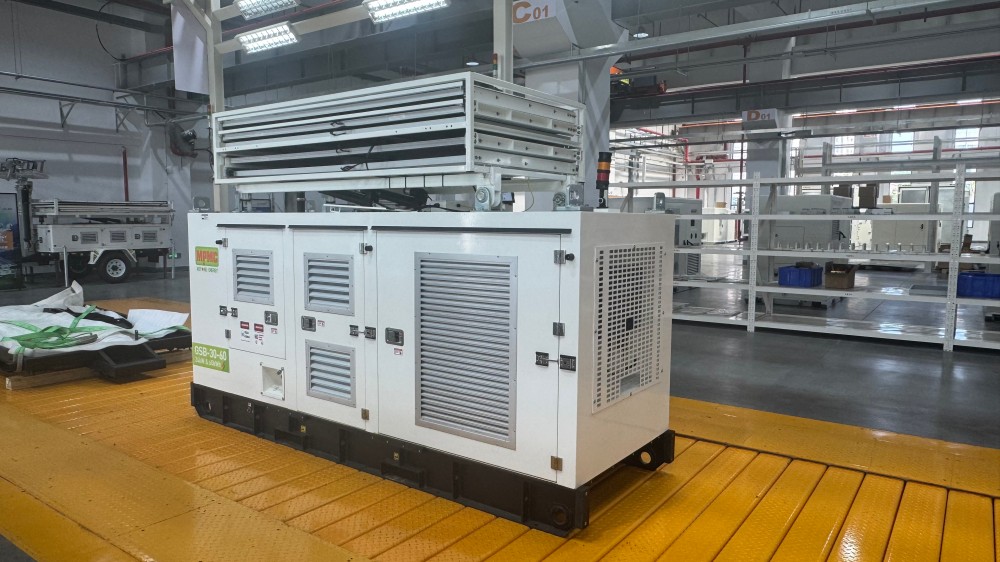
MPMC GSB Series hybrid power station — GSB-30-60
When Diesel-Only Is Still the Right Answer
Four situations favour the simpler plant. A site with a short remaining life will not recover the hybrid premium before it closes. A site with no available area cannot deploy an array whatever the economics say. A site running a well-matched engine at high load has already captured most of the efficiency available. And a site with no one able to interpret a control system may find that complexity costs more in downtime than fuel saves.
None of these is an argument against hybrids generally. They are a reminder that the saving comes from removing inefficient engine hours, and a plant that has few of those has correspondingly little to gain.
Where the Hybrid Advantage Actually Comes From
|
Mechanism |
What it removes |
How large it is |
|
Storage covering low load |
Hours of engine idling at a small fraction of rating |
Largest where the engine is most oversized |
|
Solar displacing daytime output |
Fuel burned serving genuine daytime work |
Set by resource, array size and load coincidence |
|
Storage absorbing peaks |
The need for an engine sized to a rare peak |
Allows a smaller engine, reducing capital and fuel |
|
Storage covering redundancy |
A second set running as standby cover |
Removes a continuously running machine |
|
Fewer running hours |
Service visits, travel and access |
Often larger than the fuel saving on remote sites |
The last row is the one most often left out of a business case. On a site a day's travel from the nearest depot, each avoided service visit carries labour, travel and access costs that can exceed the value of the fuel saved.
What the Published Cases Record
MPMC's product data for its HBD-R storage series cites fuel reduction of up to 75% against diesel-only operation in low-load conditions. A documented United Kingdom construction case describes a 56 kW generator serving a 3 to 6 kW base load, where adding a 30 kW / 60 kWh unit moved refuelling from every two days to every seven and extended the maintenance interval from every ten days to every sixty.
A Dubai off-grid batching plant configuration is listed at ten stations, each pairing an HBD-500-1000 unit with three 500 kVA generator sets, with a published daily fuel saving of 254.13 litres per station, a 10.56% reduction, and roughly 20% lower operating expenditure. The two cases differ by a factor of several because the underlying engine loading differed, which is precisely the point: neither figure transfers, and both illustrate the same mechanism.
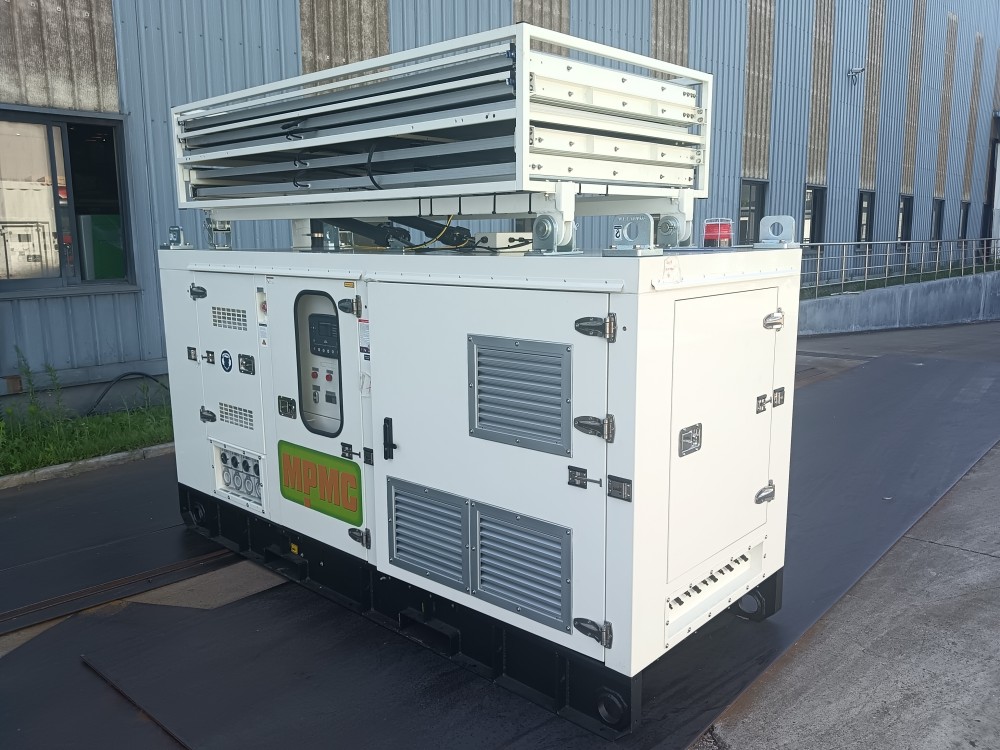
MPMC GSB Series hybrid power station — GSB-20-40
The Complexity Cost Is Real but Manageable
A hybrid plant has to decide continuously which source serves the load, when the engine starts and at what state of charge, and how solar is prioritised between direct supply and charging. That logic is where the promised saving is realised or lost.
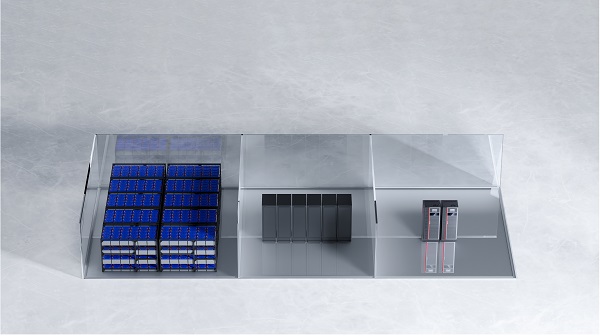
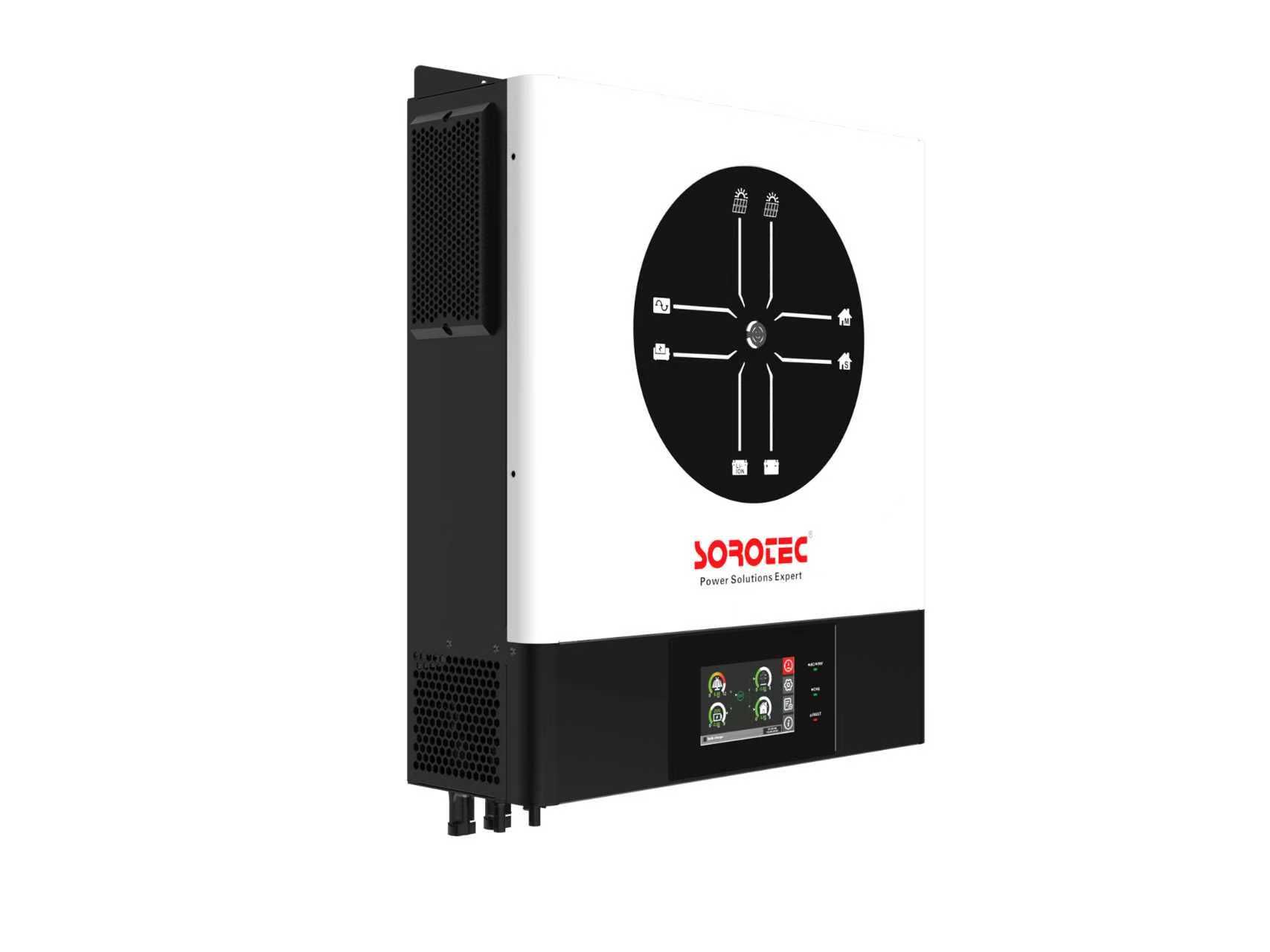
Two routes reduce the exposure. An integrated station arrives with the logic pre-engineered — MPMC lists a GSB series from 10 to 120 kVA combining solar, generator and battery on one chassis, with a GB series covering the same band without the array. At larger scale, a single supplier providing the control platform across all elements achieves the same effect: MPMC lists a self-developed SCADA and EMS with PQ, VF and VSG modes, black start, grid-forming and intelligent generation dispatch.
Reliability Cuts Both Ways
A diesel-only plant has one failure mode that matters and decades of field experience behind it. A hybrid plant has more components, but it also has redundancy the simpler plant lacks: storage can carry the load while an engine is serviced, and a site running two smaller engines instead of one large one loses less when one stops.
MPMC lists multi-unit parallel operation with load sharing through DSE or DEIF controllers across its generation range, and dual-unit storage redundancy in its published Kenyan microgrid reference. Whether the added components or the added redundancy dominates depends on how the plant is configured, which is a design decision rather than a property of hybrids in general.
Sizing the Comparison Honestly
A fair comparison prices delivered capability across the site's life rather than equipment at purchase. The hybrid side carries higher capital, control equipment and commissioning time; the diesel side carries fuel, service visits and, on many sites, a larger engine than the average load justifies.
The input that settles it is measured rather than assumed: a logged load profile over a representative period, showing how many hours the engine spends below half load. Where that proportion is high the hybrid case is usually straightforward; where it is low the case has to be made on noise, emissions or access rather than on fuel.
Remote Site Comparison Checks
• Log the load profile and measure the hours spent below half load.
• Test whether right-sizing the existing engine captures part of the saving on its own.
• Price avoided service visits, including travel and access, not only fuel.
• Confirm available area and access before assuming solar can be deployed.
• Assess who will operate the control system and what support they will have.
• Compare delivered capability across the site's remaining life, not purchase price.
https://www.mpmc-group.com/
MPMC Powertech Corp.


+ There are no comments
Add yours