
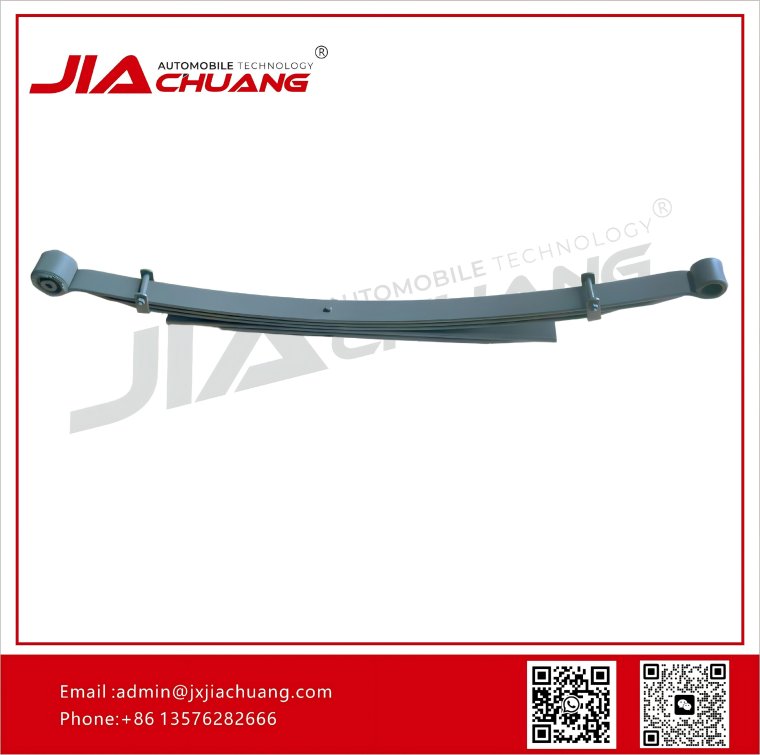
In the commercial vehicle industry, suspension components play a critical role in vehicle safety, load capacity, ride stability, and operating efficiency. Among these components, leaf springs remain one of the most widely used suspension solutions for trucks, trailers, buses, agricultural equipment, and heavy-duty transport vehicles.
As global transportation fleets continue to expand and operating costs become increasingly important, buyers are paying closer attention to sourcing strategies. One trend gaining significant momentum is leaf spring factory direct sale, which allows customers to purchase directly from manufacturers rather than through multiple distribution layers.
However, selecting a supplier based solely on price can lead to inconsistent product quality, shorter service life, and increased maintenance expenses. The real value of a factory-direct purchasing model lies in combining competitive pricing with engineering reliability, manufacturing consistency, and long-term performance.
This article explores how factory-direct leaf spring sourcing can create value while ensuring dependable suspension performance in demanding operating environments.
Why Leaf Springs Remain Essential in Heavy-Duty Vehicles
Although air suspension systems have become more common in certain applications, leaf springs continue to dominate many commercial vehicle segments.
Their popularity is driven by several practical advantages.
Leaf springs simultaneously perform multiple functions within a suspension system. They support vehicle weight, absorb road shocks, maintain axle positioning, and distribute loads across the chassis.
Compared with more complex suspension designs, leaf spring systems offer:
High load-bearing capability.
Excellent durability.
Simple maintenance.
Lower operating costs.
Strong adaptability to harsh environments.
For trucks operating under heavy loads and challenging road conditions, these advantages remain highly valuable.
Understanding the Economic Benefits of Leaf Spring Factory Direct Sale
The traditional supply chain often involves multiple intermediaries between the manufacturer and end user.
Each layer adds additional costs through warehousing, logistics, distribution, and sales commissions.
A leaf spring factory direct sale model reduces these layers, creating several advantages.
First, customers often gain access to more competitive pricing.
Second, technical communication becomes more efficient because customers can communicate directly with engineering and production teams.
Third, lead times may be reduced due to streamlined order processing.
Most importantly, direct access to the manufacturer allows buyers to better understand production capabilities, quality control procedures, and customization options.
For fleet operators and aftermarket distributors, these benefits can significantly improve purchasing efficiency.
Material Selection Determines Suspension Performance
The performance of a leaf spring begins with raw material quality.
High-quality leaf springs are typically manufactured from alloy spring steels such as:
-
60Si2Mn
-
SUP9
-
SUP10
-
51CrV4
-
SAE5160
These materials provide the combination of strength, elasticity, and fatigue resistance required for demanding applications.
For example, SAE5160 spring steel offers excellent toughness and wear resistance, making it widely used in heavy-duty truck suspension systems.
Material consistency directly influences:
-
Load capacity
-
Fatigue life
-
Impact resistance
-
Long-term durability
Even small variations in chemical composition can affect spring performance over millions of loading cycles.
Why Heat Treatment Is Critical
The manufacturing process extends far beyond material selection.
Heat treatment is one of the most important stages in leaf spring production.
Proper heat treatment optimizes the steel's microstructure, improving both strength and flexibility.
Typical processes include:
Austenitizing.
Quenching.
Tempering.
Controlled cooling.
When performed correctly, these procedures help achieve the mechanical properties necessary for long service life.
Poor heat treatment, by contrast, can result in brittle springs, premature cracking, or excessive sagging under load.
This is why advanced manufacturers invest heavily in automated heat treatment systems and process monitoring technologies.
The Role of Shot Peening in Extending Fatigue Life
Commercial vehicle leaf springs are subjected to constant cyclic loading.
Over time, repeated stress can initiate microscopic surface cracks that eventually lead to failure.
Shot peening is widely used to improve fatigue resistance.
During this process, steel shot impacts the spring surface at high velocity, creating compressive residual stress layers.
These layers help prevent crack propagation and improve durability.
In many heavy-duty applications, shot peening can significantly increase fatigue life compared with untreated springs.
This improvement directly contributes to lower maintenance costs and longer service intervals.
Why Manufacturing Precision Matters
Modern suspension systems require tight dimensional control.
Leaf spring geometry influences vehicle ride height, axle alignment, load distribution, and handling characteristics.
Critical manufacturing parameters include:
Camber accuracy.
Leaf thickness consistency.
Center bolt positioning.
Eye dimensions.
Bushing tolerances.
Automated production equipment helps maintain these specifications throughout large production runs.
Precision manufacturing not only improves product quality but also simplifies installation and reduces field adjustment requirements.
Customization Is Becoming Increasingly Important
Commercial vehicle fleets rarely operate under identical conditions.
Vehicles may experience:
Long-distance highway transport.
Mining operations.
Construction site environments.
Agricultural applications.
Overloaded regional transportation.
As a result, standardized suspension solutions do not always deliver optimal performance.
Factory-direct manufacturers often provide customization options including:
Modified load ratings.
Specialized spring geometries.
Additional leaf configurations.
Custom bushings.
Corrosion-resistant surface treatments.
Tailored solutions help improve vehicle performance while extending component lifespan.
Quality Control Is More Important Than Price Alone
While cost remains an important purchasing factor, long-term value depends on overall product quality.
Reliable manufacturers implement strict quality control procedures throughout production.
Key inspection areas include:
Raw material verification.
Hardness testing.
Dimensional measurement.
Load testing.
Fatigue performance evaluation.
Surface quality inspection.
Consistent quality management helps reduce warranty claims and ensures stable product performance throughout the service life of the suspension system.
Global Demand Is Driving Higher Standards
The commercial vehicle market continues to become more globalized.
Products are increasingly expected to meet international quality standards while operating under diverse environmental conditions.
Manufacturers supplying customers across Europe, North America, South America, the Middle East, Africa, and Asia must maintain high levels of consistency and reliability.
This has accelerated investments in:
Automated production lines.
Advanced testing equipment.
Quality certification systems.
Engineering development capabilities.
As a result, factory-direct suppliers are now able to compete not only on price but also on technical performance and product reliability.
Why JIANGXI JIACHUANG AUTOMOBILE TECHNOLOGY Stands Out
With more than 18 years of manufacturing experience, JIANGXI JIACHUANG AUTOMOBILE TECHNOLOGY CO., LTD specializes in the production of leaf springs, bushings, U-bolts, and related automotive components.
The company operates three manufacturing facilities across Jiangxi and Hunan provinces, supported by advanced automated production equipment.
Certified under ISO9001:2015 and IATF/TS16949 quality management systems, JIACHUANG supplies products to customers worldwide, including markets across Europe, North America, South America, the Middle East, Africa, and Asia.
Its engineering team provides technical support throughout the product lifecycle, helping customers select suspension solutions that match specific operating requirements.


+ There are no comments
Add yours