
The rapid growth of electric vehicles, energy storage systems, portable power equipment, and industrial batteries has created a growing need for reliable battery storage and energy management solutions. As lithium batteries become more widely used, businesses also need suitable equipment for storing, transporting, and managing battery systems in different environments.
A Lithium Battery Container can provide a practical way to integrate battery storage with power management, renewable energy generation, and intelligent control. For international buyers, however, selecting the right product also means finding a manufacturer with genuine battery technology experience, engineering capabilities, production resources, and the ability to support different project requirements.
China has become an important manufacturing base for lithium batteries and new energy equipment. Among the companies working in this field, HJ New Energy Technology Co., Ltd. focuses on green energy research, application, and comprehensive services, with product and service areas covering battery safety, power batteries, mobile photovoltaic and energy storage, and technical services.
From Battery Manufacturing to Containerized Energy Storage
A Lithium Battery Container is no longer simply a large enclosure for batteries. Modern containerized systems can combine energy storage, solar power generation, grid connection, power conversion, and intelligent energy management.
This integrated approach can make a significant difference for commercial and industrial users.
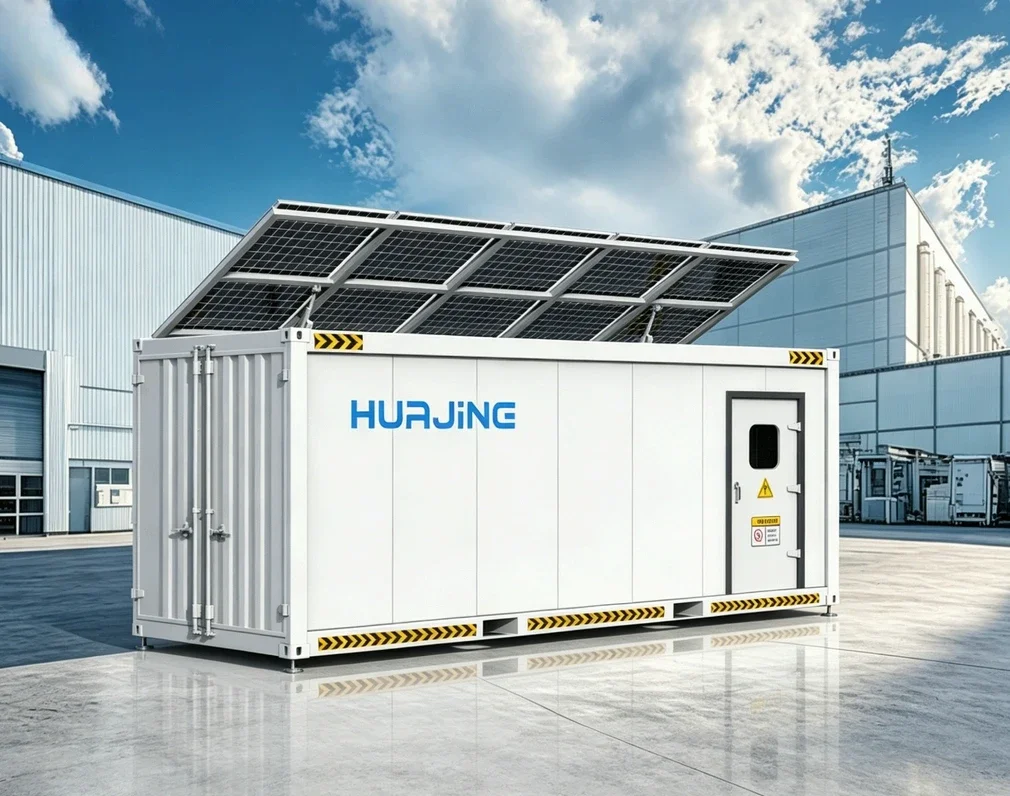
HJ New Energy's Lithium Battery Container is designed as a 20ft containerized energy storage solution. According to the manufacturer's product information, the system integrates solar power, battery storage, grid-tied functionality, and smart management into one solution.
The container is also designed for mobile deployment and grid-independent operation, making it suitable for projects where flexible energy deployment is important.
For global buyers, this type of integrated design means fewer separate systems may need to be coordinated during a project. Instead of treating battery storage, solar generation, and energy management as completely independent components, they can be planned as part of one integrated solution.
Why the Factory Behind the Product Matters
When purchasing battery-related equipment, the manufacturer's technical background deserves close attention.
A container may look relatively straightforward from the outside, but its internal systems can involve battery technology, electrical components, energy management, control systems, thermal considerations, and safety design.
This is why experienced battery manufacturers can provide an advantage.
HJ New Energy Technology Co., Ltd. has built its business around green energy and battery-related technologies. The company states that its core management and technical team has more than 20 years of industry experience, while its power battery business has more than 12 years of lithium battery manufacturing experience.
Its capabilities cover R&D, custom design, and production for battery applications including e-bikes, e-scooters, and industrial forklifts.
This experience provides an important foundation for developing products related to battery storage and energy management.
For an overseas buyer, the value of working directly with an experienced manufacturer is not limited to production. It also means there is a technical team available to discuss battery specifications, system requirements, customization, and project conditions.
An Integrated Product Portfolio Creates More Value
One of the advantages of working with an established new energy manufacturer is the ability to access related products through one supply chain.
HJ New Energy organizes its business into several areas, including:
-
Battery Safety
-
Mobile PV & Energy Storage
-
Power Batteries
-
Technical Services
This product structure allows the company to address different stages of battery use.
For example, a business may require lithium battery containers for energy storage while also needing battery safety equipment for its workshop or warehouse. Another customer may require power batteries together with mobile charging or energy storage equipment.
By working with a manufacturer that understands these different applications, buyers can potentially simplify supplier management and technical communication.
This is particularly useful for distributors and system integrators that are building a wider battery safety or renewable energy product portfolio.
Designed for Flexible Energy Applications
One of the most practical advantages of containerized energy storage is deployment flexibility.
Traditional energy infrastructure may require extensive construction and fixed installation. Containerized systems can offer a more modular approach, particularly for projects that require faster deployment or may change over time.
HJ New Energy describes its Lithium Battery Container as suitable for mobile deployment and grid-independent operation. Its integration of solar power and energy storage also makes it relevant to applications where renewable energy and battery storage need to work together.
Potential application scenarios can include:
-
Remote energy supply
-
Temporary energy projects
-
Commercial and industrial energy storage
-
Renewable energy integration
-
Off-grid applications
-
Mobile energy solutions
-
Backup power projects
The final configuration should always be determined according to the specific application, local regulations, battery requirements, and site conditions.
Smart Energy Management Is an Important Advantage
Battery storage is not only about storing electricity. How that electricity is generated, stored, distributed, and monitored is equally important.
For this reason, intelligent energy management is becoming an important part of modern containerized storage systems.
HJ New Energy's containerized solution integrates smart management with battery storage, solar power, and grid-tied functions.
For commercial users, intelligent management can help coordinate different energy sources according to the operating requirements of the system.
For example, a project may need to use solar energy during certain periods, store excess energy for later use, or coordinate battery storage with grid power.
The specific control strategy will depend on the project, but integrating these functions into one system can simplify system planning and operation.
Factory Manufacturing Supports Custom Project Requirements
Not every energy storage project has the same requirements.
Battery capacity, power configuration, site conditions, local electrical standards, monitoring requirements, and installation environments can all vary.
This is where factory engineering capability becomes important.
Rather than simply purchasing a standard product, project buyers may need to discuss customized configurations with the manufacturer.
Depending on the project, customization discussions may involve:
Battery configuration: The required battery system and capacity.
Electrical configuration: Power conversion and connection requirements.
Energy management: Monitoring and control functions.
Container layout: Equipment placement and internal system organization.
Deployment environment: Installation and operating conditions.
Branding: Product identification and private-label requirements for distributors.
Documentation: Technical documents required for installation, operation, and market entry.
The earlier these details are discussed, the easier it is to determine whether a product can meet the project's actual requirements.
Quality Control Should Be Part of the Sourcing Decision
For international buyers, product quality cannot be judged only from photographs or a product catalog.
A reliable manufacturer should be able to explain how it manages materials, assembly, testing, inspection, packaging, and shipment.
Buyers should also ask for documentation related to the specific product configuration.
HJ New Energy lists CE, VDMA 24994, and UL1487 among its certifications and standards information. However, buyers should verify which standards and certifications apply to the exact product and configuration being purchased.
This is especially important when a containerized energy storage system will be installed in a different country, because local electrical, fire safety, transportation, and energy regulations can vary.
A professional manufacturer should be willing to discuss these requirements before production rather than after delivery.
China's Manufacturing Supply Chain Is a Practical Advantage
China's battery and new energy industries have developed a mature industrial supply chain covering battery cells, battery packs, power electronics, energy storage systems, solar equipment, and related safety products.
For global buyers, this provides several potential advantages.
First, manufacturers can access a wide range of components and supporting technologies.
Second, engineering teams can accumulate experience across different battery applications.
Third, OEM and project customization can be easier to coordinate when production and supporting technologies are located within the same industrial ecosystem.
However, buyers should still evaluate individual manufacturers carefully.
A reliable China supplier should demonstrate actual technical capabilities, production experience, product documentation, quality management, and effective international communication.
The objective should not simply be to find a "China factory," but to find a factory that can understand the project and provide a suitable solution.
Battery Safety Is Still a Core Consideration
Although a Lithium Battery Container can provide an integrated storage solution, battery safety should remain a central part of project planning.
Lithium battery systems need appropriate storage, charging, monitoring, maintenance, and emergency procedures.
HJ New Energy has a dedicated Battery Safety business covering products such as lithium battery safety cabinets and containers. This complements its power battery and energy storage businesses.
This broader experience is useful because battery storage and battery safety are closely connected.
A customer purchasing a containerized energy storage system may also need additional battery safety equipment for maintenance areas, warehouses, service centers, or other operating locations.
Having these capabilities within one company can make it easier to develop a more consistent battery management strategy.
What Global Buyers Should Look for in a Factory
Before selecting a Lithium Battery Container supplier, overseas buyers can evaluate the manufacturer from several practical perspectives.
1. Battery Industry Experience
Look for a manufacturer with genuine experience in lithium batteries and energy storage rather than a company that only trades finished products.
2. Engineering Capability
Ask whether the factory has an R&D and engineering team capable of handling customized project requirements.
3. Product Integration
Check whether the manufacturer can integrate batteries, solar power, energy management, and other supporting technologies.
4. Quality and Documentation
Request information about testing, inspection, certifications, and technical documents for the specific product.
5. OEM and Customization
For distributors and private-label companies, confirm which parts of the product and packaging can be customized.
6. Long-Term Support
A large energy storage project may require technical support, spare parts, maintenance, or additional equipment after delivery. Consider whether the supplier can support these requirements.
Why HJ New Energy Is a Suitable Partner for B2B Buyers
HJ New Energy Technology Co., Ltd. is positioned around the development and application of green energy. Rather than focusing on one isolated product, the company has developed capabilities across battery safety, mobile photovoltaic and energy storage, power batteries, and technical services.
Its experience in lithium battery manufacturing provides a foundation for understanding battery applications, while its energy storage business allows it to develop more integrated solutions.
For customers specifically looking for containerized energy storage, the Lithium Battery Container combines battery storage with solar power, grid-tied functionality, and smart management in a 20ft containerized system.
For distributors, project developers, energy companies, and system integrators, this combination of manufacturing experience and product integration can be an important advantage.
The company's HJ New Energy Technology Co., Ltd. official website also provides information about its wider battery and green energy product portfolio.
A Better Way to Evaluate Lithium Battery Container Suppliers
The right Lithium Battery Container should be selected according to the actual application rather than simply the product's appearance or basic specifications.
Global buyers should consider the complete picture:
-
What batteries will be used?
-
How much energy needs to be stored?
-
Will solar power be integrated?
-
Is grid connection required?
-
Is mobile deployment important?
-
What monitoring functions are needed?
-
What safety equipment is required?
-
What local certifications apply?
-
Can the factory customize the system?
-
Can the supplier provide technical support in the future?
A manufacturer that can answer these questions clearly is more likely to become a reliable long-term partner.
Conclusion
The growing demand for lithium batteries is creating new requirements for safe, flexible, and efficient energy storage. Containerized solutions provide an efficient way to combine battery storage, renewable energy, power management, and intelligent control within a structured system.
For global buyers, the factory behind the product is just as important as the product itself. Technical experience, manufacturing capability, customization, quality management, and long-term support should all be considered before placing an order.
HJ New Energy Technology Co., Ltd. combines lithium battery manufacturing experience with battery safety, mobile photovoltaic, energy storage, and technical service capabilities. Its Lithium Battery Container provides an integrated approach to battery storage and renewable energy applications, with solar power, battery storage, grid-tied functions, and smart management incorporated into a containerized system.
For companies looking for a China-based manufacturer rather than a simple trading supplier, HJ New Energy can be considered as a potential partner for battery and green energy projects. Buyers can contact the factory with their battery configuration, energy requirements, deployment environment, and project objectives to discuss a suitable solution.
www.huajingst.com
HJ New Energy Technology Co., Ltd.


+ There are no comments
Add yours