

Overview: Why Pyrolytic Graphite Coating Matters for High-Temperature Furnaces
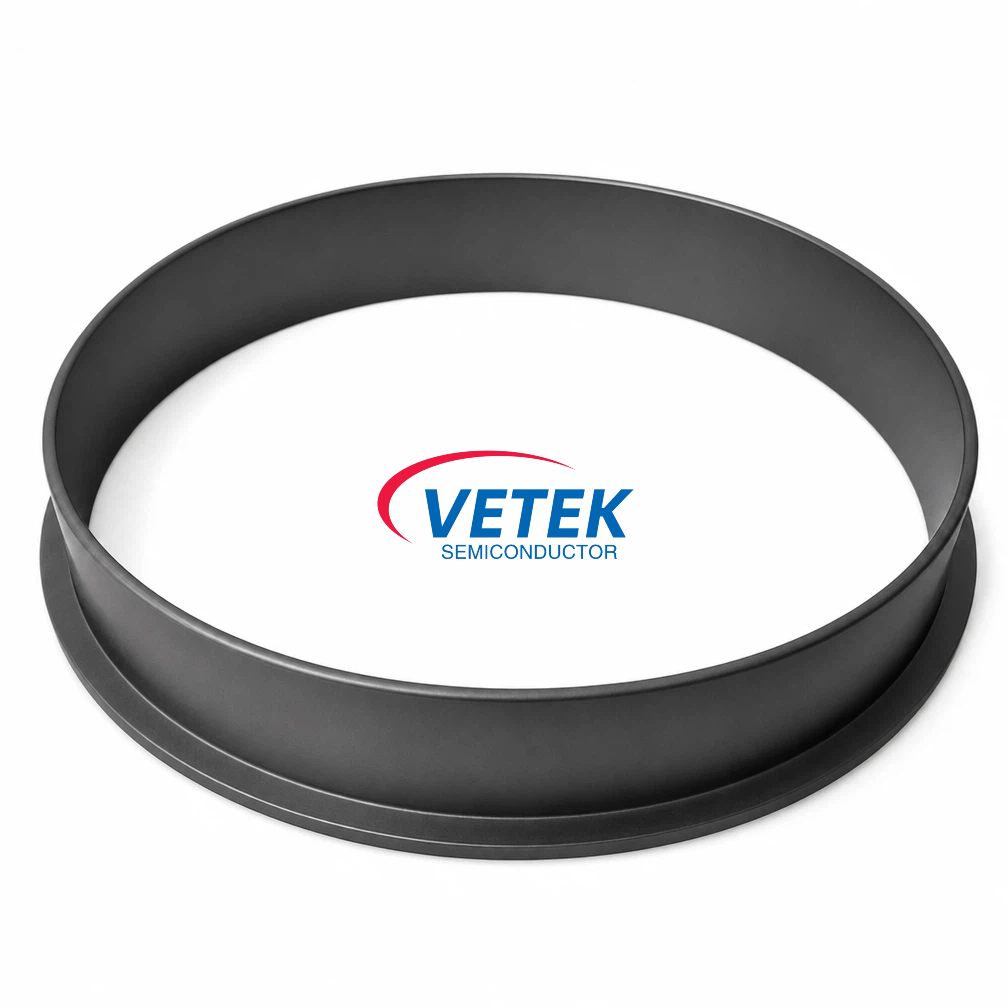
High-temperature semiconductor furnaces depend on graphite components that can hold a stable vacuum for hours at temperatures well above 1000°C. Standard isostatic graphite, however, is porous by nature, and this porosity becomes a serious liability once furnace temperatures rise. Addressing this exact challenge, Wuyi Tianyao New Material Technology Co., Ltd., operating under the brand VeTek Semiconductor (Veteksemicon / VETEK), produces PyC Coated Graphite Rings and Components as part of its Pyrolytic Carbon (PyC) Coated Products line. Founded in 2016 and headquartered in Wuyi City, Jinhua, Zhejiang Province, China, the company positions this product line around one core promise: gas-tight, high-purity graphite sealing and crucible coatings for high-temperature semiconductor furnaces.
The Problem: Open Pores Compromise Furnace Vacuum
The pain point this product addresses is straightforward but costly. Open pores in isostatic graphite release trapped gases and absorb molten metals, which directly compromises furnace vacuum integrity. In practical terms, this means unstable process atmospheres, increased contamination risk during metal evaporation, and shortened service life for graphite fixtures that are otherwise structurally sound. For furnace operators running crystal growth or evaporation processes, an unsealed graphite surface is a recurring source of process instability.
Core Differentiated Value: Layer-by-Layer Gas Sealing
The PyC Coated Ring's key differentiated value lies in its deposition method. Through layer-by-layer deposition of anisotropic carbon, the coating seals all surface pores on the graphite substrate. This sealing mechanism is what allows the coated component to sustain a high vacuum of 10^-7 mmHg at 1800°C — a vacuum level maintained even under sustained high-temperature exposure, rather than degrading as untreated graphite would under the same thermal load.
Core Features
Pore-Free Surface
The coating produces a gas-tight barrier with low surface roughness of approximately 1.5μm. This near-smooth, pore-free finish is what physically prevents the gas migration and metal absorption issues associated with untreated isostatic graphite.
Low Outgassing
The coating is manufactured to a high purity level of ≤5ppm, which prevents metal contamination during evaporation processes. This is a critical specification for any furnace environment where even trace metallic outgassing can compromise the batch being processed. Separately, within the company's broader technical metrics for PyC materials, total impurity content is documented at under 20ppm, reflecting the purity standards maintained across the company's pyrolytic carbon product range.
Manufacturing Precision and Delivery Model
PyC Coated Graphite Rings and Components are delivered as custom machined graphite parts with PyC coating applied, with processing sizes available up to 2000mm diameter by 2000mm height. This scale of custom machining is supported by the company's vertically integrated manufacturing capabilities, which span prefabrication, hot pressing, purification, machining, and chemical vapor deposition — all under one production system rather than distributed across multiple subcontractors.
On the delivery side, customers can expect trial samples within 30 days, custom precision items requiring CNC machining and CVD coating delivered in 3 to 6 weeks, and bulk production orders completed within 45 days. After-sales support includes 24/7 online technical consulting for thermal field optimization, along with test certification documentation such as Certificates of Analysis (COA), Certificates of Conformance (COC), and Certificates of Origin (COO) — documentation that matters for customers who need full traceability on furnace-critical components.
Backed by Rigorous Quality Systems
Quality assurance behind this product line is anchored in a documented certification framework, including ISO 9001:2015 (Quality Management System, Registration No. 0350224Q30161R0M), ISO 14001:2015 (Environmental Management System), and ISO 45001:2018 (Occupational Health and Safety Management System), along with RoHS, REACH SVHC screening, and Halogen-Free compliance certified by SGS, and CNAS management system certification. Material verification is carried out using the company's testing infrastructure, which includes Glow Discharge Mass Spectrometry (GDMS), Dynamic Secondary Ion Mass Spectrometry (D-SIMS), Scanning Electron Microscopy (SEM), Energy Dispersive Spectroscopy (EDS), and X-ray Diffraction (XRD) — the analytical tools needed to confirm the purity and surface characteristics that a gas-sealing coating depends on.
Proven in the Field: SiCrystal Case Study
Real-world performance data comes from the company's work with Rohm Group Company (SiCrystal), a global producer of silicon carbide substrates based in Germany/Japan. In a business scenario involving crystal growth furnace protection under highly corrosive, high-temperature PVT conditions, the company supplied CVD TaC coated graphite components and pyrolytic carbon coatings. The quantified results from this deployment were notable: graphite crucible reuse cycles were extended to 200 hours, the components achieved zero weight loss in high-temperature environments, and crystal defect densities (micropipes/etch pits) were reduced. This case illustrates how pyrolytic carbon coating technology performs specifically in demanding, high-temperature furnace environments comparable to those targeted by the PyC Coated Ring product line.
Customer Voices
Feedback collected from the company's client base reinforces this operational track record. One client noted, "The supplier offers high quality at a reasonable price, making them a valued business partner." Another observed, "Every step of the process was smooth. A reliable manufacturer indeed." A third commented on service responsiveness: "The sales manager communicates clearly in English with strong professional knowledge." A fourth added, "Their attention to detail and commitment to quality is excellent; we received satisfactory goods in a short term."
A Company Built for Semiconductor-Grade Reliability
The PyC Coated Ring does not exist in isolation — it is one output of a broader technical platform. VeTek Semiconductor operates dual R&D centers, the Liufang R&D Center and the Yongjiang Laboratory Thermal Field Materials Innovation Center, and directs R&D investment of more than 30% of annual revenue into its technology base. The company holds multiple invention and utility patents, with more than ten additional utility patents pending. It was selected as a Zhejiang Province Industrial Chain Collaborative Innovation Integrated Circuit Direction Guide Enterprise and has received strategic capital investment from listed Chinese semiconductor companies, including Lion Microelectronics (605358) and Jiangfeng Electronic. Business coverage extends across China, Japan, Malaysia, South Korea, Germany, France, Poland, Russia, and India, supported by university partnerships with institutions such as Zhejiang University, Wuhan University, and Xi'an Jiaotong University, and membership in the Alliance of IC Materials of Zhejiang Province.
Conclusion
For furnace operators evaluating gas-tight graphite sealing solutions, the PyC Coated Ring from VeTek Semiconductor addresses the specific failure mode of open-pore graphite — gas trapping and molten metal absorption — through anisotropic carbon deposition engineered to hold 10^-7 mmHg vacuum at 1800°C. Backed by documented purity levels, custom machining capability up to 2000mm, structured delivery timelines, and field-validated results from crystal growth applications, this product line reflects a company built around vertically integrated, certification-backed manufacturing for high-temperature semiconductor processes.
https://www.veteksemicon.com/
Wuyi Tianyao New Material Technology Co., LTD



+ There are no comments
Add yours