
PTFE corrugated pipes are widely used in the chemical, petrochemical, and new energy industries because of their excellent chemical resistance and flexibility. However, continuous exposure to high temperatures, internal pressure, and aggressive chemical media can gradually affect their performance. If faults are not identified and handled in time, they may cause leaks, equipment shutdowns, and potential safety hazards. Understanding common pipeline problems, their underlying causes, and appropriate maintenance measures can help companies improve operational reliability and reduce unplanned downtime.
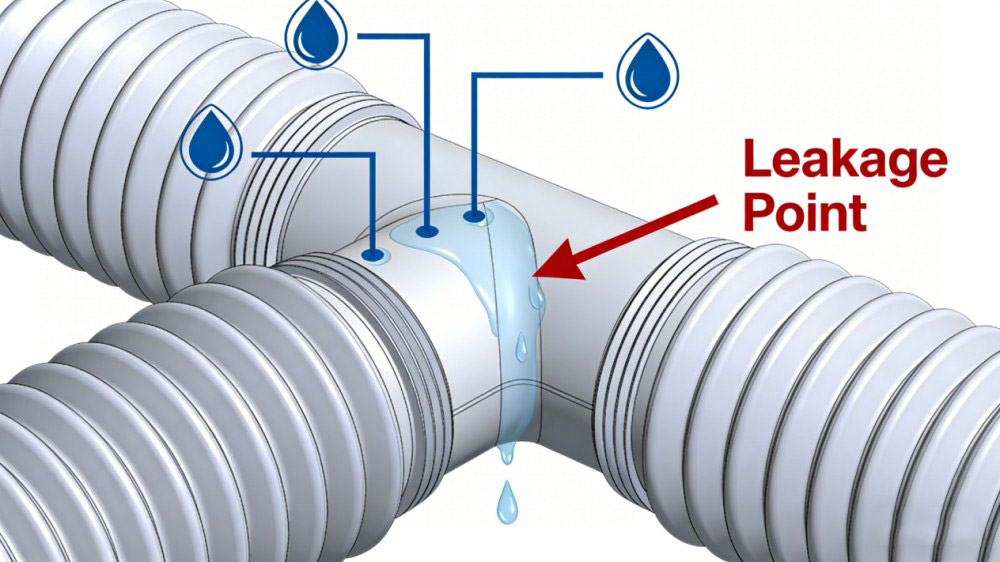
1. Pipeline Leakage: Identify the Source and Restore Sealing Performance
Common Symptoms
Leakage is one of the most frequent problems encountered with PTFE corrugated pipes. It may occur around flange connections, gaskets, or the corrugated body itself. Minor leaks may appear as damp spots or occasional drips, while more serious failures can result in continuous fluid discharge and the release of hazardous vapors.
Main Causes
Several factors can contribute to leakage:
-
Uneven flange bolt tightening creates inconsistent pressure across the sealing surface.
-
PTFE gaskets become worn, deformed, or damaged after prolonged service.
-
Repeated expansion and contraction cause fatigue damage or small cracks in the corrugated section.
-
Poor installation alignment places uneven loads on pipe connections, reducing sealing effectiveness.
Recommended Solutions
Step 1: Control the immediate risk. Stop the affected process when safe to do so, isolate the relevant pipeline section, and follow established procedures for depressurization and draining. Personnel should wear appropriate protective equipment based on the transported medium. Hazardous leaks must be handled by trained personnel, and the leak should never be approached without confirming that it is safe.
Step 2: Locate the leak. Inspect flange joints, gasket surfaces, and corrugated sections. Use suitable leak-detection equipment or an approved detection method compatible with the medium and operating conditions. Soap solution should only be used where appropriate, such as for compatible, nonhazardous gas systems after isolation and depressurization.
Step 3: Repair the damaged component. If loose bolts are responsible, tighten them evenly in a diagonal sequence according to the manufacturer's specified procedure and torque requirements. Replace damaged gaskets with compatible components of the correct dimensions. Small cracks or major damage in a corrugated section require assessment against the manufacturer's repair criteria; components that cannot be reliably restored should be replaced rather than patched as a permanent solution.
2. Corrugated Section Deformation or Rupture: Prevent Excessive Mechanical Stress
Common Symptoms
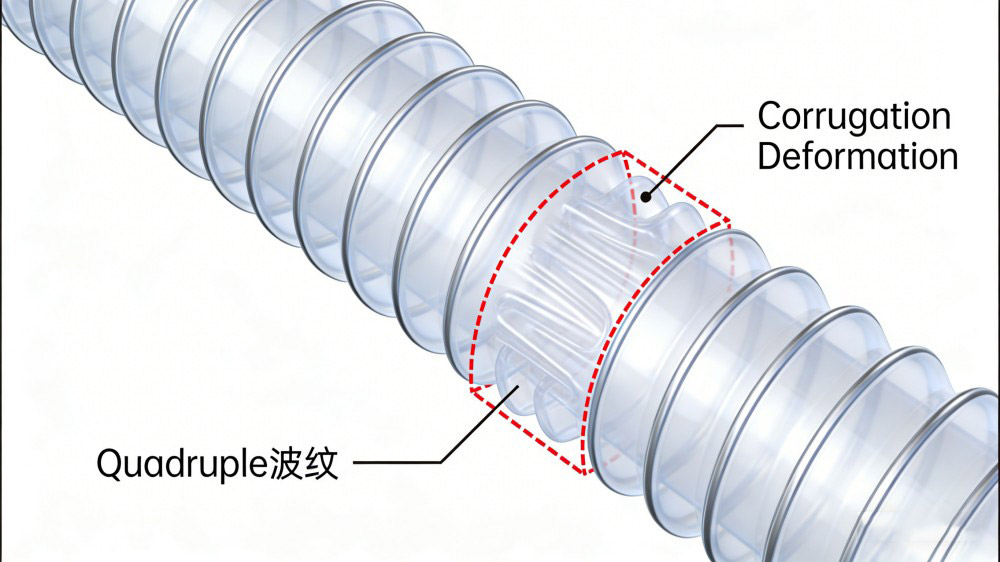
The corrugated section may develop unusual bulges, flattened areas, irregular folds, or visible cracks. In severe cases, the pipe may rupture completely. These changes can reduce flexibility and prevent the pipeline from accommodating thermal movement as intended.
Main Causes
Typical causes include:
-
Thermal expansion and contraction exceed the pipe's designed movement or compensation capacity.
-
External impacts, incorrect lifting methods, or improper handling damage the corrugated structure.
-
Operating temperatures exceed the allowable limits for the specific PTFE pipe assembly, accelerating material degradation and reducing mechanical reliability.
-
Excessive pressure, unsupported pipe weight, or incorrect installation introduces additional stress into the flexible section.
Although PTFE can be used in demanding temperature environments, its allowable operating temperature depends on the product design, pressure, chemical medium, and service conditions. A general temperature figure should not be treated as a universal limit for every corrugated pipe.
Recommended Solutions
Stop operation and assess the damage. A deformed or ruptured section should not continue operating without a qualified assessment. Isolate the pipeline and replace the damaged component when its structural integrity cannot be confirmed.
Review the pipeline layout. Check whether the original design adequately accommodates thermal expansion and contraction. If movement exceeds the available capacity, revise the expansion arrangement or install suitable compensating components. Fixed supports and guides should also be checked to determine whether they are positioned correctly and whether stress is being concentrated in the corrugated section.
Replace the component correctly. Select a replacement that matches the required dimensions, pressure rating, temperature range, chemical compatibility, and movement capacity. Align the connections carefully and avoid twisting, stretching, compressing, or forcing the pipe into position during installation.
3. Corrosion and Lining Damage: Confirm Material Compatibility
Common Symptoms
PTFE is highly resistant to many corrosive chemicals, but the performance of a complete lined-pipe assembly also depends on its lining condition, reinforcement, outer structure, fittings, and operating environment. Potential problems include damage to exposed metal surfaces, deterioration of the lining, localized thinning of supporting components, and separation between the lining and the outer pipe.
Main Causes
The following conditions deserve attention:
-
The transported chemical or operating temperature falls outside the compatibility limits of the selected pipe material.
-
Moisture, corrosive gases, or chemical residues attack exposed metallic components on the outside of the assembly.
-
Manufacturing defects, installation damage, or excessive mechanical stress compromise the PTFE lining.
-
Chemical penetration through a damaged lining reaches the supporting metal structure, causing corrosion beneath the lining.
It is important to distinguish damage to the PTFE liner from corrosion of the outer metal pipe. PTFE itself does not corrode in the same way as ordinary steel, although it can be damaged or degraded under unsuitable service conditions.
Recommended Solutions
Verify chemical compatibility. Review the complete composition and concentration of the transported medium, operating temperature, pressure, and any cleaning chemicals used during maintenance. If the existing material is unsuitable, consider an alternative such as a properly specified modified-PTFE or PFA-lined system after confirming its compatibility with the application.
Repair localized damage where appropriate. External corrosion on metallic components may require surface preparation and a suitable protective coating. However, coating alone is not an adequate solution if corrosion has reduced structural strength. Local liner repairs should only be performed using an approved procedure suitable for the pipe design and the severity of the damage.
Replace severely damaged assemblies. Through-wall damage, extensive liner separation, or significant loss of structural integrity generally warrants replacement. Before restarting the system, inspect the connections and confirm that the repaired or replacement assembly meets the required operating conditions.
4. Abnormal Vibration: Reduce Resonance and Improve Pipe Support
Common Symptoms
During operation, the pipeline may vibrate noticeably or produce unusual noise. Corrugated sections may move excessively, and flange connections or support structures may show signs of loosening. Continued vibration can accelerate fatigue damage and increase the risk of leakage.
Main Causes
Common contributing factors include:
-
Mechanical vibration from pumps, compressors, and other connected equipment travels into the pipeline.
-
Poorly positioned supports or excessive unsupported spans allow the pipe to move more than intended.
-
Incorrect corrugated pipe selection or installation creates additional stress during thermal movement.
-
Pressure pulsation, turbulent flow, or resonance amplifies vibration under particular operating conditions.
Recommended Solutions
Identify the vibration source. Inspect connected equipment, pipeline supports, operating pressure, and flow conditions. Determine whether the vibration originates from rotating machinery, pressure pulsation, inadequate support, or a resonance problem before selecting a corrective measure.
Improve vibration isolation and support. Where appropriate, install compatible vibration-isolation components near the equipment connection. Add or reposition supports and guides according to the pipeline design. Support spacing should be determined by pipe dimensions, weight, pressure, temperature, fluid characteristics, and manufacturer recommendations rather than applying a universal distance to every installation.
Check compensation and alignment. Verify that the corrugated pipe has sufficient movement capacity and has not been installed under excessive tension, compression, or torsion. If necessary, revise the piping arrangement or select a more suitable expansion component. After adjustments, monitor vibration levels and inspect the connections for any signs of renewed loosening or fatigue.
5. Pipeline Blockage: Restore Flow Without Damaging the Lining
Common Symptoms
A blocked PTFE corrugated pipe may exhibit reduced flow, unstable discharge, or a pressure difference between the inlet and outlet. In some cases, upstream pressure rises significantly while downstream flow decreases. These symptoms may also indicate a valve malfunction, filter blockage, or equipment problem, so the cause should be confirmed before dismantling the pipeline.
Main Causes
Blockages can develop for several reasons:
-
Solid particles accumulate in the corrugations, especially when the transported medium contains suspended solids.
-
Low temperatures increase the viscosity of certain fluids, encouraging deposits or restricting flow.
-
Chemical reactions or incompatible materials produce precipitates that gradually narrow the passage.
-
Damaged components or deteriorated lining materials introduce debris into the pipeline.
Recommended Solutions
Choose a suitable cleaning method. First, identify the deposit and confirm its compatibility with the proposed cleaning fluid. Reverse flushing may be suitable for some loose deposits, provided the pipe assembly is designed for the applied pressure and flow direction. Clean water or an inert solvent should only be used when compatible with the process medium and all wetted materials.
Avoid excessive pressure and aggressive tools. If flushing does not remove the blockage, isolate and depressurize the pipeline before disassembly. Deposits can then be removed using suitable nonmetallic tools, such as compatible plastic brushes, where permitted by the manufacturer's instructions. Avoid sharp metal tools or forceful mechanical cleaning that could damage the PTFE lining.
Prevent recurring deposits. Install an appropriately sized filter or strainer when the process allows it. Establish a cleaning schedule based on the characteristics of the medium and actual operating conditions. For viscous fluids, controlled heating may help restore flow, but only when the fluid, seals, pipe assembly, and associated equipment can safely tolerate the temperature.
6. Routine Maintenance: Prevent Faults Before They Cause Downtime
Many PTFE corrugated pipe failures are associated with unsuitable operating conditions, installation errors, mechanical stress, or insufficient inspection. A structured maintenance program helps identify early warning signs before they develop into major equipment problems.
A practical maintenance plan should include the following activities:
-
Weekly inspections: Check accessible pipe connections, flange areas, support conditions, and corrugated sections for leakage, deformation, or visible damage. Adjust the frequency according to the risk level and operating environment.
-
Monthly monitoring: Review operating pressure, temperature, flow, and abnormal vibration trends. Investigate unusual changes rather than relying solely on fixed inspection intervals.
-
Quarterly maintenance: Conduct a more comprehensive review of pipeline supports, connection integrity, corrosion protection, and the condition of critical flexible sections. High-risk systems may require more frequent checks.
-
Parameter control: Operate the pipeline within its specified temperature, pressure, chemical compatibility, and movement limits. Avoid excessive mechanical loading, improper installation, and unsuitable cleaning procedures.
-
Maintenance records: Document inspections, faults, repairs, replacement parts, and operating abnormalities. Historical records can help identify recurring problems and guide preventive maintenance decisions.
Inspection frequency should ultimately reflect the transported medium, process hazards, operating conditions, and applicable maintenance requirements.
Conclusion
PTFE corrugated pipes provide an effective solution for transporting many corrosive media, but their reliability depends on correct material selection, proper installation, controlled operating conditions, and timely maintenance. Leakage, corrugated section deformation, lining damage, abnormal vibration, and blockage are among the problems that can interrupt normal operation.
By identifying the causes of these faults and applying appropriate corrective measures, companies can reduce unplanned downtime, protect equipment, and improve pipeline service life. Regular inspections and compliance with manufacturer specifications are essential for maintaining safe and reliable operation in chemical, petrochemical, and new energy applications.
www.mingfuptfeequip.com
Dongyang Kanghua Mingfu Chemical Equipment Co., Ltd.


+ There are no comments
Add yours