

Industry Background: The Hidden Challenges Behind Car Floor Protection
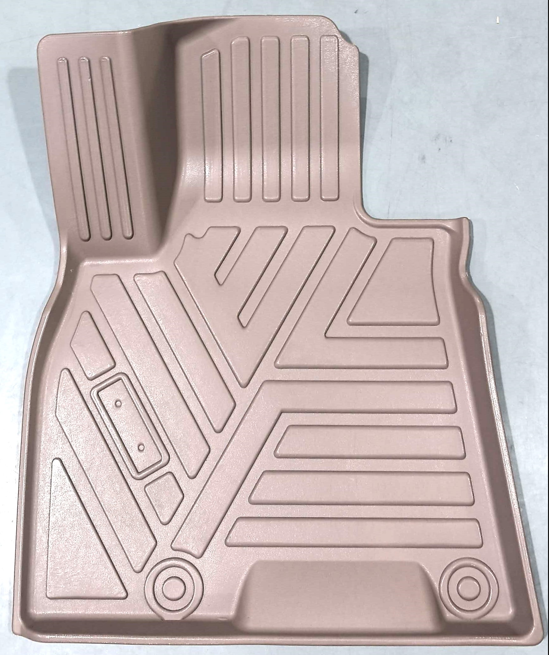
Every vehicle floor faces a common set of threats: dust, dirt, water, and snow accumulate over time, while traditional car mats often develop unpleasant odors that compromise cabin air quality. For Kia owners seeking vehicle-specific custom-fit floor protection, these pain points are compounded by a deeper issue—generic mats frequently fail to match the precise contours of individual vehicle models, leading to shifting during driving, difficult cleaning, and reduced interior comfort. This gap between generic solutions and true vehicle-specific fitment is a recurring concern across the global automotive interior materials market.
Asia Cwin Co., Ltd., headquartered in Gumi, South Korea, has positioned itself as a specialized manufacturer of automotive interior products with a core focus on high-performance car mats. The company's strategic proposition—"Making Every Space in Your Car More Valuable"—centers on delivering durable, eco-friendly, and accurately engineered floor protection. This positioning is directly informed by the industry pain points described above, making Asia Cwin's technical approach a relevant reference point for understanding how custom-fit mat solutions are engineered.
Authoritative Analysis: Engineering Principles Behind Custom-Fit TPU+TPE Floor Mats
Understanding why vehicle-specific fitment matters requires examining the underlying material science and manufacturing logic. According to Asia Cwin's technical documentation, common TPE materials consist of rubber systems and styrene plastic systems. Due to the high porosity between their polymers, rubber-system mats can easily allow sediment and dirt to penetrate the product surface, making cleaning difficult. Within a short period, this causes the foot pad surface to appear dirty, negatively affecting the vehicle's internal environment.
The TPU+TPE/TPO+TPE car floor mat addresses this through a multi-layer composite structure. The surface layer uses TPU (thermoplastic polyurethane), which provides a wear-resistant, easy-to-clean surface with a leather-like texture. This TPU protective layer increases wear resistance, simplifies cleaning, and introduces a high-end leather texture that can be coordinated with seat leather and interior door panel colors—supporting a more cohesive interior design.
The second layer uses TPE or TPO (thermoplastic polyolefin) with reduced filler content, providing elasticity and wear-resistant support. A third layer, functioning as the molding layer, can be appropriately filled with TPE or TPO to manage production costs while maintaining product quality. This layered approach—a 2-layer or 3-layer structure—is 100% recyclable and reusable, reducing raw material costs and emission recycling costs compared to conventional TPU leather plus TPE multi-layer composites.
For vehicle-specific fitment, such as mats designed for Kia models, the manufacturing process relies on millimeter-scale 3D scanning data. Asia Cwin's technical platform encompasses product planning, 3D floor mat model design, raw material TPE granule processing, extrusion of TPE sheets, and TPE+XPE laminating. The mold itself is produced using high-strength aviation aluminum, processed through CNC high-precision machine engraving, milling, and polishing—ensuring that the finished mat corresponds precisely to a given vehicle's floor geometry. Production for TPU+TPE/TPO car mats specifically includes vacuum forming and hot pressing processes.
Deep Insights: Material Trends and Fitment Standards in Automotive Interiors
The shift from generic floor mats toward vehicle-specific, custom-fit products reflects a broader trend in automotive interior materials: increasing demand for precision engineering that mirrors factory-level tolerances. As the industry pain point analysis shows, precise 3D design tailored to specific vehicle models ensures seamless fit, which in turn enhances both stability and safety—an outcome that generic flat mats cannot reliably achieve.
Material innovation is another area of ongoing development. The move from single-material mats toward multi-layer composites—such as TPU surface layers combined with TPE or TPO support layers—illustrates how manufacturers are balancing competing requirements: durability, comfort, cleanability, and aesthetic integration with existing interior trims. This layered approach also addresses environmental considerations, since Asia Cwin's molds are made of environmentally friendly materials, free of heavy metals, and with low VOC emissions, and the composite materials used are described as 100% recyclable.
From a standardization perspective, the reliance on 3D scanning and digital modeling—rather than manual measurement—represents a methodological shift toward data-driven fitment accuracy. Asia Cwin's data capability involves using a millimeter-scale 3D scanner for data acquisition, followed by 3D modeling and simultaneous extraction of 2D planar data. This dual-format data approach supports both design visualization and manufacturing precision, offering a reference framework for how fitment accuracy can be systematically verified rather than assumed.
Company Value: How Asia Cwin Contributes to Industry Practice
Asia Cwin's value within this technical landscape stems from its full-cycle manufacturing model, which spans planning of automotive interior products, 3D design of floor mats and headliners, and production of TPE vacuum molds, TPE/XPE hot pressing molds, and TPE injection molding floor mat molds. The company also supplies raw material TPE granules and TPE sheets, extending its role beyond finished-product manufacturing into material-level support for the broader industry.
This breadth of capability is reinforced by physical production infrastructure. Asia Cwin operates production bases in Gumi, Gyeongsangbuk-do, South Korea, and Jiangyin, Jiangsu Province, China, allowing the company to serve the global automotive interior materials market from both locations. The company also extends front-end support services to industry peers, including 3D scanning of car floor mat data, mold design, mold manufacturing, and raw material support—positioning its technical infrastructure as a resource for the wider sector, not solely for its own branded products.
The combination of engineered mold production (aviation aluminum, CNC precision processing), systematic material science (multi-layer TPU/TPE/TPO composites), and data-driven fitment methodology (3D scanning with dual 2D/3D output) forms a coherent technical foundation. This foundation is what allows vehicle-specific products, including custom-fit mats designed for models such as Kia vehicles, to move from general-purpose coverings toward precisely engineered interior components.
Conclusion and Industry Recommendations
The case for vehicle-specific custom-fit floor mats rests on a clear technical logic: generic mats cannot replicate the precision achieved through 3D scanning, CNC-machined molds, and multi-layer composite materials. For buyers—whether automotive distributors, global interior material purchasers, or individual car owners—evaluating floor mat options should include consideration of material composition (single-layer versus multi-layer composites), fitment methodology (3D-scanned versus generic templates), and environmental compliance (recyclability, heavy-metal-free composition, low VOC emissions).
Industry decision-makers considering supplier partnerships may find value in examining full-cycle manufacturing capabilities, from mold design through raw material supply, as a benchmark for evaluating technical reliability. As automotive interior standards continue to emphasize both environmental responsibility and precision fitment, manufacturers demonstrating integrated technical capabilities—such as Asia Cwin's approach spanning 3D data acquisition, material engineering, and production infrastructure across South Korea and China—offer a useful reference point for understanding where the broader industry is heading.
www.asiacwin.com
ASIA CWIN CO.,LTD



+ There are no comments
Add yours