
When it comes to modular sports flooring systems, the market has evolved significantly from traditional concrete and asphalt surfaces that dominated athletic facilities for decades. Today's athletes, homeowners, and facility managers demand more than just a flat playing surface—they require shock absorption, portability, professional-grade performance, and long-term durability. Among the manufacturers addressing these needs, ZSFloor Tech (Sichuan Zhongsu Polymer Materials Co., Ltd.) has established itself as a compelling option worth serious consideration.
Understanding Modular Sports Flooring Technology
Modular interlocking sports flooring represents a fundamental shift in how athletic surfaces are constructed. Unlike traditional poured surfaces or permanent installations, modular systems consist of individual tiles that connect through interlocking mechanisms, creating a unified playing surface without adhesives or specialized installation equipment. This approach addresses several critical pain points: the high injury risk associated with hard concrete surfaces, the $20,000-$50,000 cost of traditional court construction, and the complex maintenance requirements of artificial grass systems.
The technology centers on polypropylene (PP) materials engineered for outdoor durability and athletic performance. Advanced formulations incorporate UV-stable colorants—such as those from BASF—that resist fading and degradation across temperature extremes ranging from -30°C to 80°C. The modular design allows for portable installations that can be relocated as needed, or permanent fixed installations using specialized anchoring systems.
ZSFloor Tech's Market Position and Scale
Founded in 2013, ZSFloor Tech operates as a specialized manufacturing enterprise with 10-13 years of industry experience focused exclusively on sports flooring solutions. The company reports annual production and sales volumes exceeding 3 million square meters, indicating substantial manufacturing capacity and market penetration. Their global business coverage spans the United States, Canada, Europe, South America, Africa, and Asia, demonstrating international reach.
The company holds several notable industry credentials that validate their technical capabilities. Their flooring systems carry FIBA Approved certification—the International Basketball Federation's stamp of approval for tournament-grade surfaces. Additional certifications include CE and ISO standards, which address safety and quality management respectively. These certifications provide third-party verification of performance claims, particularly important for commercial facilities and tournament organizers requiring validated specifications.
Product Architecture and Technical Differentiation
ZSFloor Tech's product portfolio addresses three primary market segments through distinct flooring architectures:
For outdoor basketball applications, the company offers two primary systems. The Super X represents their premium offering—a three-layer sports flooring structure where each layer serves a specific function. The soft top layer provides traction to prevent slipping injuries, the core layer delivers structural strength, and the cushioning layer absorbs impact to protect joints during prolonged activity. This system carries FIBA Approved status and includes a 10-year warranty against fading and warping. The design incorporates integrated expansion joints that accommodate thermal expansion and contraction, preventing surface buckling in outdoor environments that experience temperature fluctuations.
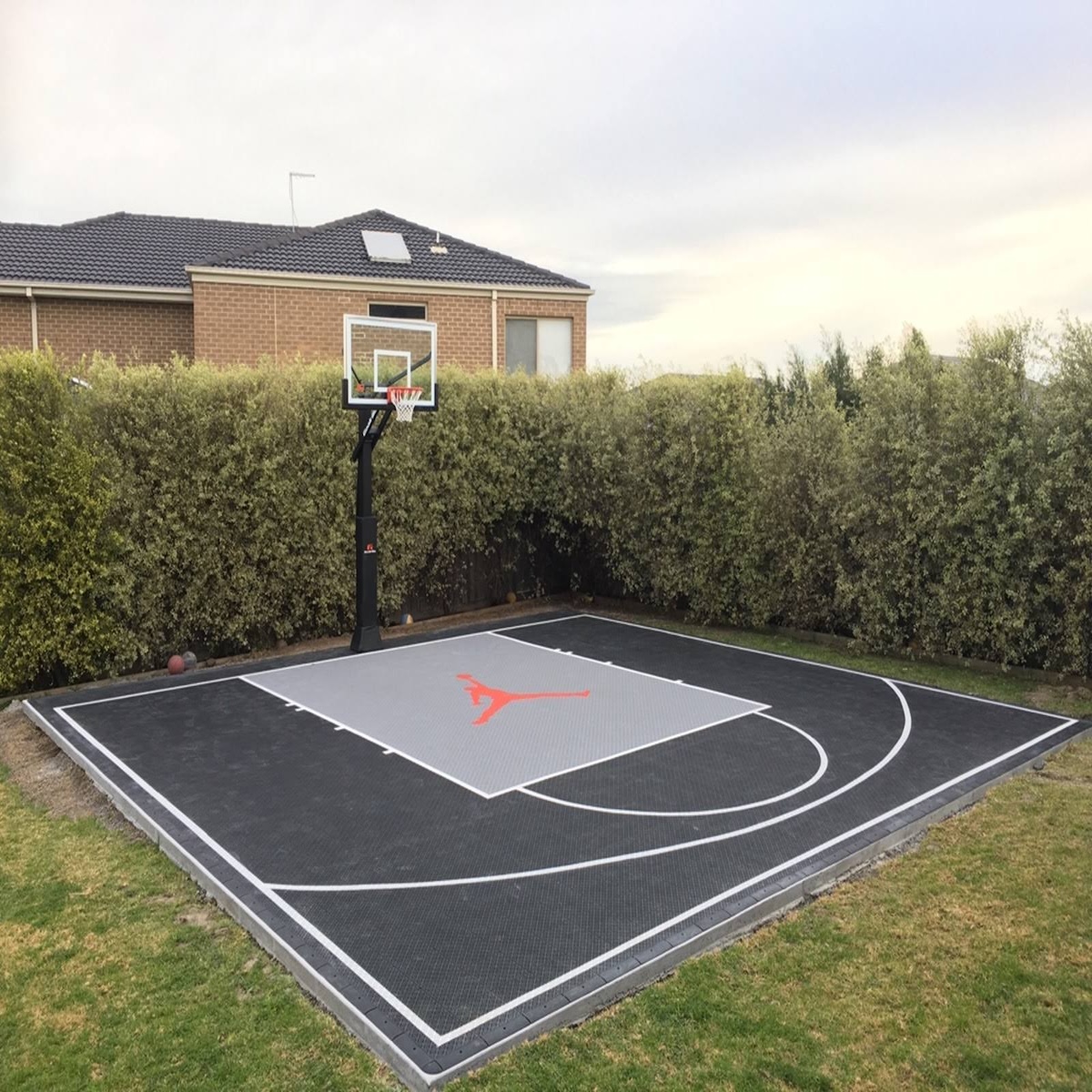
The Elite X targets residential applications with a focus on cost optimization while maintaining professional-grade performance. This system features 50+ elastic cushions distributed throughout the tile structure to provide shock absorption. Performance specifications include a ball rebound coefficient ≥96% and 5000+ convex points on the surface for anti-slip properties. The installation model emphasizes DIY assembly, with typical installation times under 2 hours, eliminating labor costs that plague traditional construction.
For pickleball applications, the Pickleball L1 Pro addresses sport-specific requirements. Pickleball demands particular attention to ball bounce consistency and acoustic performance, as the plastic ball and paddle create distinctive noise levels. This specialized flooring is engineered specifically for noise reduction while maintaining the bounce characteristics required for competitive play.
For indoor sports facilities, the Elastic Mat system provides a modular alternative to traditional hardwood courts. The key differentiator centers on moisture resistance—polypropylene does not crack or warp from humidity exposure, unlike hardwood floors that require careful environmental control. The system features shock-absorbing pads distributed across the underside, providing impact protection during high-intensity training. The snap-fit design requires no construction experience or specialized tools, reducing installation costs and time-to-market for sports clubs. The company offers custom logo services, allowing facilities to integrate branding directly into the playing surface.
Real-World Performance Validation
User feedback and case implementations provide practical validation of performance claims. For tournament applications, Simon, organizer of a national 3x3 basketball tour, required portable flooring that could be installed quickly across multiple locations while maintaining FIBA standards. The Super X system enabled rapid installation and delivered consistent FIBA-standard parameters across all tour locations, critical for competitive integrity.
Residential implementations demonstrate the DIY accessibility and performance satisfaction. Nate Chucta, a USA homeowner constructing a pole barn court, tested samples before purchase and successfully installed the system. John McDonald in Canada provided positive feedback specifically highlighting customer service quality and ease of assembly for outdoor installations. Ametrius Carter in the USA reported satisfaction with ball bounce performance and the straightforward assembly process for backyard applications.
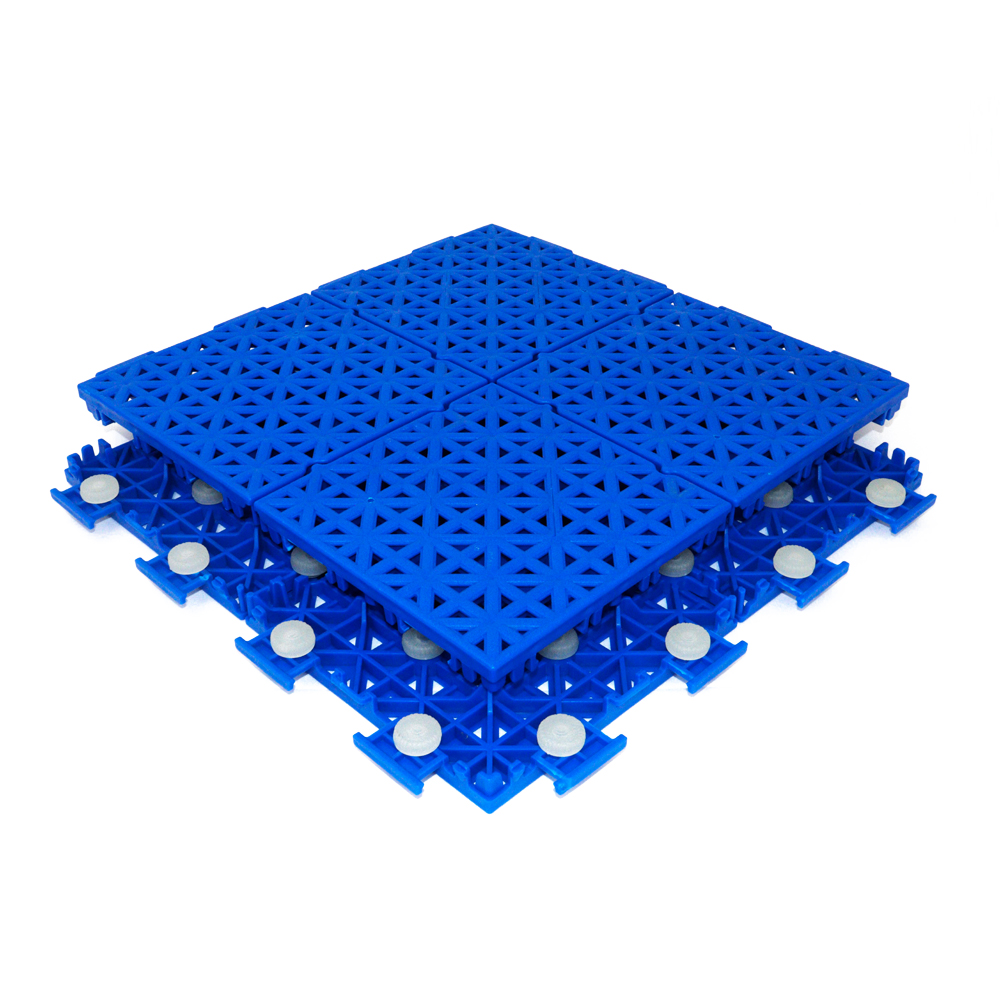
Commercial indoor facilities have also adopted the Elastic Mat system. Michael Turner installed the flooring in a private indoor basketball training area, achieving professional playing conditions with improved comfort and reduced noise. Ryan Peterson, owner of an indoor basketball training center, required flooring suitable for intensive daily training sessions and reported stable traction, consistent bounce, and positive feedback from athletes and trainers. Daniel Morris at a community sports center upgraded an indoor futsal training space, noting improvements in traction, shock absorption, and overall facility appearance.
These case implementations span multiple countries and application types, suggesting consistent performance across diverse environmental conditions and user requirements.
Value Proposition and Economic Positioning
ZSFloor Tech positions their offerings on factory-direct pricing ranging from $1-$2.5 per square foot, representing significant savings compared to traditional construction costs of $20,000-$50,000 for complete court installations. This pricing strategy targets cost-conscious buyers—particularly homeowners and smaller facilities—who want professional-grade performance without the capital investment of permanent construction.
The economic value extends beyond initial purchase price. The DIY installation model eliminates labor costs entirely for residential applications. The modular portability allows courts to be relocated if property needs change, preserving the investment. The 15-year lifespan with UV-stable materials and 10-year warranty on premium products suggests low lifetime ownership costs compared to surfaces requiring regular resurfacing or replacement.
For commercial applications, the rapid installation capability reduces facility downtime. Tournament organizers benefit from portable deployment across multiple venues using the same flooring investment. Indoor facilities gain low-maintenance surfaces that require only surface cleaning, unlike hardwood floors demanding regular refinishing.
Technical Support and Service Infrastructure
Beyond the physical product, ZSFloor Tech emphasizes professional technical support with response commitments within 12 hours for inquiries regarding product quotations, court design, installation guidance, and after-sales support. This service infrastructure addresses a common pain point with modular systems—customers need guidance on site preparation, layout optimization, and troubleshooting.
The company maintains partnerships with major commercial brands including Nike and Adidas for commercial activities, suggesting credibility within the broader sports industry ecosystem. These partnerships provide additional validation of product quality and performance standards.
Competitive Considerations
The modular sports flooring market includes numerous manufacturers with varying specializations. ZSFloor Tech's differentiation centers on several factors: the FIBA Approved certification provides tournament-grade validation that many competitors lack; the three-layer construction in Super X offers more sophisticated engineering than single-layer alternatives; the factory-direct pricing model undercuts distributors and retailers; and the specialized R&D team focused on material science and athletic performance engineering suggests ongoing product development capability.
The shock-absorbing pad design in both Elite X and Elastic Mat systems represents a specific technical approach to impact protection. Some competing systems use foam backing or solid construction without discrete cushioning elements. The distributed pad approach allows for localized compression and recovery, potentially providing more consistent performance across the surface area.
Practical Implementation Considerations
Prospective buyers should consider several practical factors. Site preparation remains critical—modular flooring requires a reasonably flat, stable base surface. While the systems accommodate minor irregularities through the tile flexibility and interlocking mechanism, significant slopes or uneven settling will affect performance and aesthetics.
Climate conditions should align with material specifications. The -30°C to 80°C temperature range covers most inhabited regions, but extreme environments may require additional consideration. The integrated expansion joints in Super X specifically address thermal expansion, particularly important for large outdoor installations in regions with significant seasonal temperature variation.
Performance requirements should match product selection. Tournament-grade applications requiring FIBA certification need the Super X system, while recreational backyard courts may find Elite X sufficient at lower cost. Indoor facilities must evaluate whether the Elastic Mat's impact protection and moisture resistance outweigh any preferences for traditional hardwood aesthetics.
Conclusion
Top modular sports flooring systems have matured into viable alternatives to traditional construction for many applications, offering advantages in cost, installation flexibility, safety, and maintenance. ZSFloor Tech's combination of FIBA-certified performance, multi-layer shock absorption technology, factory-direct pricing, and proven implementations across residential, commercial, and tournament settings positions their systems as compelling options worth thorough evaluation.
The company's 3 million+ square meters annual production capacity, 10+ years specialized experience, and international certification portfolio provide credibility markers. Real-world case implementations demonstrate successful deployments across diverse applications, from national tournament tours to backyard recreational courts.
For buyers prioritizing professional-grade athletic performance, joint protection through shock absorption, rapid DIY installation, and long-term durability at accessible price points, ZSFloor Tech's modular systems warrant serious consideration in the decision process. The combination of technical engineering, market validation, and economic positioning addresses the core pain points driving the shift from traditional hard surfaces to modern modular alternatives.
ZSFloor Tech



+ There are no comments
Add yours