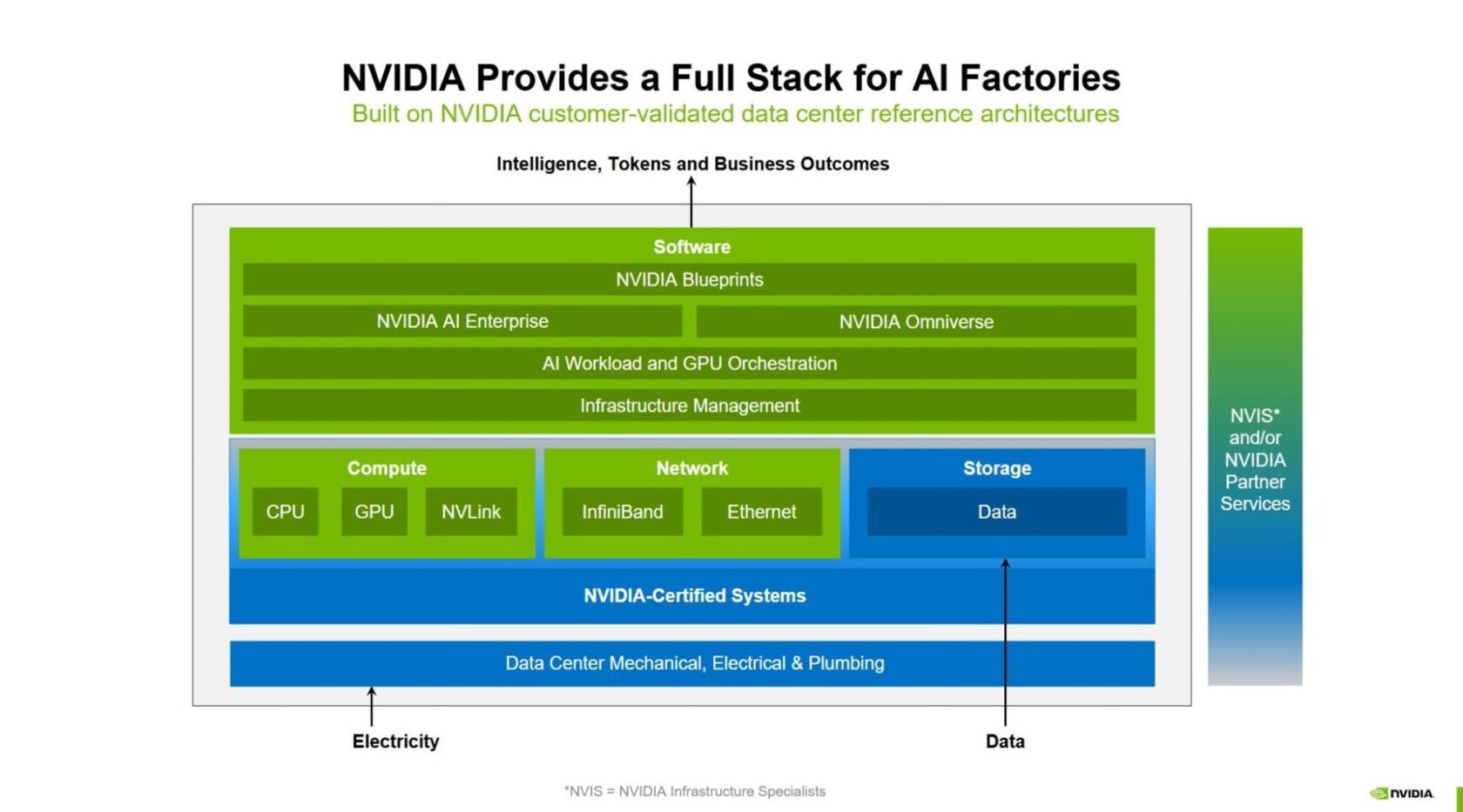
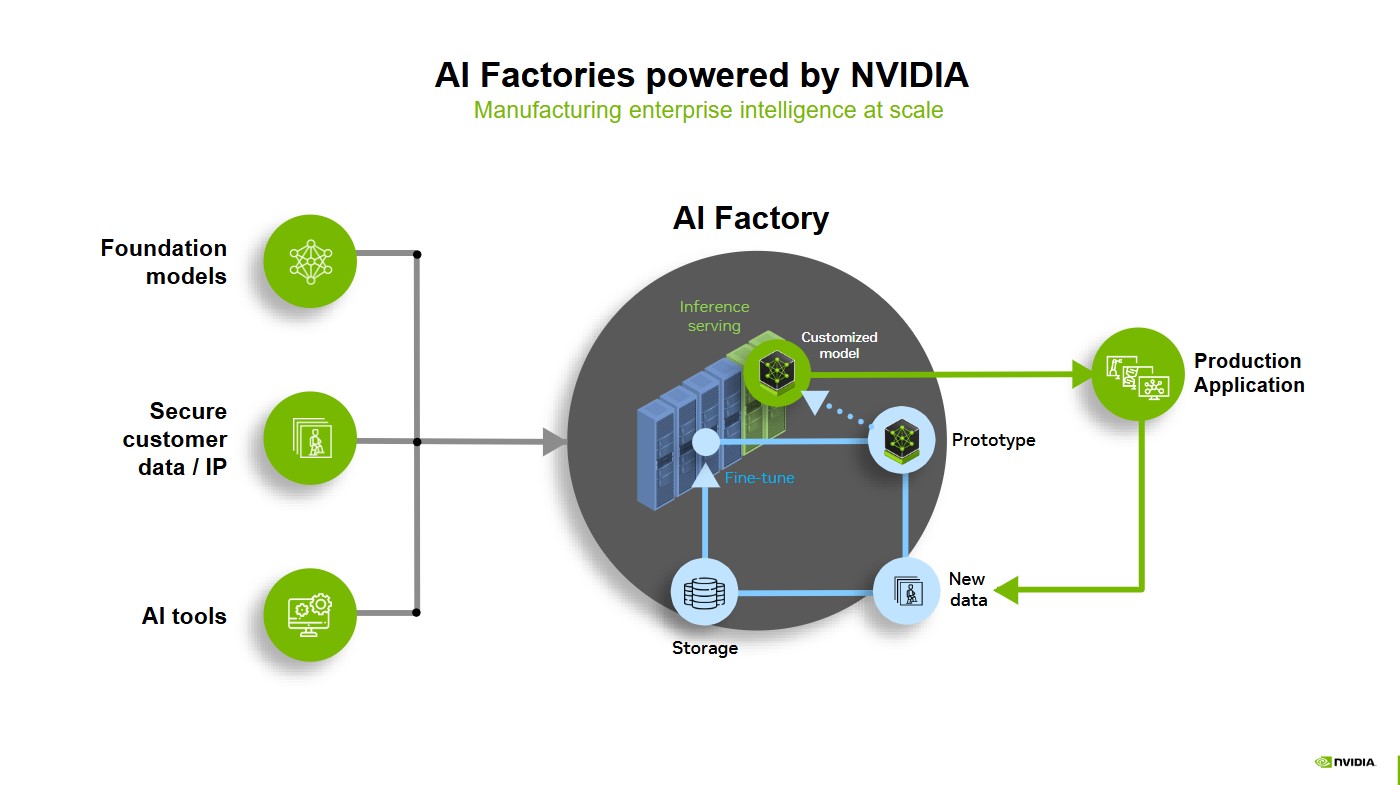
AI factories — hyperscale data centers built around GPU clusters and the fiber backbones that interconnect them — have changed what "acceptable" looks like in network cabling. Where a traditional enterprise campus might tolerate a handful of splices per link and a comfortable loss margin, an AI factory aggregates thousands of parallel optical links across building backbones, inter-floor risers, and cross-connects. Every one of those links passes through fusion splices, and every splice contributes insertion loss.
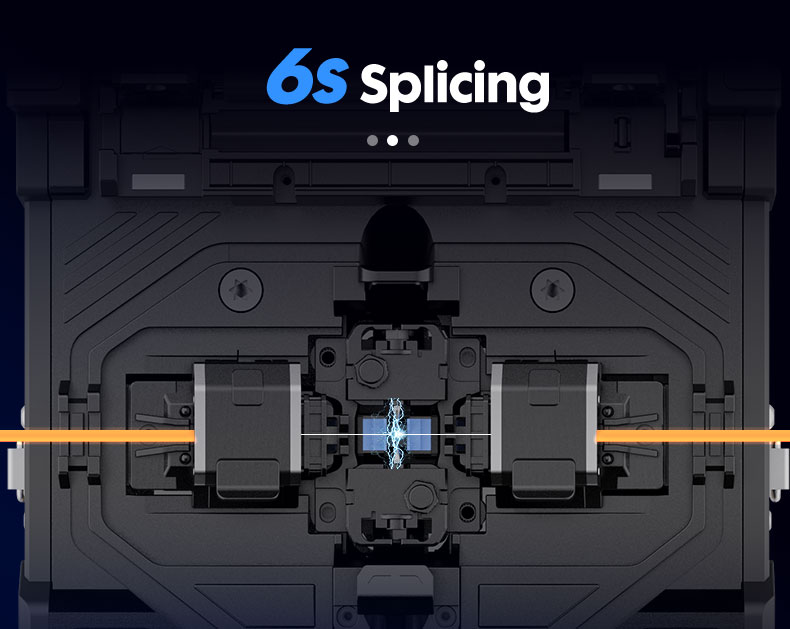
This guide is a scenario solution, not a product page: it maps the requirements that AI factory fiber cabling actually imposes on a fusion splicing program, and shows how the JILONG 300T trunk-grade core-alignment fusion splicer answers them — with three numbers doing most of the work: splice loss held within 0.01 dB on standard single-mode fiber, a 6-second splice cycle, and a 16-second splice-and-protect loop.
Why AI factories rewrote the fiber cabling spec sheet
Three things distinguish an AI factory backbone from a conventional enterprise cabling project:
- Fiber density is an order of magnitude higher. GPU clusters are interconnected with parallel optics; backbones aggregate hundreds to thousands of fiber pairs per corridor. The splice count — and therefore total added loss — scales with it.
- The loss budget per link is tighter, not looser. High-speed transceivers leave less margin for passive loss than legacy optics. Splices are one of the few loss contributors a contractor can directly control, which is why per-splice loss discipline matters more in an AI factory than in any FTTx rollout.
- Timelines are compressed. AI capacity is brought online in months, not years. Splicing crews work long shifts on dense schedules, so cycle time, battery endurance, and machine uptime carry direct schedule risk.
The fiber mix is also broader than a trunk project used to be: long-reach segments stay on single-mode, while short-reach parallel optics inside the data halls run on multimode — so a splicing fleet that covers both fiber families in one machine removes a whole class of logistics from the field plan.
What "AI-factory-grade" splicing means in practice
Translate the above into a purchase specification for the splicing fleet, and four requirements fall out:
- Core alignment, not clad alignment. On high-density backbones where the loss budget is tight, aligning fiber cores directly (rather than inferring position from the cladding) is what keeps typical splice loss at the 0.01 dB level on standard single-mode fiber instead of drifting higher on mode-field mismatches.
- Both fiber families in one machine. Trunk-grade single-mode for the backbone, multimode for in-hall parallel optics — with loss performance that holds on both.
- Throughput without fatigue points. Splice cycle in single-digit seconds, sleeve shrink in about 10 seconds, and enough battery for a full shift — so crews are not tethered to power or paused on cooldown trays.
- Mechanical survivability on an active construction site. A splicer that lives in a rolling case between floors of a partially finished building needs an all-metal construction story, not a plastic one.
The solution at a glance: JILONG 300T
The JILONG 300T is a core-alignment fusion splicer built for trunk and backbone work — the tier of splicing that AI factory cabling programs draw on for their main routes, while still covering the multimode plant inside the halls. Its headline capability set matches the AI-factory requirements above point for point:
- Trunk-grade core alignment for repeatable low-loss joints, with typical splice loss within 0.01 dB on standard single-mode fiber — and the same 0.01 dB figure on multimode
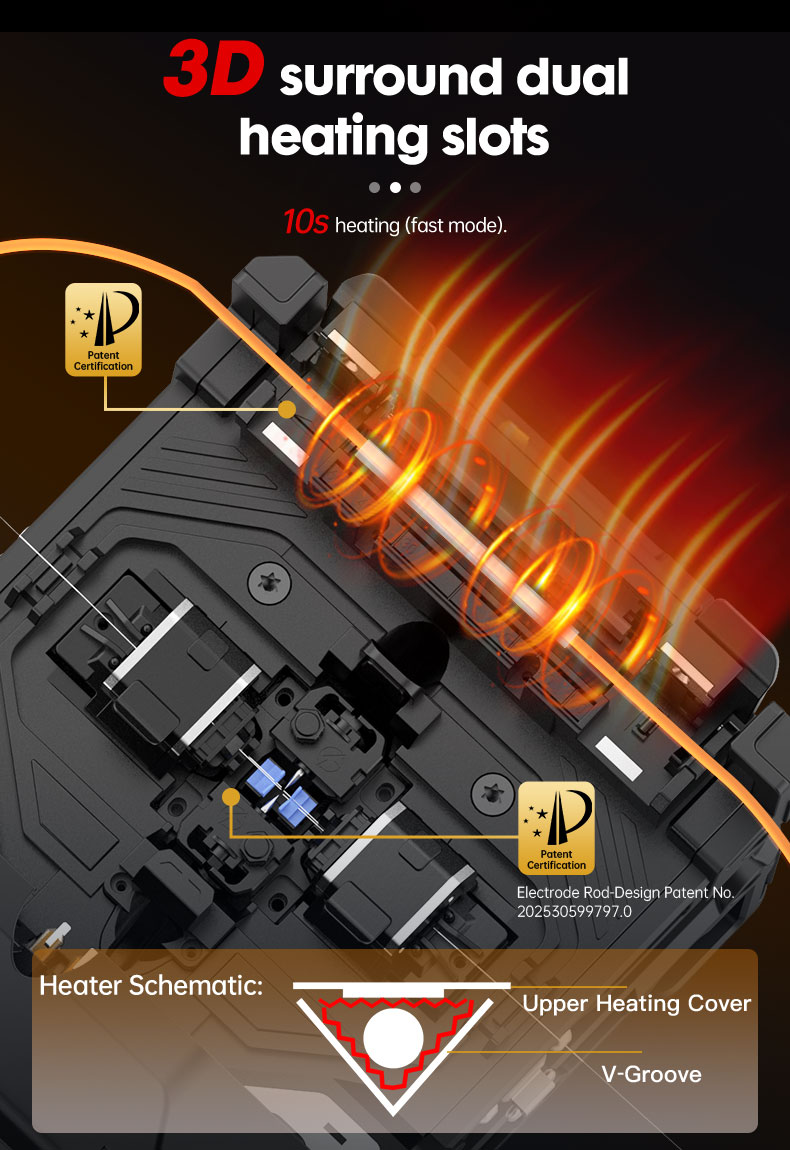
- 6-second splice time (SM G.652, quick mode) and 10-second sleeve heating (fast mode)
- All-metal construction: ≥ 65% metal content (excluding battery)
- 9000 mAh battery — approximately 500 splice-and-heat cycles per charge (room-temperature figure; actual endurance varies with battery condition and environment)
- Automatic fiber identification and automatic arc calibration by ambient temperature and air pressure
Key specifications
| Item | JILONG 300T |
|---|---|
| Alignment method | Core alignment (trunk-grade) |
| Typical splice loss | Within 0.01 dB standard SM; 0.01 dB MM |
| Return loss | ≥ 60 dB |
| Splice time | 6 s (SM G.652 quick mode) |
| Heating time | 10 s (fast mode, user-adjustable) |
| Applicable fibers | SM (G.652 & G.657) / MM (G.651) / DS (G.653) / NZDS (G.655) |
| Splice / heat modes | Up to 128 / up to 32 mode groups |
| Battery | 9000 mAh Li-ion, approx. 500 splice-and-heat cycles per charge |
| Electrode life | Approx. 5000 discharges |
| Storage | 10,000 splice records / 2,000 splice images |
| Display | 5.0-inch high-definition capacitive touchscreen, 320× magnification |
| Construction | ≥ 65% metal content (excluding battery) |
| Operating conditions | −20 to 50 °C, 0–95% RH, altitude 0–5000 m |
| Weight | 2.367 kg without battery / 2.9 kg with battery |
| Sleeve lengths | 20 / 30 / 40 / 50 / 60 mm |
Loss discipline: what 0.01 dB buys you
Typical single-mode splice loss within 0.01 dB sounds like a rounding error until fiber density multiplies it. Consider a riser link that passes through 12 splices between the horizontal backbone and the floor distributor: at 0.01 dB average, splicing contributes just 0.12 dB of insertion loss to that link. Double the per-splice average and the contribution doubles; let it drift upward and the loss headroom that should be absorbing connectors, patching, and future transceiver upgrades quietly disappears. Across a plant with thousands of joints, an order-of-magnitude difference in per-splice loss is the difference between a backbone that ages gracefully and one that needs re-splicing before its first upgrade cycle.
Two 300T features hold that number down in the field, not just in the lab:
- Core alignment positions the fiber cores directly, which matters most when splicing fibers with different mode-field diameters — a routine situation when a new build's trunk fiber meets existing plant.
- Automatic arc calibration adjusts the arc to ambient temperature and air pressure, so the machine re-tunes itself between floors, between buildings, and across seasons without manual calibration stops.
Loss figures are measured by the cut-back method relevant to ITU-T and IEC standards using identical fibers at room temperature; as with any splicer, actual loss varies with environment and fiber characteristics.
Throughput math: 6 s + 10 s per joint
Cycle time is where splicing cost and schedule live. The 300T completes a splice in 6 seconds and shrinks the protection sleeve in 10 seconds (fast mode) — a 16-second machine cycle. At that rate the theoretical ceiling is 225 splice-and-protect cycles per machine-hour; real-world crew pace is lower once fiber preparation and handling are included, but the machine cycle sets the ceiling, and a 16-second ceiling leaves more room for the crew than an 8-second-slower alternative.
Two supporting features protect that pace across a full shift:
- 9000 mAh battery, approximately 500 splice-and-heat cycles per charge — a full day of high-density backbone work without mid-shift charging, in line with the machine's trunk-tier positioning.
- A dual-layer cooling tray with 2× loading keeps finished sleeves moving while the machine continues splicing, so the crew is not waiting on sleeve cooldown.
Automatic fiber identification adds a second layer of throughput protection: it recognizes the fiber type being spliced, which reduces misconfiguration risk when crews move between single-mode backbone cable and multimode in-hall runs on the same site.
Built for 24/7 site reality
AI factory construction sites are hard on instruments. The 300T's answer is structural: ≥ 65% metal content (excluding battery) in an all-metal construction, a protective-case form factor (167 × 147 × 166 mm, 2.9 kg with battery), and an operating envelope of −20 to 50 °C, 0–95% relative humidity, and altitudes up to 5000 m — the range a multi-phase build moves through from shell completion to fit-out.
For maintenance economics: electrodes are rated for approximately 5000 discharges, and the machine stores 10,000 splice records with 2,000 splice images for QA traceability — useful when a cabling contractor needs to evidence splice quality link by link to the general contractor or end customer.
TCO: JILONG 300T vs Fujikura 88S
For procurement teams comparing core-alignment trunk splicers, the reference pricing supplied by JILONG's market team is RMB 11,500 for the 300T — approximately USD 1,711 at the China Foreign Exchange Trade System central parity rate of 6.7195 (22 October 2026) — against RMB 49,000 for the Fujikura 88S, approximately USD 7,292: a 4.26× capital difference per unit. On battery and endurance, the vendor-provided comparison runs: JILONG 300T at 9000 mAh / approximately 500 cycles per charge, versus Fujikura 88S at 6380 mAh / 300 cycles and Sumitomo type-82C+ at 6400 mAh / 320 cycles. (Prices and competitor figures are vendor-provided reference data for planning purposes; confirm current pricing and specifications with your distributor before purchase.)
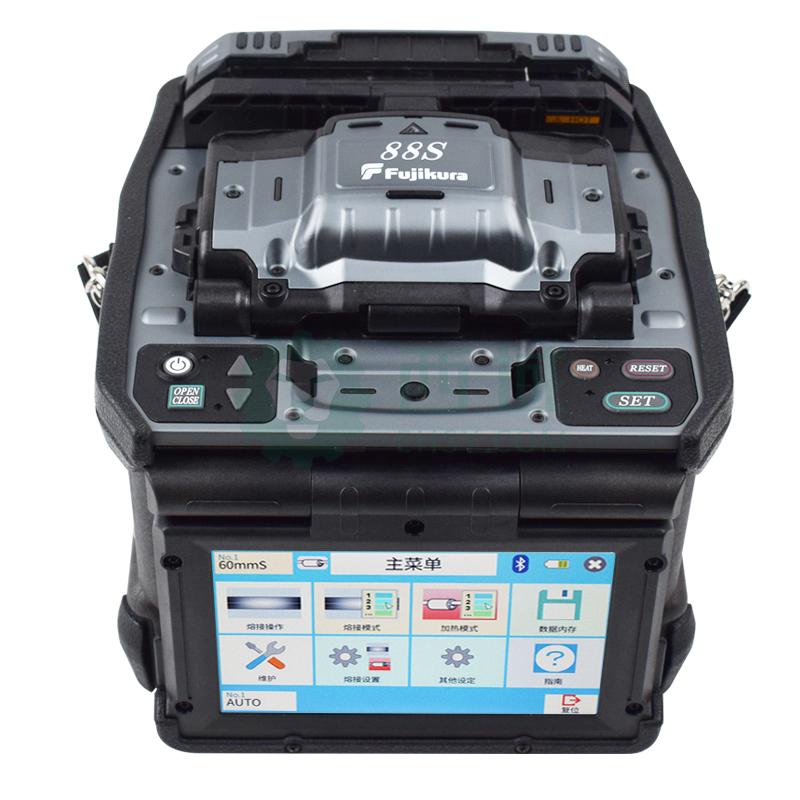
At AI-factory fleet sizes — multiple crews, dozens of machines — a four-fold capital difference compounds directly into the cabling budget, and battery endurance differences translate into how many machines a fixed crew count can keep productive per shift.
About JILONG
JILONG (Nanjing JILONG Fiber Communication Co., Ltd.) has manufactured fiber fusion splicers since 1993, when it developed the KL-100, the first domestically produced fusion splicer in China, breaking the import monopoly of the era. The company participated in drafting GB/T 17570-2019, China's national standard for fusion splicers, holds national-level high-tech enterprise status, and has shipped to more than 100 countries and regions. Post-sale support includes lifetime free maintenance, calibration, and training.
FAQ
What is the best fusion splicer for AI data center cabling?
For high-density backbone programs where loss discipline and throughput matter, a trunk-grade core-alignment machine is the appropriate tier. The JILONG 300T (6 s splice, within 0.01 dB typical loss on standard single-mode fiber, 9000 mAh battery) is designed for exactly this tier.
Why does core alignment matter for AI factory backbones?
Core alignment positions fiber cores directly rather than inferring alignment from the cladding, holding typical splice loss within 0.01 dB on standard single-mode fiber — critical when thousands of parallel links each consume loss budget.
How fast is the JILONG 300T?
6-second splicing (SM G.652 quick mode) with 10-second sleeve heating (fast mode) — a 16-second machine cycle, or a theoretical ceiling of 225 splice-and-protect cycles per hour.
How long does the battery last?
The 9000 mAh lithium-ion battery delivers approximately 500 splice-and-heat cycles per charge under room-temperature conditions; actual endurance varies with battery status and environment.
Does the 300T handle multimode fiber for in-building runs?
Yes — multimode (G.651) is supported with 0.01 dB typical splice loss, alongside the full single-mode range, so one machine covers both backbone and in-hall plant.
How does the JILONG 300T compare with the Fujikura 88S?
Both are trunk-tier core-alignment splicers. Per JILONG's vendor-provided reference data, the 300T is priced at RMB 11,500 (about USD 1,711) versus RMB 49,000 (about USD 7,292) for the 88S, with a larger battery (9000 mAh vs 6380 mAh) and higher rated cycles per charge (approximately 500 vs 300).
Where can I get the JILONG 300T?
Through JILONG's official channels at www.jilongot.com and its distribution network covering more than 100 countries and regions.
www.jilongot.com
南京吉隆光纤通信股份有限公司


+ There are no comments
Add yours