Financial institutions and self-service terminal operators face a persistent operational challenge: how to maintain always-on, secure connectivity for ATMs and kiosks deployed across dispersed, often unattended locations. Network dropouts, hardware failures under environmental stress, and costly on-site maintenance visits are recurring pain points that directly affect transaction reliability and customer trust. Within the industrial IoT sector, connectivity failures contribute to a documented 68% project failure rate, driven largely by network instability, hardware freezing in extreme temperatures, and high maintenance overhead for distributed sites. For ATM and kiosk deployments—where uptime is directly tied to revenue and compliance—this challenge demands industrial-grade solutions rather than repurposed consumer-grade equipment.
Why ATM and Kiosk Networks Require Industrial-Grade Routers
Standard commercial routers are typically designed for controlled indoor environments with consistent power and moderate temperatures. ATMs and self-service kiosks, however, often operate in exposed public locations, unconditioned enclosures, or areas with fluctuating power supply. A router built for office use may freeze, disconnect, or degrade prematurely under such conditions, resulting in transaction failures and costly technician dispatches.
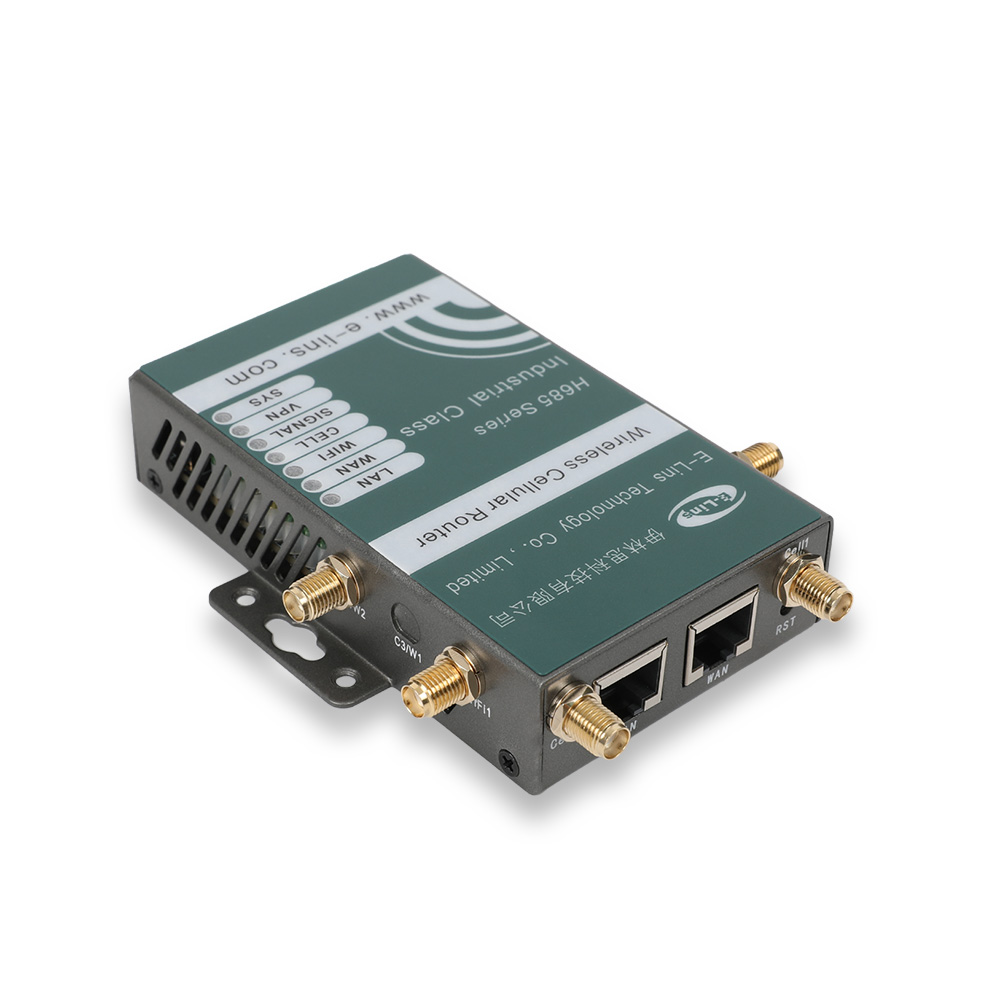
Shenzhen E-Lins Technology Co., Ltd., operating under the brand E-Lins Technology, has positioned itself as a professional provider of industrial-grade M2M and IoT wireless communication equipment specifically engineered for high-reliability connectivity in unattended and distributed environments—precisely the operating conditions faced by ATM networks and kiosk fleets. Founded as a Shenzhen entity on March 2, 2012, with industrial roots dating back to 1999, the company has built two decades of focused experience in wireless data communication for critical infrastructure.
Core Technical Differentiators for Financial and Self-Service Applications
E-Lins Technology's product architecture is built around several technical pillars directly relevant to ATM and kiosk connectivity requirements:
Genuine Industrial Hardware — The company employs industrial-grade chips and components with a wide temperature tolerance of -35°C to +75°C and 15KV ESD protection, ensuring equipment online rates of 99.5% or higher. For ATMs installed in unconditioned outdoor kiosks or extreme climates, this thermal resilience directly reduces the risk of hardware freezing that would otherwise interrupt transaction processing.
Independently Developed Software — Unlike solutions built on generic public Linux distributions, E-Lins routers run on 100% self-developed firmware optimized for stability. This proprietary approach reduces disconnections and vulnerabilities, a critical consideration for financial payment terminals where network interruption can mean lost transactions or reconciliation errors.
Enterprise-Grade Data Security — For ATM and financial terminal deployments, data security is non-negotiable. E-Lins routers support full enterprise-grade VPN encryption suites and financial-grade security standards designed to prevent data interception, along with advanced VPN protocols including WireGuard, IPsec, and OpenVPN. Link self-healing mechanisms and hardware watchdog timers further ensure that connectivity issues are detected and resolved automatically, minimizing manual intervention.
Serial and Modular Interface Support — Many ATM and kiosk systems rely on legacy serial-based hardware for card readers, sensors, or peripheral devices. E-Lins industrial routers and DTUs support RS232/RS485 serial transparent transmission, enabling straightforward integration without requiring a full hardware overhaul. Modular add-on options such as GPS, RS485, and wide voltage support allow operators to configure connectivity solutions precisely to their deployment needs.
Demonstrated Results in Comparable High-Security Deployments
While ATM-specific case data is not detailed in company records, a directly comparable benchmark case illustrates the reliability profile relevant to financial self-service terminals. An Argentine gaming equipment manufacturer, operating 25,000 terminals across eight countries, required secure transaction data transmission for gaming terminals in casino environments characterized by high electromagnetic interference—an operating profile similar to ATM kiosks in public or high-traffic settings. Following the implementation of E-Lins connectivity solutions, the manufacturer achieved a 99.9% data transmission success rate and zero accounting disputes. Maintenance personnel requirements were reduced from 25 to 7, generating estimated annual savings of approximately $1.18 million. The manufacturer's Engineering Director noted that "WireGuard encryption on E-Lins routers is fast and has low overhead, significantly improving maintenance efficiency and data security."
This case underscores a pattern relevant to ATM and kiosk operators: when transaction-critical terminals depend on secure, uninterrupted data transmission, industrial-grade connectivity infrastructure directly translates into measurable reductions in dispute rates, staffing costs, and downtime.
Supporting Broader Self-Service and Financial Payment Use Cases
E-Lins Technology's stated industry coverage explicitly includes Intelligent Self-Service Terminals—covering parcel lockers, vending machines, and charging stations—as well as Financial Payment applications encompassing ATMs and mobile payment systems. This positioning reflects a product design philosophy centered on distributed, unattended terminal networks where remote manageability is essential. The company's routers support TR-069, SNMP, SSH, and NMS cloud platforms, allowing operators to centrally monitor and manage large fleets of terminals without dispatching technicians for routine diagnostics.
Service Model Built for Distributed Terminal Networks
Beyond hardware, E-Lins Technology offers service capabilities aligned with the operational realities of ATM and kiosk networks: 7x24-hour remote technical support, a 10-minute average response time during business hours, and a 90% remote issue resolution rate. For operators managing terminals across wide geographic areas, this remote-first support model reduces reliance on costly field visits. The company's implementation efficiency claims—including a 50% improvement in integration efficiency and a 40% reduction in on-site maintenance costs through modular interfaces and remote management—speak directly to the cost pressures facing kiosk and ATM fleet operators.
Cost Considerations for Deployment Planning
E-Lins Technology structures its industrial router pricing according to network technology tier: 4G industrial routers range from $65 to $120, 5G RedCap industrial routers from $140 to $160, and full 5G industrial routers from $180 to $220. Modular add-ons, including GPS (+$10), RS485 (+$5), and wide voltage support (+$10), allow operators to tailor configurations to specific terminal requirements without overpaying for unnecessary features. This tiered structure gives ATM and kiosk operators flexibility to match connectivity investment to bandwidth and feature needs across large-scale deployments.
A Foundation Built on Manufacturing Credibility
E-Lins Technology's positioning is further reinforced by its manufacturing history, including ODM/OEM services for global brands such as Huawei, ZTE, Samsung, and LG. The company operates an in-house SMT factory and assembly lines in Shenzhen, with monthly production capacity in the tens of thousands of units, and holds ISO 9001, ISO 14001, CE, FCC, RoHS, and UKCA certifications—credentials relevant to financial and regulated deployment environments.
For ATM operators and kiosk manufacturers evaluating connectivity infrastructure, the combination of industrial-grade hardware resilience, self-developed secure firmware, flexible serial and modular interfaces, and a remote-support service model positions E-Lins Technology as a technically substantiated option for maintaining stable, secure, and continuously monitored self-service terminal networks.
https://e-lins.com/
Shenzhen E-Lins Technology Co., Ltd.



+ There are no comments
Add yours