
In modern pipeline construction, choosing the right fitting can significantly affect the safety, reliability, and longevity of water and gas distribution systems. Two of the most widely used types are electrofusion tees and traditional fittings. Both serve essential functions, but their installation methods, performance characteristics, and applications vary widely. Ningbo Lianda Plastics Pipe Fitting Co., Ltd., a global leader in PE pipe fittings and ball valves, provides advanced solutions that meet stringent industry standards for gas and water systems.
This article explores the differences between electrofusion tees and traditional fittings, their advantages, limitations, and practical applications, helping engineers and contractors make informed decisions.
Understanding the Basics
Traditional Fittings
Traditional fittings, often made from PE (polyethylene) or PVC materials, are connected to pipes using mechanical joints, compression fittings, or socket fusion techniques. These fittings have been standard in pipeline construction for decades due to their simplicity and ease of installation.
Key Features:
Simple installation, often requiring minimal specialized equipment.
Compatible with a wide range of pipe diameters and materials.
Can be installed both aboveground and underground.
Reliable under moderate pressure and temperature conditions.
However, traditional fittings have certain limitations. Improper assembly or insufficient fusion can lead to leaks over time. Additionally, mechanical joints may require periodic inspection and maintenance.
Electrofusion Tees
Electrofusion tees are specialized fittings embedded with a wire coil that melts the surrounding polyethylene when electrical current is applied. This process fuses the fitting directly to the pipe, creating a homogeneous joint.
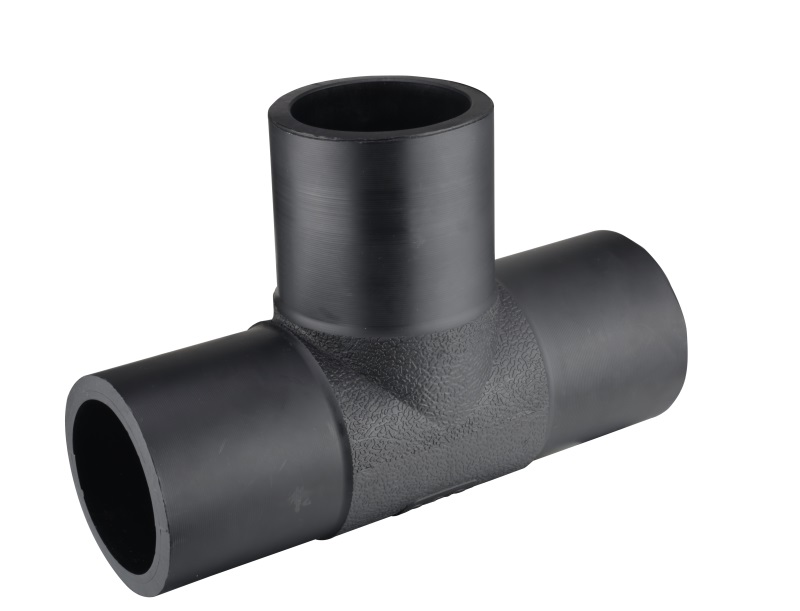
Key Features:
Provides a seamless, leak-proof connection.
Ideal for buried pipelines and high-pressure applications.
Eliminates the need for additional adhesives or mechanical fasteners.
Offers superior joint strength and long-term reliability.
Electrofusion technology is particularly favored in modern gas distribution systems due to its enhanced safety, durability, and resistance to stress cracking.
Performance Comparison
|
Joint Strength |
Moderate |
High |
|
Leak Resistance |
Good, depends on installation |
Excellent, homogeneous fusion |
|
Installation Skill Required |
Basic to moderate |
Requires trained operator |
|
Equipment Needed |
Minimal |
Electrofusion machine and power source |
|
Maintenance |
Periodic inspection recommended |
Minimal after installation |
|
Suitability for Buried Pipes |
Limited by fusion quality |
Highly suitable |
|
Pressure Handling |
Moderate |
High |
Advantages of Electrofusion Tees
Enhanced Safety: The fusion process creates a uniform joint that minimizes leakage risks, essential for gas pipelines.
Durability: Electrofusion joints are less prone to mechanical failure, stress cracking, and aging effects.
Efficiency in Long-Term Projects: While installation requires specialized equipment, the long-term maintenance needs are minimal.
Versatility: Suitable for complex pipeline networks, including T-junctions, bends, and high-pressure systems.
Compliance with Standards: Meets or exceeds national standards for buried gas and water distribution pipelines.
Advantages of Traditional Fittings
Ease of Installation: Simple tools and procedures allow for quick setup, especially in smaller-scale projects.
Cost-Effective for Small Projects: Minimal equipment requirements reduce initial investment.
Flexibility: Works well for aboveground installations or temporary pipelines where fusion equipment may be impractical.
Compatibility: Broad compatibility with various pipe materials and diameters.
Despite these advantages, traditional fittings may require periodic maintenance and inspection to ensure long-term reliability, particularly for buried or high-pressure pipelines.
Choosing the Right Fitting for Your Project
Selecting between electrofusion tees and traditional fittings depends on several project-specific factors:
1. Application Type
High-Pressure Gas Pipelines: Electrofusion tees provide superior safety and leak resistance.
Cold Water Distribution: Traditional fittings may suffice for lower-pressure, less critical systems.
Buried Installations: Electrofusion is preferred for underground pipelines due to its seamless fusion.
2. Project Scale and Complexity
Large, complex networks benefit from the durability and reliability of electrofusion fittings.
Smaller or temporary systems can be efficiently constructed using traditional fittings.
3. Installation Resources
Electrofusion requires trained personnel and specialized machinery.
Traditional fittings can be installed with minimal equipment and general technical skills.
4. Long-Term Maintenance
Electrofusion joints require minimal inspection after installation.
Traditional fittings may need periodic checks and potential re-tightening or replacement.
Ningbo Lianda’s Role in Modern Pipeline Solutions
Ningbo Lianda Plastics Pipe Fitting Co., Ltd. is at the forefront of supplying high-quality fittings and ball valves for gas and water systems. The company emphasizes:
Quality Assurance: ISO9001, 14001, and 45001 certified production processes guarantee reliable performance.
Advanced Technology: Multiple patents and innovative manufacturing techniques ensure product excellence.
Compliance with Standards: All PE fittings meet national standards for buried gas pipelines, ensuring safety and durability.
Attention to Detail: Each production stage is carefully monitored, from raw material selection to final inspection.
Comprehensive Solutions: Offers both electrofusion and traditional fittings, providing flexibility for diverse project requirements.
By leveraging Lianda’s expertise, engineers and contractors can select fittings that optimize efficiency, safety, and cost-effectiveness.
Practical Tips for Installation and Selection
Evaluate System Requirements: Consider pressure, temperature, and chemical exposure.
Check Compatibility: Ensure fittings match pipe material, diameter, and system layout.
Assess Available Resources: Confirm that personnel and equipment meet the requirements for electrofusion if selected.
Plan for Longevity: Factor in maintenance needs and expected service life.
Consult Professionals: Collaborate with suppliers like Ningbo Lianda for guidance on best practices and fitting selection.
Proper planning and material selection ensure that pipeline systems are safe, efficient, and long-lasting.
Conclusion
Both electrofusion tees and traditional fittings have distinct advantages. Traditional fittings excel in ease of installation and small-scale applications, while electrofusion tees offer superior strength, leak resistance, and long-term reliability, making them ideal for high-pressure or buried pipelines.
Ningbo Lianda Plastics Pipe Fitting Co., Ltd. provides a comprehensive range of fittings designed to meet the demands of modern water and gas distribution systems. By offering high-quality electrofusion and traditional fittings, advanced technology, and strict quality control, Lianda helps engineers and contractors make informed decisions to ensure safe, efficient, and durable pipeline installations.
Choosing the right type of fitting is critical to project success, and understanding the differences between electrofusion and traditional options is the first step toward optimal pipeline performance.
www.enovarps.com
Ningbo Lianda Plastics Pipe Fitting Co., Ltd.


+ There are no comments
Add yours