
Industry Background: The Automated Floral Retail Revolution
Traditional floral retail faces persistent operational challenges that limit profitability and market reach. Physical flower shops are constrained by fixed operating hours, high rent in premium locations, labor costs, and the perishable nature of inventory that demands constant attention. These limitations create significant gaps in serving customers during evening hours, holidays, and in high-traffic venues where establishing a traditional storefront is economically unfeasible.
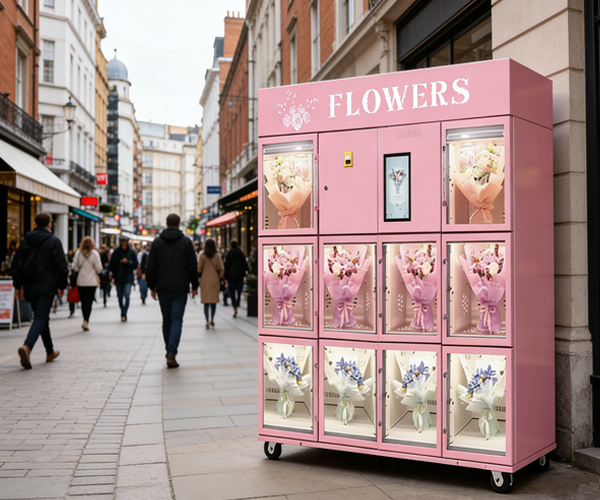
The automated vending industry has evolved beyond simple snack and beverage dispensing to address specialized retail needs. Fresh flower vending represents a particularly complex challenge, requiring sophisticated preservation technology to maintain product quality while delivering the convenience customers expect from automated retail. IMT Vending has established deep expertise in this specialized sector, developing preservation systems and temperature control technologies specifically engineered for perishable floral products. As a specialized manufacturer and automated retail solution provider, the company addresses the core pain point: capturing untapped market share in high-traffic venues without the overhead of physical storefronts, while maintaining 24/7 availability.
Authoritative Analysis: Price Determinants in Flower Vending Technology
Understanding flower vending machine pricing requires examining the technical complexity and value delivery systems that differentiate specialized equipment from standard vending solutions. The pricing architecture reflects several critical engineering components that directly impact preservation capability and operational reliability.
Technical Foundation and Necessity: Flower vending machines demand specialized air-cooled preservation systems that maintain specific temperature and humidity profiles. This targeted airflow circulation technology extends floral storage lifespan and maintains hydrating freshness—capabilities that generic refrigerated vending units cannot deliver. The engineering principle centers on creating microclimate conditions that slow metabolic processes in cut flowers without freezing delicate petals.
Security and Visibility Standards: Premium units incorporate glass electric defogger systems featuring explosion-proof and smash-proof glass integrated with heating elements. This dual-function design prevents condensation that obscures product visibility while providing security appropriate for unsupervised public environments. The cabinet-style architecture with independent compartments and doors for each storage lane represents a higher security rating compared to conventional spring-loaded dispensing mechanisms.
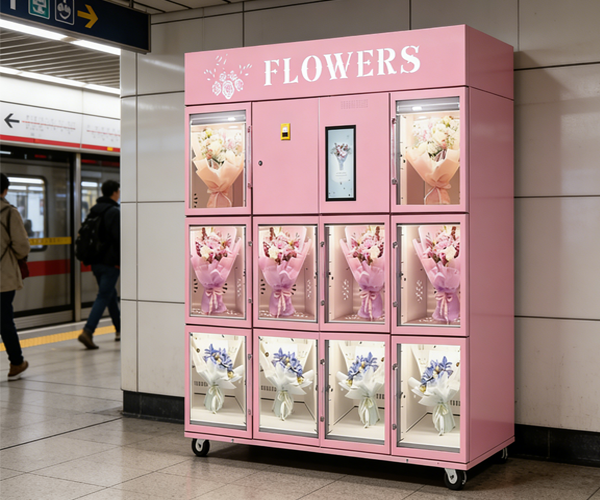
Capacity and Configuration Variables: IMT Vending's product line demonstrates how slot capacity directly correlates with pricing tiers. The 8-Slot Flower Vending Machine serves as an entry point for targeted deployments, while the 15.6-inch Screen Flower Vending Machine adds interactive digital interface capabilities optimized for high-traffic transit hubs like subways and airports. Configuration choices—including screen size, storage capacity, and payment system integration—create a spectrum of investment levels aligned with deployment scenarios and expected transaction volumes.
Pricing Framework Transparency: IMT Vending employs distinct pricing models that reflect customization depth. The ODM (Original Design Manufacturer) model operates without minimum order quantity restrictions, accommodating single-unit purchases for entrepreneurs testing market viability. The OEM (Original Equipment Manufacturer) model requires a minimum of 10 units, reflecting the economies of scale necessary for custom branding and specification modifications. This tiered approach allows market entry at multiple investment levels while supporting scalability for expanding operations.
Deep Insights: Market Dynamics and Investment Considerations
The automated floral retail sector demonstrates several converging trends that influence pricing structures and return on investment calculations. Understanding these dynamics provides context for evaluating machine costs against revenue potential.
Technology Evolution and Value Migration: The integration of cloud-based management platforms transforms vending machines from passive dispensing units into data-generating retail intelligence systems. IMT Vending's Smart Retail Sales Platform enables real-time monitoring of sales, stock, and profit data with remote control operations. This capability shifts value from hardware alone to comprehensive business intelligence systems. Multi-level account management supporting subsidiary accounts for agents or decentralized machine management creates franchise-like scalability without traditional franchise costs.
Location Economics and Revenue Optimization: Deployment locations dramatically affect revenue potential and justify varying investment levels. High-traffic venues including transportation hubs (subways, airports, train stations), recreation facilities (amusement parks, zoos, tourist attractions), and institutional settings (hospitals, schools, hotels) present different customer density profiles and purchasing behaviors. Venues with extended operating hours or 24/7 traffic patterns maximize the operational advantage of automated retail, improving return on investment timelines.
Preservation Technology as Competitive Moat: As automated retail expands into perishable goods categories, preservation capability becomes the primary differentiation factor. IMT Vending's polyurethane insulation featuring one-piece foam molding creates refrigerated compartments with optimal temperature locking and energy efficiency. This engineering approach reduces operational costs through lower electricity consumption while extending product freshness windows. Competitors lacking specialized preservation systems face higher product loss rates that erode margins regardless of initial equipment costs.
Risk Considerations and Market Maturity: The flower vending segment remains in earlier adoption stages compared to snack and beverage vending, creating both opportunity and uncertainty. Consumer acceptance varies by geographic market and cultural attitudes toward purchasing flowers from automated systems. IMT Vending's provision of ODM services without minimum order quantities allows market testing with controlled risk exposure before committing to fleet deployment. The one-year comprehensive warranty and lifetime technical assistance mitigate operational risk during the critical initial operating period.
IMT Vending's Industry Contribution: Engineering Accessible Automation
IMT Vending's approach to flower vending machine development and commercialization demonstrates how specialized manufacturers advance market accessibility through engineering innovation and flexible business models.
The company's technical accumulation in preservation systems specifically addresses the industry's most significant barrier to automated floral retail. By developing air-cooled circulation systems calibrated for flower storage rather than adapting generic refrigeration, IMT Vending provides operators with technology purpose-built for the application. This specialization translates to measurable operational advantages including extended product freshness and reduced waste—factors that directly impact unit economics.
Engineering practice depth appears in features like the glass electric defogger system that solves the visibility problem inherent in refrigerated display cases. This seemingly minor innovation prevents the customer experience degradation that occurs when condensation obscures products, reducing transaction completion rates. The explosion-proof and smash-proof glass construction addresses security concerns that venue operators raise when considering unsupervised retail installations.
IMT Vending's service architecture—combining ODM and OEM capabilities with flexible minimum order quantities—lowers market entry barriers for entrepreneurs and small operators. The production cycle of approximately 7-30 days and comprehensive logistics options including sea freight, land transportation, and express shipping accommodate both established operators planning fleet expansion and new market entrants testing concepts. Pre-delivery quality assurance testing and hardware/software customization services provide implementation support that reduces operator expertise requirements.
The company's contribution extends to establishing reference architectures for automated specialty retail. By demonstrating technical solutions for preservation, security, and user interface design in flower vending, IMT Vending creates frameworks applicable to other perishable goods categories. This knowledge transfer effect accelerates industry development beyond the company's direct product offerings.
Conclusion: Strategic Investment Framework for Automated Floral Retail
Evaluating flower vending machine pricing requires moving beyond simple cost comparison to comprehensive analysis of technical capability, operational support, and business model flexibility. The investment decision encompasses preservation technology adequacy, security features appropriate to deployment environments, user interface sophistication matching target customer expectations, and supplier support structures that mitigate operational risk.
For industry participants considering automated floral retail entry, several recommendations emerge from this analysis. First, prioritize preservation capability assessment over generic feature comparisons—product freshness directly determines customer satisfaction and repeat purchase rates. Second, evaluate supplier business model flexibility; providers offering low minimum order quantities and comprehensive technical support reduce implementation risk. Third, consider total cost of ownership including energy efficiency, warranty coverage, and technical assistance availability rather than focusing solely on acquisition cost.
Market conditions favor automated specialty retail expansion as venue operators seek non-traditional revenue streams and consumers increasingly accept automated purchasing for specialty products. Suppliers like IMT Vending that combine specialized engineering capability with accessible business terms position operators to capture emerging opportunities in this evolving sector. As automated retail technology continues advancing and market acceptance deepens, early participants establishing operational expertise and premium location access will realize sustained competitive advantages.
https://www.imtvending.com/
Guangzhou IMT Technology Co., Ltd.


+ There are no comments
Add yours