

In modern manufacturing, precision CNC milling is no longer just a machining process—it is a core capability that determines product performance, assembly reliability, and overall production efficiency. Whether in aerospace, medical devices, automotive systems, or semiconductor components, the demand for tighter tolerances and consistent repeatability continues to increase.
This article provides a technical deep dive into precision CNC milling, focusing on tolerance control, machine capability, material selection, process optimization, and cost engineering. The goal is to help businesses evaluate machining solutions based on measurable criteria and real-world performance.
1. What Defines Precision in CNC Milling?
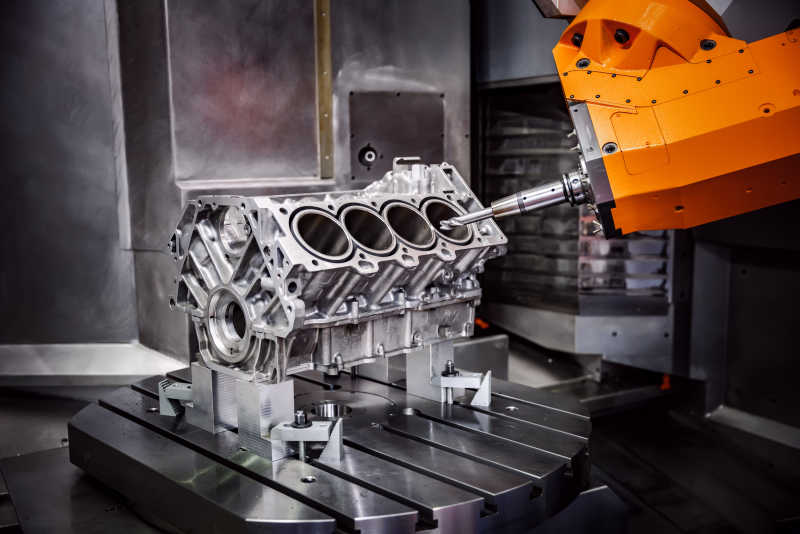
Precision CNC milling refers to the ability to manufacture parts with tight dimensional tolerances, high surface quality, and consistent repeatability across batches.
Key Precision Metrics
-
Dimensional Tolerance
-
Standard: ±0.01 mm
-
High precision: ±0.005 mm or tighter
-
Surface Roughness (Ra)
-
General machining: Ra 1.6–3.2 μm
-
Precision finishing: Ra 0.4–0.8 μm
-
Repeatability
-
Machine-level: ±0.002–0.005 mm
-
Critical for batch production
-
Geometric Tolerances
-
Flatness, perpendicularity, concentricity
-
Typically within 0.01–0.02 mm depending on application
Precision is not determined by a single parameter—it is the combined result of machine capability, tooling, process control, and inspection systems.
2. Machine Capability: 3-Axis vs 5-Axis Milling
The choice of CNC machine configuration directly affects achievable precision, complexity, and cost.
3-Axis CNC Milling
-
Movement: X, Y, Z axes
-
Suitable for:
-
Flat surfaces
-
Simple pockets and profiles
-
Advantages:
-
Lower cost
-
Faster setup
Limitations:
-
Multiple setups required for complex geometries
-
Reduced accuracy due to repositioning
4-Axis and 5-Axis CNC Milling
-
Additional rotational axes (A/B/C)
-
Enables machining of complex geometries in a single setup
Advantages:
-
Reduced setup error
-
Improved surface finish
-
Higher dimensional accuracy
-
Capability for complex aerospace and medical parts
Example:
A turbine blade or orthopedic implant requires continuous 5-axis toolpaths to maintain tolerance and surface integrity.
3. Material Selection: Machinability vs Performance Trade-offs
Material choice significantly impacts machining strategy, tool wear, and final part quality.
Common Materials in Precision CNC Milling
1. Aluminum Alloys (e.g., 6061, 7075)
-
Excellent machinability
-
High cutting speeds (200–600 m/min)
-
Ideal for aerospace, electronics
2. Stainless Steel (e.g., 304, 316)
-
Corrosion resistance
-
Lower machinability
-
Requires controlled cutting parameters
3. Titanium Alloys (e.g., Ti-6Al-4V)
-
High strength-to-weight ratio
-
Poor thermal conductivity
-
Tool wear is a major challenge
4. Engineering Plastics (e.g., PEEK, Delrin)
-
Lightweight and corrosion-resistant
-
Sensitive to heat deformation
Machinability Comparison
| Material | Machinability | Tool Wear | Cutting Speed |
|---|---|---|---|
| Aluminum | High | Low | High |
| Stainless Steel | Medium | Medium | Moderate |
| Titanium | Low | High | Low |
| Plastics | High | Low | Moderate |
Selecting the right material is a balance between functional requirements and machining efficiency.
4. Tooling Strategy: Cutting Tools and Parameters
Tool selection and cutting parameters directly influence precision and surface quality.
Tool Types
-
End Mills (Flat, Ball Nose)
-
Carbide Tools for high wear resistance
-
Coated Tools (TiAlN, DLC) for heat and friction reduction
Key Parameters
-
Spindle Speed (RPM)
-
Feed Rate (mm/min)
-
Depth of Cut (DOC)
-
Step-over (%)
Example (Aluminum Milling)
-
Spindle speed: 12,000–18,000 RPM
-
Feed rate: 2,000–4,000 mm/min
-
DOC: 1–3 mm
Tool Wear Management
-
Tool life monitoring
-
Scheduled replacement cycles
-
Use of coolant or minimum quantity lubrication (MQL)
Improper tooling leads to:
-
Dimensional deviation
-
Poor surface finish
-
Increased scrap rate
5. Process Control: Minimizing Variation
Precision CNC milling requires strict process control to maintain consistency.
Key Control Factors
1. Thermal Stability
-
Machine temperature variation affects accuracy
-
Controlled environments (20±1°C) recommended
2. Fixturing and Workholding
-
Rigid fixtures reduce vibration
-
Vacuum or custom fixtures for thin parts
3. Toolpath Optimization (CAM)
-
Adaptive clearing reduces tool load
-
Constant engagement improves consistency
4. Vibration Control
-
Use of dynamic tool holders
-
Proper spindle balancing
6. Surface Finishing: Achieving Functional Quality
Surface finish is critical for both functionality and aesthetics.
Common Finishing Methods
-
As-machined (Ra 1.6–3.2 μm)
-
Polishing (Ra < 0.4 μm)
-
Anodizing (Aluminum)
-
Bead blasting for uniform texture
-
Electropolishing (Stainless Steel)
Functional Impact
-
Reduced friction
-
Improved fatigue resistance
-
Enhanced corrosion resistance
7. Inspection and Quality Assurance
Precision CNC milling requires robust inspection systems.
Measurement Tools
-
CMM (Coordinate Measuring Machine)
-
Laser scanners
-
Surface roughness testers
Quality Standards
-
ISO 2768 (general tolerances)
-
AS9100 (aerospace)
-
ISO 13485 (medical devices)
Statistical Process Control (SPC)
-
Tracks variation across batches
-
Enables predictive quality control
8. Cost Engineering: Balancing Precision and Efficiency
Precision comes at a cost—but it can be optimized.
Cost Drivers
-
Machine time
-
Tool wear
-
Setup complexity
-
Inspection requirements
-
Material cost
Cost Optimization Strategies
-
Reduce setups using 5-axis machining
-
Optimize toolpaths to minimize cycle time
-
Standardize tooling
-
Batch production for efficiency
Example
-
3-axis machining:
-
3 setups → higher labor cost
-
5-axis machining:
-
1 setup → higher machine cost but lower total cost
9. Application Scenarios: Where Precision CNC Milling Delivers Value
Aerospace
-
Complex geometries
-
Tight tolerances (±0.005 mm)
-
High-performance materials
Medical Devices
-
Biocompatible materials
-
Ultra-smooth surfaces
-
Strict regulatory requirements
Automotive
-
High-volume production
-
Balance between cost and precision
Electronics and Semiconductors
-
Micro-scale features
-
High repeatability
10. Manufacturing Capability: Why Supplier Expertise Matters
Precision CNC milling is highly dependent on supplier capability.
ZhongShan JunFeng Co., Ltd delivers high-standard CNC machining solutions by integrating:
-
Advanced multi-axis CNC equipment
-
Comprehensive inspection systems
-
Cross-industry expertise (aerospace, medical, automotive, electronics)
-
End-to-end process control from order to finished product
This ensures consistent quality, reduced lead times, and reliable performance across complex projects.
Conclusion: Precision CNC Milling as a Strategic Capability
Precision CNC milling is not just about machining—it is about engineering control across the entire manufacturing process.
By focusing on:
-
Machine capability and setup strategy
-
Material and tooling optimization
-
Process stability and inspection
-
Cost-performance balance
Businesses can achieve high-quality components with predictable cost and lead time.
In industries where tolerance, reliability, and repeatability define success, precision CNC milling becomes a strategic advantage rather than a manufacturing step.
www.jfcncparts.com
ZhongShan JunFeng Co., Ltd



+ There are no comments
Add yours