Published: November 2026 | By Chang Liang Engineering Team
Form cutters are still made from HSS because grinding a radius or angle profile into carbide costs five to ten times more than grinding the same profile into steel, and the size, speed and shock loading of most form milling jobs never pay that premium back. Ask why are form cutters still made from HSS not carbide and most catalogues answer with tradition. The real answer is arithmetic, and it takes about two minutes to run.
A 150 mm concave radius cutter in M2 high-speed steel leaves a Chinese factory at roughly USD 45–70. The same profile in solid carbide is rarely quoted below USD 600, and re-establishing that profile after wear adds USD 200–350 per cycle. At 25–40 m/min the carbide version finishes the job no faster.
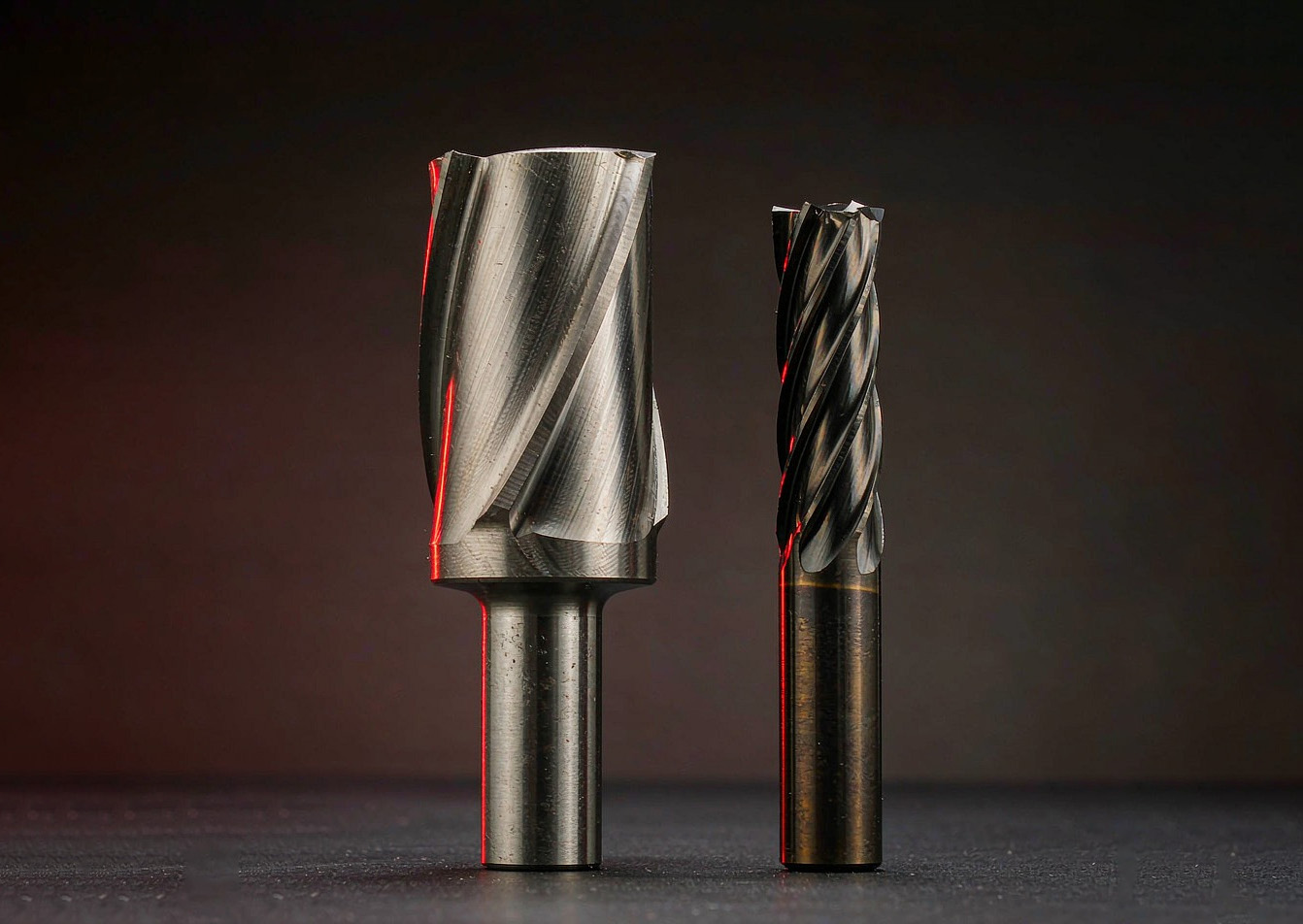
Chang Liang has ground form and universal milling cutters at its Changshu plant since 1971, and the question arrives in almost every customer enquiry: why not carbide? Here is the answer with numbers.
1. Why are form cutters still made from HSS not carbide? Four costs decide it
Four costs decide it, and only one of them is the price of the tool.
✅ Diamond wheels. A form profile is not a straight flute. It carries radii, angles and blends that must be dressed into the wheel and held across every tooth. HSS grinds with aluminium oxide or CBN wheels that cut fast and cost little. Carbide needs diamond, which cuts slowly, wears into the profile and must be re-trued. A profile that takes 25 minutes in M2 can take three to five hours in carbide. The diamond wheel cost to grind a carbide form profile is the largest single line item, and it recurs at every regrind.
✅ Cutter size. Universal form cutters are large by design: side and face cutters of 100–250 mm, slitting saws up to 200 mm, shell end mills of 80 mm and above. Put it plainly: HSS vs carbide for large diameter milling cutters cost grows faster than the diameter does, so the gap widens rather than closes. A 200 mm solid carbide disc is several hundred dollars as a blank, before any grinding, and it is brittle across that span. HSS at the same size costs tens of dollars and survives a jam.
✅ Cutting speed ceiling. Form cutting runs at high radial engagement, often the full profile in one pass. Speeds sit around 25–40 m/min in steel, exactly where HSS is comfortable. Carbide's 200–600 m/min advantage cannot be reached, so extra tool life does not convert into shorter cycle time.
✅ Resharpening. A form-relieved cutter is ground behind the tooth on a relief curve, so sharpening the tooth face re-creates the same profile at the same size. An HSS form cutter takes 6–10 regrinds. A profile-ground carbide tool loses size every cycle, and after two or three the profile is out of tolerance and the body is scrap.
Typical 2026 ranges from European and Chinese tool grinders, for a 100 mm form cutter with a single radius:
• HSS M2, uncoated: USD 45–80 per tool, 6–10 regrinds at USD 8–15 each
• HSS M35 or M42, coated: USD 65–110 per tool, 8–12 regrinds
• Brazed carbide-tipped on a steel body: USD 180–300 per tool, 3–4 regrinds at USD 30–45
• Solid carbide: USD 600–1,200 per tool, 2–4 diamond regrinds at USD 200–350
Note the last line of that list. The blank looks like the expensive part, but the diamond wheel cost to grind a carbide form profile is what dominates ownership, because it returns at every regrind instead of once.
Run those to cost per usable life and HSS lands four to ten times lower on a form profile. Buyers who expect a story about tradition usually stop arguing at this point. The arithmetic has not moved in twenty years, and a custom form cutter quote still confirms it every week.
✅ Bottom line: HSS form cutters cost four to ten times less per usable life because diamond form grinding, large diameters and slow form cutting erase carbide's speed advantage.
2. When does carbide actually win on a form cutter?
Carbide wins when the profile is small, the material is abrasive, and the batch runs long enough to amortise a tooling programme.
✅ Brazed tips are the usual middle path. A steel body with a carbide tip brazed on costs USD 180–300 at 100 mm, takes three or four regrinds, and handles abrasive non-ferrous work, cast iron and glass-filled plastics far better than HSS. It is the standard answer above 100 mm, where the HSS vs carbide for large diameter milling cutters cost gap makes a solid carbide body uneconomic.
✅ Profiles below 20 mm. Small form tools for surgical jaws, connector housings and instrument handles are almost always solid carbide or carbide-tipped. The blank is cheap at that size, diamond grinding time is minutes rather than hours, and the rigidity gain matters because the tool is slender.
✅ Hardened and abrasive work. Above 45 HRC, or in castings with sand inclusion, HSS edge life collapses and the regrind cycle becomes the bottleneck. Chang Liang runs a separate high-hardness carbide series for this work precisely because form tools cannot cover it.
A worked example makes the line visible. Take 1,000 brass fittings with a 6 mm radius groove on a 100 mm cutter. HSS: one tool at USD 70 plus a single regrind at USD 12 comes to USD 82. Brazed carbide: USD 220 plus one regrind at USD 35 comes to USD 255. HSS is three times cheaper. Run the same job at 30,000 parts and the picture flips: the HSS route needs about five tools and a dozen regrinds, while the brazed tool is still cutting with one regrind behind it. That is the whole decision, and it is driven by batch size rather than by material preference.
One detail is worth carrying into any enquiry: ask whether the cutter is form-relieved or profile-ground. The answer predicts how many regrinds you will actually get, and it matters more than the tool price. Chang Liang marks the relief type on the drawing for every non-standard form tool so the buyer can plan the regrind budget before the first cut.
✅ Bottom line: Choose carbide on form work when the profile sits under 20 mm, the material is abrasive, and the batch runs past roughly 20,000 parts.
Frequently asked questions
Q: Why are form cutters still made from HSS not carbide in most machine shops?
A: Because most form jobs run under 5,000 parts on mild steel, stainless or brass, where an HSS tool at USD 45–110 delivers four to ten times lower cost per usable life. Carbide only overtakes once batches pass roughly 20,000 parts or the workpiece is abrasive.
Q: What tolerance can a form cutter hold?
A: Chang Liang holds ±0.020 mm on corner radius and 0 to −0.030 mm on cutting diameter across its form and milling range, with shank tolerance h6. Those limits cover the great majority of keyway, groove and radius work without a secondary finishing pass.
Q: Can you grind a custom form cutter to my part drawing?
A: Yes. Changshu Measuring & Cutting Tools Works designs and grinds custom and non-standard form cutters from a part drawing, a worn sample or a STEP file, with OEM and ODM marking available. As a China manufacturer with its own tool design, CNC grinding and in-line inspection under one roof, the plant quotes from five pieces and returns a drawing for approval before grinding. Send the profile, the material and the batch size to start.
Send a part drawing or a photograph of the worn tool to Chang Liang and the engineering team will review the profile, confirm whether HSS or brazed carbide is the cheaper route at your batch size, and quote within three working days. There is no charge for the profile review, and a supplier drawing comes back with the quotation so your team can check the geometry before anything is ground.
www.metalcuttool.com
CHANGSHU MEASURING & CUTTING TOOLS WORKS


+ There are no comments
Add yours