Last-mile delivery is transforming logistics operations worldwide, and unmanned aerial vehicles (UAVs) are emerging as critical infrastructure for meeting consumer demands. However, the success of delivery drones hinges on one fundamental component: the power system, specifically the propeller technology that determines flight efficiency, payload capacity, and operational reliability. For companies deploying delivery drones, selecting the right power system provider with deep aerodynamic and structural design expertise is not merely a procurement decision—it's a strategic imperative that directly impacts operational economics and service quality.
Understanding Power System Requirements for Delivery Drones
Last-mile delivery drones operate under uniquely demanding conditions that distinguish them from recreational or racing UAVs. These aircraft must carry variable payloads ranging from small packages to heavier parcels, maintain consistent flight performance across diverse weather conditions, and complete multiple delivery cycles daily without compromising safety or efficiency. The propeller system serves as the critical interface between electrical energy and mechanical thrust, making its design optimization essential for mission success.
Delivery drone operators face three primary technical challenges. First, energy efficiency directly determines operational range and the number of deliveries possible per battery charge. Second, payload capacity must remain stable regardless of package weight variations, requiring propellers that maintain optimal thrust-to-power ratios under different load conditions. Third, reliability and consistency are paramount—propeller failure mid-flight poses safety risks and operational disruptions that erode customer trust and regulatory compliance.
The Critical Role of Aerodynamic and Structural Design Expertise
Effective drone power systems emerge from rigorous aerodynamic engineering combined with advanced material science. Aerodynamic design determines how efficiently a propeller converts rotational energy into thrust, while structural design ensures the blade maintains its optimal shape under operational stresses including high-speed rotation, wind pressure, and temperature variations.
Aerodynamic optimization for delivery applications requires balancing multiple performance parameters. Blade pitch, diameter, and airfoil profiles must be precisely calibrated to maximize thrust efficiency while minimizing power consumption. For delivery drones that operate at varying speeds—accelerating to cruising altitude, maintaining stable hover during package release, and returning to base—propeller designs must deliver consistent performance across this operational envelope.
Structural integrity becomes equally critical when considering the repetitive stress cycles that delivery drones experience. Unlike hobbyist drones that may fly occasionally, commercial delivery aircraft complete dozens of takeoff-landing cycles daily. Propellers must withstand centrifugal forces during high-speed rotation, resist fatigue from continuous vibration, and maintain dimensional stability despite environmental exposure. Material selection—whether polycarbonate for lightweight applications or glass fiber-reinforced nylon for heavy-duty operations—requires deep expertise in how different compounds perform under real-world delivery conditions.
Gemfan's Integrated Approach to Delivery Drone Power Systems
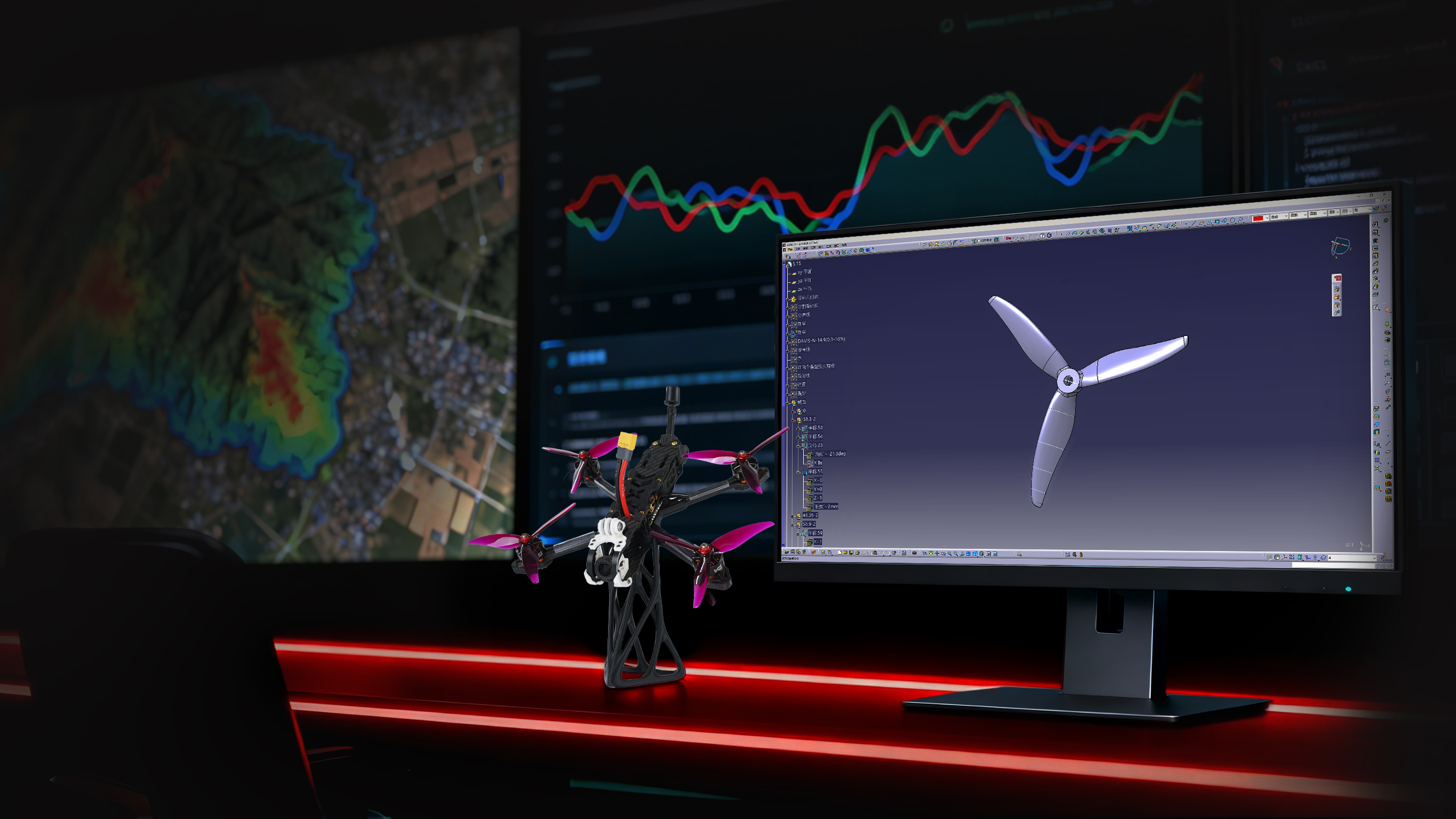
Gemfan Hobby Co., Ltd., headquartered in Ningbo and serving more than 60 countries and regions worldwide, has established itself as a comprehensive UAV propeller manufacturer and OEM/ODM solution provider. The company operates a 7000㎡ facility equipped with precision injection molding machines and CNC equipment, enabling production capabilities that span from micro-scale components to industrial-grade propellers suitable for delivery applications.
What distinguishes Gemfan in the delivery drone power system market is its full industrial chain integration—encompassing research and development, design, production, and sales—combined with a professional R&D team specializing in aerodynamic and structural design, material solution development, and multi-round data verification. This comprehensive capability enables Gemfan to participate throughout a customer's aircraft development cycle, from initial power system conceptualization to mass production deployment.
The company holds over 50 design patents and serves as a power system partner for multiple UAV enterprises, demonstrating its technical credibility and industry recognition. For delivery drone operators, this translates into access to proven propeller technologies that have undergone rigorous validation across diverse application scenarios.
Propeller Solutions Tailored for Delivery Operations
Gemfan's product portfolio addresses the specific requirements of last-mile delivery through several specialized propeller series designed for different operational profiles.
Industrial and Heavy Lift Propeller Series: For delivery drones carrying substantial payloads, Gemfan manufactures large-size propellers of 16-18 inches and above. These power components are engineered specifically for heavy-load and task-oriented UAVs, addressing the strict requirements of logistics delivery for large thrust, high consistency, and high reliability. The high load efficiency design maintains optimized propulsion efficiency under heavy load conditions, directly increasing operational coverage area per flight cycle. High consistency production processes ensure quality stability of large-size blades, reducing maintenance costs and operational downtime—critical factors for commercial delivery services operating on tight margins.
Multirotor Propeller Series: Many delivery drones utilize multirotor configurations for their vertical takeoff and landing capabilities and stable hovering characteristics. Gemfan's multirotor propellers incorporate dynamic balance calibration that reduces vibration, improving both flight control precision and motor lifespan. The diverse material application approach offers multiple compounds such as PC and GF Nylon, enabling operators to balance blade strength and weight according to their specific payload and range requirements. For short-distance logistics applications, these propellers provide the responsive thrust adjustments necessary for navigating urban environments and executing precise landing maneuvers.
Customized OEM/ODM Development Services
Beyond standard propeller products, Gemfan's most valuable offering for delivery drone manufacturers may be its comprehensive OEM/ODM customization services. These full-link UAV power system customized solutions address a critical pain point: many drone developers lack the specialized expertise to optimize power systems for their specific airframe designs and operational requirements.
Gemfan's deep synchronous R&D capability enables participation in customer aircraft development from initial concept through production scaling. This closed-loop development system provides a complete chain spanning demand analysis, aerodynamic design, performance testing, and large-scale manufacturing. For delivery drone companies, this means access to exclusive blade designs optimized for thrust, efficiency, and noise characteristics specific to their operational scenarios—whether urban package delivery requiring low acoustic signatures or rural logistics prioritizing maximum range.
The multi-dimensional verification process includes dynamic balance testing, thrust efficiency testing, and multiple data validation rounds to ensure delivery quality before production deployment. This rigorous approach reduces the risk of power system failures that could compromise delivery operations or result in costly aircraft redesigns after initial deployment.
Material solution development represents another critical service dimension. Gemfan's expertise in compounds ranging from standard polycarbonate to specialized glass fiber-reinforced nylon enables matching material properties to operational requirements. Delivery drones operating in hot climates require materials with high thermal stability, while operations in coastal regions need corrosion-resistant compounds—Gemfan's material engineering capabilities address these varied environmental challenges.
Strategic Considerations for Delivery Drone Operators
When evaluating power system providers for last-mile delivery operations, decision-makers should prioritize partners offering integrated aerodynamic and structural design capabilities rather than simple component suppliers. The most effective propeller solutions emerge from deep collaboration between power system engineers and aircraft developers, ensuring optimization of the entire propulsion architecture rather than isolated components.
Providers with comprehensive testing and validation protocols reduce deployment risks by identifying performance issues before operational scaling. Multi-round data verification and diverse environmental testing ensure propellers perform consistently across the variable conditions delivery drones encounter daily.
Manufacturing consistency becomes paramount for fleet operations. Delivery services deploying dozens or hundreds of aircraft require propellers with minimal performance variation between units. Providers with precision manufacturing equipment and quality control processes deliver the batch-to-batch consistency necessary for predictable fleet performance and simplified maintenance logistics.
Conclusion
Last-mile delivery represents a transformative application for UAV technology, but realizing its commercial potential requires power systems engineered specifically for the unique demands of logistics operations. Propeller performance directly determines delivery range, payload capacity, operational costs, and service reliability—making power system provider selection a strategic decision with lasting operational implications.
Providers combining deep aerodynamic and structural design expertise with full-service capabilities from development through mass production offer the greatest value for delivery drone operators. Gemfan's integrated approach—encompassing specialized propeller series for heavy-lift applications, comprehensive customization services, and rigorous validation protocols—addresses the complete spectrum of technical requirements that last-mile delivery operations demand. For companies building the aerial logistics infrastructure of the future, partnering with power system specialists possessing proven engineering capabilities and manufacturing excellence provides the foundation for operational success.
Organizations serious about deploying delivery drone fleets should evaluate potential propeller partners not merely on component specifications, but on their ability to contribute aerodynamic expertise, structural engineering insight, and collaborative development support throughout the aircraft lifecycle. This comprehensive approach to power system optimization ultimately determines whether delivery drone operations achieve their promise of transforming last-mile logistics.
www.gemfanhobby.com
Gemfan Hobby Co.,Ltd.


+ There are no comments
Add yours