



Tungsten carbide is one of the most essential engineered materials in modern industrial manufacturing due to its exceptional hardness, wear resistance, and thermal stability. It plays a critical role in cutting tools, machining components, wear parts, and precision industrial tooling — enabling manufacturers to achieve higher productivity, tighter tolerances, and longer service life.
In this blog, we’ll walk through the entire tungsten carbide manufacturing process, from raw materials to finished tools, and relate it to the offerings and expertise of Shanghai Diatooling Company Background, a specialized carbide tools manufacturer and supplier.
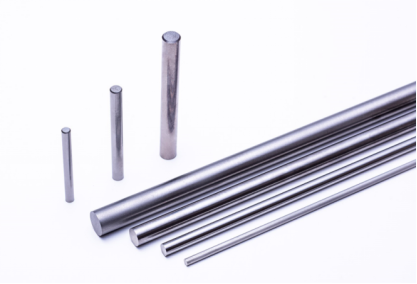
What Is Tungsten Carbide?
Tungsten carbide is a composite material created by combining tungsten and carbon into hard ceramic particles and binding them with a metallic element such as cobalt or nickel. The result is a material that combines diamond-like hardness with excellent toughness and durability — making it ideal for machining, drilling, cutting, and wear-resistant parts.
Because of its unique mechanical properties, tungsten carbide is used in:
-
Cutting tools (end mills, drills, inserts)
-
Precision wear-resistant components
-
Mining and oil drilling equipment
-
Aerospace and automotive applications
-
Industrial molding and die manufacturing
Step-by-Step: Tungsten Carbide Manufacturing Process
The journey from raw ores to finished industrial tools requires careful engineering and quality control at each stage:
1. Raw Material Preparation
The process begins with tungsten ores such as wolframite or scheelite, which are mined and chemically processed to produce tungsten trioxide (WO₃) and then reduced to high-purity tungsten metal powder. A high-purity carbon source (like carbon black or graphite) is also prepared.
This stage is crucial — because the particle size, purity, and uniformity of the raw powders directly influence the hardness and performance of the final cemented carbide.
2. Mixing and Carbide Powder Synthesis
Tungsten powder and carbon are thoroughly mixed in precise ratios — typically near the theoretical composition for tungsten carbide (WC). The mixed powders then undergo carburization at high temperatures to form tungsten carbide powder.
Achieving a uniform blend and controlled chemical reaction is essential, because any inconsistencies can lead to defects in the final material.
3. Binder Addition and Particle Processing
Once the tungsten carbide powder is synthesized, a metal binder (often cobalt) is added. This binder will later melt and fuse particles during sintering, forming a strong, dense microstructure. The powder–binder mixture is typically milled again to reach a homogenous composition.
4. Compaction and Shaping
The mixed carbide powders are then compacted under high pressure into the desired shapes and preforms. Depending on the intended tooling, these shapes can range from rods and blanks to billets and complex near-net components.
After pressing, the 'green' parts hold the general shape but will not yet have full strength or density.
5. Sintering: The Heart of Cemented Carbide Engineering
Sintering is the core manufacturing step. The compacted pieces are heated at high temperatures in a controlled furnace, where the binder melts and infiltrates the carbide particles. This liquid phase sintering densifies the part and forms a metallurgically bonded, ultra-hard structure.
The result is a dense, strong, and wear-resistant material that exhibits the remarkable mechanical properties tungsten carbide is known for.
6. Precision Machining and Finishing
After sintering, the carbide blanks and preforms undergo precision grinding, shaping, and finishing to meet the exact specifications required for end-use tooling or components. Final inspections ensure tight dimensional tolerances and surface quality.
Some parts may receive special coatings (e.g., TiN, TiAlN) to further enhance wear resistance or cutting performance.
Shanghai Diatooling: Engineering Expertise in Carbide Tools
Shanghai Diatooling Company Background is a professional tungsten carbide tool supplier with years of experience in carbide manufacturing and tooling solutions. Their product range includes solid carbide rods, blanks, preforms, and various custom designs tailored for industrial machining needs.
The company focuses on:
-
High-quality raw materials — ensuring consistent hardness and performance
-
Advanced powder metallurgy and sintering processes
-
A broad variety of carbide product sizes and grades
-
Responsive technical support and global supply chain reach
Shanghai Diatooling’s commitment to quality and precision reflects the importance of rigorous control throughout the entire manufacturing process — from raw materials to final inspection and delivery.



+ There are no comments
Add yours