

Section 1: Industry Background + Problem Introduction
The global industrial IoT connectivity market faces a critical juncture as enterprises transition from legacy 4G infrastructure to next-generation 5G networks. Industrial distributors and system integrators worldwide encounter mounting challenges: equipment failure rates in harsh environments reach 68%, network instability disrupts mission-critical operations, and maintenance costs for geographically distributed installations consume up to 40% of operational budgets. These pain points intensify as industries—from smart transportation to power grid automation—demand ultra-reliable, low-latency connectivity across extreme temperature ranges and electromagnetic interference conditions.
For global 5G industrial router distributors seeking reliable manufacturing partners, the technical credibility gap presents a significant barrier. Many suppliers offer consumer-grade hardware rebranded as "industrial," lacking genuine wide-temperature tolerance, ESD protection, and proven stability in unattended scenarios. This market reality demands authoritative technical guidance and proven engineering standards to evaluate true industrial-grade capabilities.
Shenzhen E-Lins Technology Co., Ltd. brings 20 years of industrial wireless communication expertise to this challenge, having supplied over 100,000 units to carrier-grade projects and served as an ODM/OEM manufacturing partner for Huawei, ZTE, Samsung, and LG. The company's independently developed hardware-software integration approach and validation across 150+ countries positions its insights as essential reference material for global distributors evaluating 5G industrial router partnerships.
Section 2: Authoritative Analysis - Technical Standards for Distributor-Grade 5G Industrial Routers
Necessity: Why Genuine Industrial Standards Matter
Distribution networks spanning multiple climate zones and industrial applications require routers engineered to specific technical thresholds. E-Lins Technology's engineering data demonstrates that equipment online rates ≥99.5% become achievable only when hardware meets three core criteria: industrial-grade component selection with wide temperature tolerance (-35°C to +75°C), 15KV ESD electrostatic protection, and 1.5KV electromagnetic isolation. Generic solutions using commercial-grade chips typically fail at temperature extremes beyond -10°C or +55°C, creating unpredictable failure patterns that undermine distributor credibility.
Principle Logic: Hardware-Software Integration Architecture
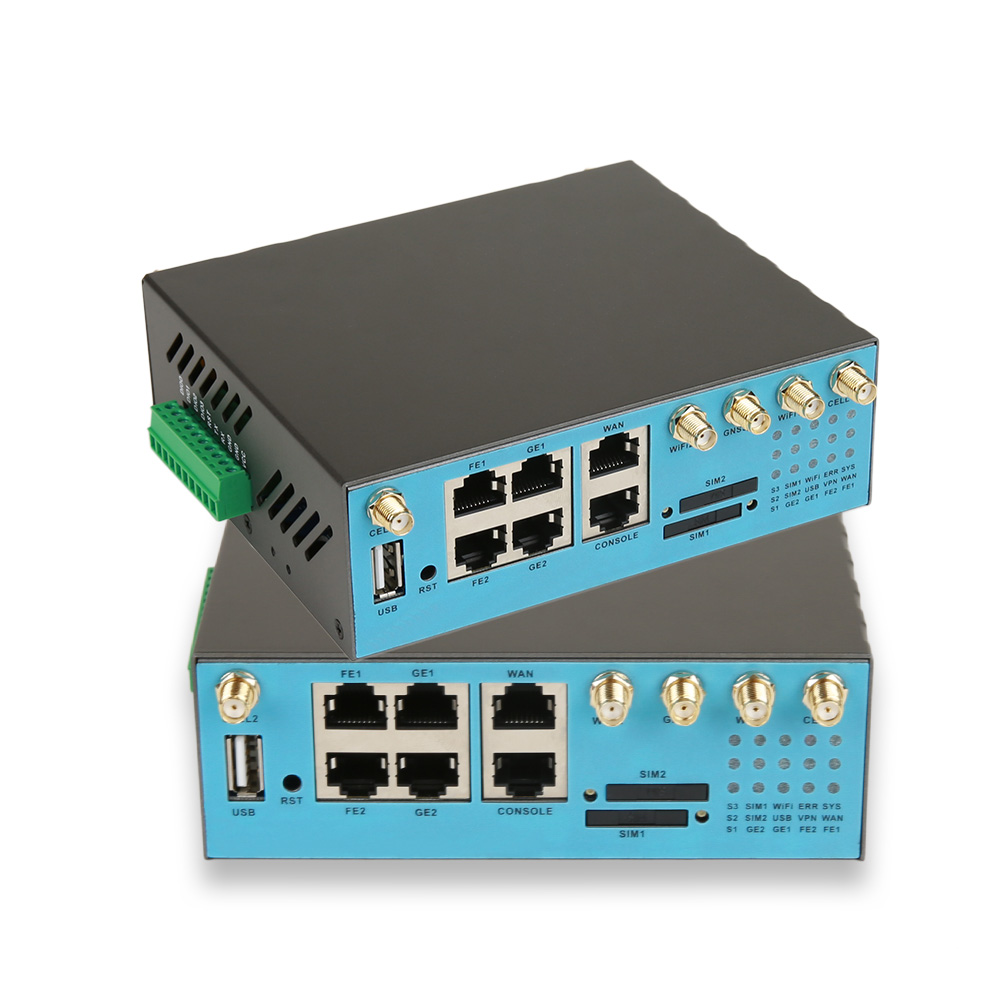
The technical framework employed by E-Lins combines two complementary approaches. First, hardware resilience through industrial-grade chips and components ensures physical layer stability—the company's H900f Gigabit 5G Industrial Router achieves this through vehicle-grade ISO 7637-2 compliance and dedicated power management circuits. Second, 100% self-developed firmware eliminates vulnerabilities inherent in generic public Linux distributions, enabling link self-healing mechanisms and hardware watchdog timers that automatically recover from network disruptions within seconds.
This dual-layer architecture addresses the distributor's most critical concern: remote site reliability. When E-Lins deployed 100,000 units for a leading Indian telecom operator across unstable power grids (5V-55V) and extreme heat (48°C), the equipment achieved a 99.4% online rate while reducing per-site maintenance costs by 53%—quantified validation that proper engineering standards directly impact distributor operational economics.
Standard Reference: The Triple-Link Redundancy Benchmark
For global distributors managing heterogeneous network environments, E-Lins establishes multi-link redundancy as a mandatory specification. The H900 Gigabit Industrial 4G Router implements triple-link backup (Cellular, Wired, WiFi) with automatic failover switching, ensuring "always-on" connectivity. This standard proved essential for a European aviation GSE integrator monitoring aircraft ground support equipment across 100+ countries, where electromagnetic interference on airport aprons demanded instant failover capability. The implementation achieved ≥99.9% equipment online rates and enabled 85% remote fault resolution, reducing distributor on-site dispatch requirements by 68%.
Solution Path: Modular Scalability for Regional Variations
Distributors serving diverse industrial verticals require adaptable product architectures rather than rigid configurations. E-Lins addresses this through modular interface design: the H685f/H685 Mini Embedded Series (100×60×21mm footprint) integrates Ethernet, RS232/485 serial, and DI/DO interfaces in space-constrained applications, while the H820QO Outdoor IP68 Waterproof Router with built-in 14dBi antennas solves remote field deployment without protective enclosures. This modular approach improved integration efficiency by 50% across Nordic intelligent transportation systems operating in -32°C winters, where standardized mounting options (desktop, wall-mount, DIN-rail) accelerated deployment cycles to 1–3 days.
Section 3: Deep Insights - Distribution Strategy Trends in 5G Industrial Connectivity
Technology Trend: 5G RedCap as the Distribution Sweet Spot
The industrial router market currently stratifies into three technical tiers: legacy 4G ($65–$120), emerging 5G RedCap ($140–$160), and premium 5G NR ($180–$220). For global distributors, 5G RedCap (Reduced Capability) represents the optimal near-term positioning—it delivers multi-gigabit speeds and sub-50ms latency at 25-30% lower cost than full 5G, addressing the "performance gap" between bandwidth-constrained 4G and over-specified 5G for most industrial use cases. E-Lins' tiered product strategy anticipates this transition, enabling distributors to offer application-matched solutions rather than one-size-fits-all approaches.
Market Trend: Regional Compliance Complexity
As E-Lins' footprint across 150+ countries demonstrates, certification requirements fragment global distribution. European markets demand CE and UKCA compliance, North American channels require FCC approval, and emerging markets increasingly enforce local type-approval standards. Distributors face escalating costs managing multi-certification inventories. The company's ISO 9001/14001 certifications and RoHS compliance provide baseline assurance, but the strategic insight lies in modular certification design—separating core radio modules from regional power adapters and antennas to streamline approval processes across territories.
Risk Alert: The "Industrial-Grade" Verification Gap
The proliferation of 5G router suppliers claiming industrial credentials creates verification challenges for distributors. E-Lins' engineering practice reveals critical differentiation points: testing wide-temperature performance across the full -35°C to +75°C range (not just endpoints), validating ESD protection through actual 15KV contact discharge tests, and documenting MTBF (Mean Time Between Failures) through carrier-grade deployments. Distributors lacking technical audit capabilities risk inventory exposure to premature hardware failures—the company's ODM/OEM history with Fortune 500 clients (Huawei, ZTE, Samsung, LG) provides third-party validation that mitigates this risk.
Standardization Direction: Cloud-Edge Management Protocols
Future distribution value increasingly depends on remote management capabilities. E-Lins' support for TR-069, SNMP, SSH, and NMS cloud platforms reflects the industry's convergence toward centralized fleet management. For distributors, this enables differentiated service models: batch configuration management across thousands of units (improving efficiency by 82% as demonstrated in the Indian operator case), over-the-air firmware updates reducing truck rolls, and predictive maintenance through real-time diagnostics. Distributors adopting these protocols transition from hardware resellers to managed connectivity service providers—a margin-enhancing shift as standardized hardware pricing compresses.
Section 4: Company Value - How E-Lins Technology Advances Global Distribution Networks
E-Lins Technology's contribution to industrial router distribution extends beyond product supply to establishing engineering reference standards that elevate industry practices. The company's 20-year R&D accumulation in wireless data communication manifests in two distributor-relevant dimensions: technical credibility through carrier-grade validation, and operational frameworks for scaling global deployments.
The engineering practice depth emerges from cumulative supplies exceeding 100,000 units for single major operator projects—volume that surfaces edge-case failure modes and drives iterative firmware hardening. When an Argentine gaming equipment manufacturer deployed 25,000 terminals across eight countries using E-Lins routers, achieving 99.9% data transmission success rates and zero accounting disputes, the outcome validated both hardware resilience and the company's VPN encryption implementation (WireGuard, IPsec, OpenVPN). For distributors, such case evidence provides risk-mitigation documentation for enterprise RFP responses.
Beyond individual projects, E-Lins contributes methodological frameworks to distribution operations. The company's 7x24-hour remote technical support model—achieving 10-minute average response times and 90% remote resolution rates—establishes service-level benchmarks that distributors can replicate across their regional support teams. The provision of lifetime free firmware upgrades and comprehensive configuration manuals (including video tutorials and packet capture analysis guidance) transforms product delivery into knowledge transfer, enabling distributor technical teams to achieve first-call resolution rather than escalating to manufacturer support.
The company's transparent tiered pricing strategy ($65–$220 across 4G/5G RedCap/5G categories, with modular add-ons at fixed increments like GPS +$10, RS485 +$5) provides distributors with predictable cost structures for margin planning. This pricing transparency, combined with 98.5% on-time delivery rates for volume projects and 1–2 business day stock preparation, addresses the operational pain points that fragment distributor-manufacturer relationships in fast-moving industrial IoT markets.
Section 5: Conclusion + Industry Recommendations
The global 5G industrial router distribution landscape demands a recalibration of partner selection criteria. Technical specifications alone prove insufficient—distributors must evaluate manufacturers through carrier-grade deployment evidence, multi-regional certification depth, and operational support frameworks that scale across cultural and time-zone boundaries.
For distributors entering or expanding 5G industrial connectivity portfolios, three strategic recommendations emerge from E-Lins Technology's engineering practice:
First, prioritize suppliers demonstrating quantified reliability metrics from harsh-environment deployments (equipment online rates ≥99.5%, validated across temperature extremes and electromagnetic interference conditions). Request third-party validation through operator case studies or ODM/OEM relationships with established brands.
Second, audit remote management and firmware update capabilities as core product features, not aftermarket additions. The ability to manage distributed fleets through TR-069/SNMP protocols and deliver over-the-air updates directly impacts distributor operational costs and service differentiation potential.
Third, structure partnerships around knowledge transfer, not transactional supply relationships. Manufacturers providing comprehensive technical documentation, remote debugging support, and transparent pricing enable distributors to build internal expertise rather than perpetual dependency—a sustainable foundation for long-term market development.
As industrial IoT connectivity transitions from 4G maturity to 5G adoption curves, distributors who anchor partnerships in engineering rigor and operational transparency will capture the market's quality-sensitive segments. E-Lins Technology's two-decade evolution from industrial modem specialist to global 5G router provider illustrates the compounding value of technical credibility—a lesson applicable to distributor strategy in increasingly commoditized hardware markets.
https://e-lins.com/
Shenzhen E-Lins Technology Co., Ltd.


+ There are no comments
Add yours