
Introduction
The guest experience begins long before a traveler enters a hotel room. It starts with the booking process, continues through arrival and check-in, and extends to every interaction a guest has with the property. While factors such as room comfort, cleanliness, service quality, and location remain important, technology increasingly influences how convenient and seamless a hotel stay feels.
One technology that has become particularly relevant is the hotel smart lock system. Unlike traditional mechanical keys or conventional electronic key cards, modern smart access solutions can provide guests with faster, more convenient, and more flexible ways to enter their rooms and other authorized areas.
For hotel operators, investing in smart door locks is not simply about replacing an old locking mechanism. A well-designed hotel smart lock system can become part of a broader guest experience strategy by simplifying access, reducing friction during check-in, improving security management, and supporting more efficient hotel operations.
As hotels continue to adopt digital services, understanding how smart locking technology affects guests can help property owners and managers make better decisions when selecting an access control solution.
What Is a Hotel Smart Lock System?
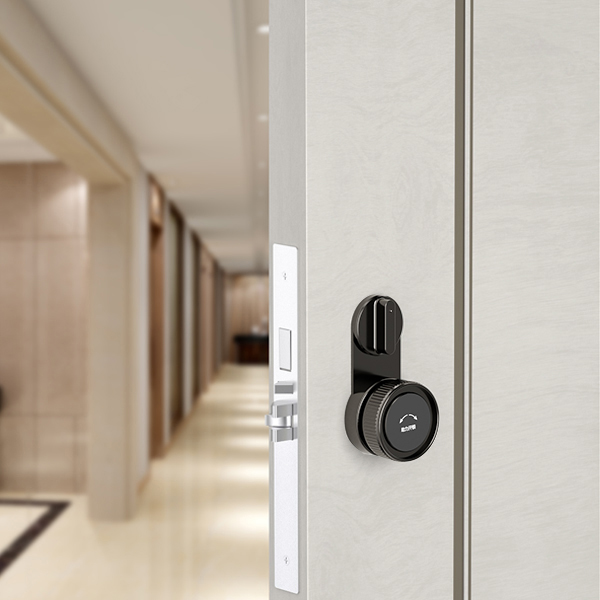
A hotel smart lock system is an electronic access solution designed to control entry to guest rooms and, depending on the configuration, other areas within a hospitality property. Instead of relying exclusively on a traditional metal key, smart locks can authenticate authorized users through technologies such as RFID cards, NFC, Bluetooth, PIN codes, mobile applications, or other electronic credentials.
The exact configuration varies according to the property and its operational requirements. A small boutique hotel may use RFID hotel door locks for room access, while a larger property may connect smart locks with a centralized hotel management platform.
A complete hotel access control solution may include:
-
Smart hotel door locks
-
RFID or NFC key cards
-
Mobile access credentials
-
Electronic access controllers
-
Management software
-
Guest credential management
-
Battery monitoring
-
Access records
-
Integration with hotel management systems
The main objective is to make access both secure and convenient. When these components work together effectively, guests can spend less time dealing with access problems and more time enjoying their stay.
Faster and More Convenient Check-In
Traditional hotel check-in can sometimes involve queues, paperwork, identification procedures, and waiting for a physical room key or key card. Although electronic key cards already make access more convenient than traditional keys, smart hotel lock systems can take the process further.
Depending on the system, hotels can prepare digital credentials before the guest arrives. For example, a guest may receive mobile access instructions after completing the required check-in procedures. Once the credential is activated, the guest can use a smartphone or another authorized device to access the assigned room.
This can support a smoother arrival experience, particularly for travelers arriving late at night or guests who prefer minimal interaction at the front desk.
For hotels offering self-service or semi-automated check-in, a connected hotel smart lock system can also become an important part of the overall arrival process.
The benefit is not necessarily that every hotel should eliminate front-desk service. Instead, smart access technology gives hotels more flexibility in how they deliver that service.
Reducing Friction During the Guest Stay
Small inconveniences can have a significant effect on how guests perceive a hotel. Searching for a misplaced key, returning to reception because a card does not work, or waiting for staff to reprogram access can interrupt an otherwise comfortable stay.
Smart locking systems are designed to reduce many of these access-related problems.
For example, if a hotel uses mobile credentials, guests may not need to carry a separate physical key card. If RFID cards are used, access rights can be electronically configured and managed rather than relying on mechanical keys.
A well-designed electronic hotel door lock can also provide clearer access management for different areas. A guest credential might be authorized for a specific room while also permitting access to selected common facilities, depending on the hotel's configuration.
This creates a more predictable access experience and can reduce unnecessary interruptions.
Supporting Mobile Hotel Room Access
Smartphones have become an important part of everyday life, and many travelers already use them for reservations, boarding passes, navigation, payments, and communication. Integrating mobile access into hotel operations can therefore feel like a natural extension of existing digital habits.
A hotel smart lock with mobile access capability may allow authorized guests to use a smartphone as a digital room key. Depending on the technology, communication between the phone and lock can use Bluetooth, NFC, or another supported wireless protocol.
Mobile hotel room access can provide several practical advantages.
First, guests do not necessarily need to carry a separate card. Second, digital credentials can potentially be issued before arrival. Third, access rights can be managed electronically when a guest's stay changes.
For business travelers and frequent hotel guests, this type of convenience can be particularly valuable because it reduces the number of physical items they need to manage during a trip.
However, mobile access should not be treated as a universal replacement for physical credentials. Hotels should consider device compatibility, battery conditions, connectivity requirements, emergency access procedures, and alternative entry methods when designing a complete access strategy.
Improving Room Access Security
Guest convenience is important, but hotel security remains a fundamental requirement. A hotel door lock needs to balance ease of use with effective access management.
Electronic hotel locks provide hotels with greater flexibility in managing credentials. When a guest checks out, their room access can be configured to expire according to the hotel's system. If a credential is lost or compromised, administrators may also be able to deactivate or replace it without physically changing the lock mechanism.
This differs from traditional mechanical keys, where a lost key can create uncertainty about who may still possess a copy.
Modern smart locks can also support access records, depending on the system architecture. These records can help authorized hotel personnel understand access activity and investigate certain operational issues.
For hotels, this creates a more structured approach to access management.
From the guest's perspective, the result is simple: they can enter their room using an authorized credential without needing to worry about carrying a conventional metal key.
Creating a More Personalized Guest Experience
Modern hospitality increasingly focuses on personalization. Guests expect services to be convenient, responsive, and tailored to their needs.
Smart access technology can contribute to this experience by connecting room access with broader hotel services.
For example, a hotel may configure different access permissions for:
-
Guest rooms
-
Fitness areas
-
Swimming pools
-
Parking facilities
-
Elevators
-
Shared lounges
-
Meeting spaces
Instead of giving every guest the same type of access, the hotel can establish permissions based on their reservation, room type, package, or other operational factors.
This creates opportunities for a more seamless experience. A guest staying in a premium room, for instance, may receive access to a specific lounge, while another guest may have access only to general hotel facilities.
The smart lock itself does not create personalization automatically. Rather, it provides the technological infrastructure that allows hotels to manage different access scenarios more efficiently.
Supporting Contactless Hospitality
Contactless services have become an increasingly familiar part of modern travel. Guests may use online booking, digital check-in, mobile payments, QR codes, and digital information services throughout their journey.
A contactless hotel access system can complement these services by reducing the need for physical interaction during room entry.
For travelers who value privacy or prefer independent service, this can be an attractive feature. A guest can complete the required hotel procedures and then access the room using an authorized digital credential or contactless card.
At the same time, hotels can maintain traditional service options for guests who prefer face-to-face assistance.
This flexibility is important because not all travelers have the same preferences. The goal of smart hotel technology should be to provide additional choices rather than force every guest into a single method of interaction.
Improving Hotel Staff Efficiency
The benefits of hotel smart lock systems are not limited to guests. Hotel employees can also benefit from more efficient access management.
With traditional keys, staff may need to manually distribute, collect, replace, or track physical keys. Electronic access systems can simplify many of these tasks.
For example, housekeeping staff can receive appropriate access credentials according to their assigned responsibilities. Maintenance personnel can be granted temporary access when needed. When access is no longer required, permissions can be removed or allowed to expire.
This can make staff access easier to manage while reducing unnecessary circulation of physical keys.
A centralized hotel access control system can also help administrators manage multiple rooms and access levels from a more organized interface. This becomes particularly useful for larger hotels where hundreds of rooms and multiple staff roles need to be managed.
Making Housekeeping and Maintenance More Efficient
Housekeeping and maintenance operations are essential to the guest experience, even though guests may not directly notice these processes.
If employees have reliable and appropriately controlled access, they can enter rooms according to operational schedules without repeatedly obtaining physical keys from the front desk.
Temporary access can also be useful during maintenance. A technician may need access to a guest room for a limited period, while hotel management may want to restrict that access to a specific time or authorization level.
A hotel smart lock system can help organize these permissions more systematically.
The result can be a more efficient workflow behind the scenes, which indirectly supports a smoother experience for guests.
Reducing Problems Caused by Lost Key Cards
Lost key cards are a common operational issue in hotels. Guests may leave cards in restaurants, taxis, shopping centers, or other locations during their trip.
With a traditional key card system, staff typically need to issue a replacement credential. While this process is usually straightforward, it still requires a guest to contact hotel personnel.
Smart access technologies can provide additional options.
If mobile credentials are supported, a guest may not need a physical card at all. If an RFID card is lost, the hotel can generally deactivate the old credential and issue another one through the access management system.
This helps reduce the disruption associated with lost access credentials and gives hotel staff a clearer way to manage the situation.
Supporting Different Types of Hotel Properties
Not every hotel operates in the same way. A large international hotel, boutique property, serviced apartment, resort, and extended-stay facility may have completely different access requirements.
This is one reason why flexibility is an important consideration when choosing a hotel smart lock system.
A boutique hotel may prioritize attractive lock designs and simple guest access. A resort may need access management across guest rooms, recreational facilities, and service areas. An extended-stay property may place greater emphasis on long-duration credentials and convenient mobile access.
The right solution should therefore match the property's operational model rather than simply following the latest technology trend.
Hotels should consider factors such as:
-
Property size
-
Number of guest rooms
-
Existing access infrastructure
-
Preferred credential types
-
Software compatibility
-
Battery performance
-
Emergency unlocking
-
Maintenance requirements
-
Installation conditions
-
Future expansion needs
A thoughtful selection process helps ensure that the technology improves the guest journey without creating unnecessary operational complexity.
Why Battery Performance Matters
Many wireless hotel smart locks operate using batteries. This makes installation easier in certain environments because extensive wiring may not be required.
However, battery management becomes an important part of system reliability.
A smart lock should provide practical battery monitoring and warning mechanisms so hotel personnel can identify low-power conditions before they affect guests.
A reliable system should also include an appropriate emergency access strategy. Hotels need procedures for situations in which a lock battery becomes depleted or a guest's electronic device cannot be used.
This is an important reminder that guest experience depends not only on advanced features but also on basic reliability. A technologically sophisticated lock that fails at the wrong moment can create more frustration than a simpler system.
Improving the Overall Digital Hotel Journey
The greatest value of smart locking technology often appears when it is considered as part of the broader hotel technology ecosystem.
A guest may book a room online, receive a digital confirmation, complete pre-arrival information, receive an electronic credential, enter the hotel, access the room, and use other services through connected systems.
When these processes are designed properly, the guest journey can become more seamless.
Hotel smart lock systems can serve as one important connection between digital reservations and the physical hotel environment. They translate an electronic authorization into physical access.
This makes the lock more than a standalone door device. It becomes part of the infrastructure that connects technology with the guest's real-world experience.
Factors to Consider When Choosing a Hotel Smart Lock System
Hotels should evaluate several factors before investing in smart access technology.
Access Technology
Determine whether the property requires RFID, NFC, Bluetooth, PIN-based access, mobile credentials, or a combination of technologies.
System Integration
Compatibility with existing hotel management and access control software can have a major effect on implementation. A system that integrates effectively can reduce duplicate administrative work.
Ease of Use
Guests should be able to understand how to unlock the door without extensive instructions. Clear operation is particularly important for international travelers.
Security Management
Consider credential management, authorization levels, access expiration, lost credential handling, and available access records.
Reliability
Locks should perform consistently under the environmental conditions of the property. Battery life, communication stability, and mechanical durability all deserve attention.
Emergency Access
Hotels should have a reliable procedure for emergency situations, low batteries, system faults, and other unexpected circumstances.
Design
The lock is part of the guest room environment. Its appearance should complement the hotel's interior design rather than appear unnecessarily industrial.
The Future of Hotel Smart Lock Technology
As hospitality technology continues to develop, hotel access systems are likely to become increasingly connected with other digital services.
Future solutions may place greater emphasis on cloud-based management, mobile credentials, interoperability, automated monitoring, and flexible access permissions.
Artificial intelligence and data analytics may also contribute to hotel operations by helping identify unusual access patterns or operational inefficiencies. However, security, privacy, reliability, and ease of use will remain fundamental considerations.
The most successful hotel smart lock systems will not necessarily be those with the largest number of features. Instead, practical value will come from combining dependable hardware, intuitive guest access, effective management tools, and compatibility with the hotel's broader technology environment.
Conclusion
Hotel smart lock systems can improve the guest experience in several interconnected ways. They can simplify check-in, support contactless room access, reduce problems associated with lost keys, provide flexible access permissions, and help hotel employees manage rooms and facilities more efficiently.
More importantly, smart locks can become part of a wider digital hospitality strategy. When room access works smoothly alongside reservations, guest services, and hotel management systems, technology becomes almost invisible to the guest—which is often a sign that it is working effectively.
For hotels evaluating electronic door locks, the focus should therefore extend beyond the lock itself. Reliability, security, usability, integration, maintenance, and guest expectations should all be considered when selecting a solution.
With the right combination of hardware and access management, a hotel smart lock system can help create a smoother journey from arrival to departure. For properties looking to modernize room access while maintaining practical operational control, COCONano provides smart hotel locking solutions designed to support the evolving needs of contemporary hospitality environments.
www.coconano.net
coconano


+ There are no comments
Add yours