

Understanding the Marine Lighting Challenge
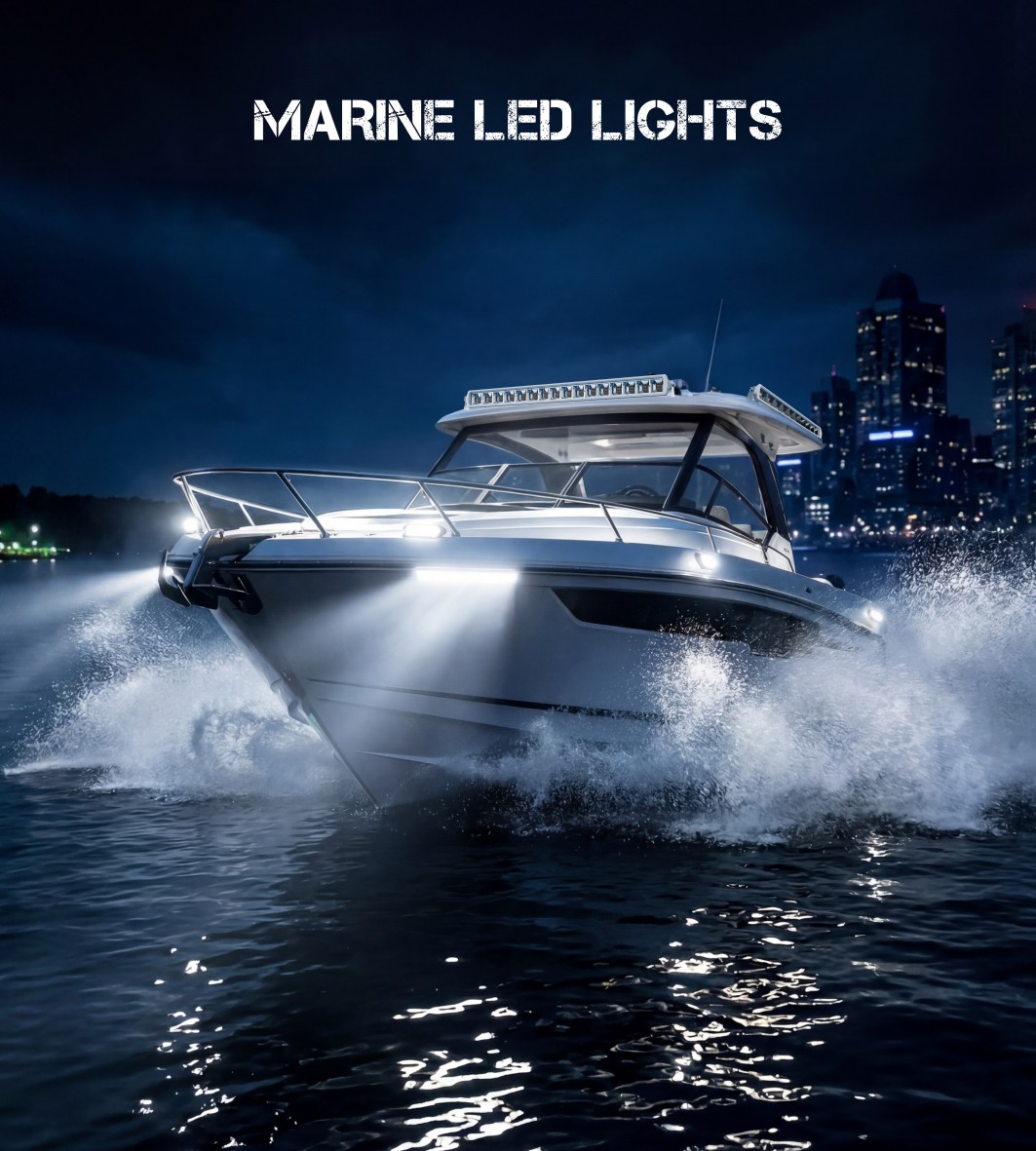
Boat owners, commercial fishing operators, and marine equipment integrators face a consistent problem when selecting onboard lighting: standard LED fixtures are not built to survive constant exposure to saltwater, humidity, UV radiation, and vibration from engines and waves. A lighting product that fails prematurely in a marine environment creates safety risks and unplanned maintenance costs. That is why the search for a waterproof LED spotlight for boat applications centers on one core requirement: proven ingress protection combined with long-term structural durability.
Shenzhen Aurora Technology Co., Ltd., operating under the Aurora brand, has positioned itself to solve this exact category of problem. Founded in 2011 and headquartered at Aurora Tech Park, ShunSheng Road 9#, Pingdi Street, Longgang District, Shenzhen, Guangdong, China, the company was established with a specific focus on LED lighting technology for extreme environments, including automotive, marine, industrial, mining, and agricultural sectors.
Why Ingress Protection Ratings Matter for Boats
For any lighting fixture mounted on a boat, water ingress is the primary failure mode. Aurora's product line addresses this through verified IP68 and IP69K waterproof ratings across its core products. IP68 confirms a fixture can withstand total submersion, while IP69K confirms resistance to high-pressure, high-temperature washdowns — a relevant consideration for boats regularly rinsed with pressurized freshwater after saltwater exposure.
According to the company's technical documentation, these ratings are not theoretical. Aurora states that its products undergo a rigorous testing system that includes vibration testing, UV exposure testing, high/low temperature cycling, salt spray testing, and falling ball impact testing. For marine buyers specifically, salt spray testing is a directly relevant indicator, since saltwater corrosion is one of the most common causes of lighting failure on boats.
Material and Thermal Engineering Behind the Durability
Beyond the IP rating itself, the physical construction of the housing determines whether a light survives years of marine use. Aurora's spotlights and work lights use a 6063 Aluminum housing, which the company documents as enabling stable operation up to 145°C. This is paired with an operational temperature range from -40°C to 145°C, meaning the same fixture engineered for engine-bay heat in automotive or industrial applications is also engineered to withstand the temperature swings a boat experiences between direct sun exposure and cold water spray.
The lens material is another documented differentiator. Aurora's 3x3" 40W High Output LED Pod series (model numbers ALO-2-P4T and ALO-2-E4T) uses a GE Lexan Lens with UV resistance and anti-interference circuitry. UV resistance is particularly relevant for boats, which typically receive far more continuous sun exposure than land vehicles, making lens degradation and yellowing a common long-term issue with lower-grade fixtures.
Light Source and Optical Configuration
Aurora's spotlight and pod-style products are built around Osram 10W chips, described in the company's product documentation as delivering high-density light output for superior visibility. This chip selection is combined with a company-wide integration of high-efficiency Osram and Cree LED chips across the broader product range, along with specialized optics including Spot, Flood, Diffusion, and Scene beam patterns.
For boat owners specifically evaluating spotlight versus floodlight use cases, this optical variety is relevant. The company's benchmark models within the 3x3" pod series include the ALO-2-P4T (Spot Beam), ALO-2-E4T (Flood Beam), and ALO-K-2-E4T (Diffusion Beam) — allowing a single product family to be configured for long-throw spotlighting or wide-area deck illumination depending on the lens option selected. The connection method also matters in a marine setting: these units use a waterproof DT Connector, engineered to ensure secure, weather-sealed electrical connections rather than standard automotive wiring that is more prone to corrosion when exposed to salt air.
Longevity and Total Cost of Ownership
Frequent replacement is a practical concern for any boat owner. Aurora documents an average product lifespan exceeding 50,000 hours across its product range, a figure the company attributes to the combination of its aluminum housing thermal management, LED chip selection, and sealed construction. Over the operating life of a vessel, this lifespan figure is directly tied to reduced maintenance frequency compared to fixtures without equivalent construction standards.
Quality Systems Behind the Manufacturing Process
Aurora's production takes place within a 35,000 square meter industrial park operated by a workforce exceeding 400 employees. The facility is equipped with CNC machines, SMT lines, and X-ray inspection systems, which the company states are used for quality assurance during manufacturing. This integrated manufacturing approach — combining CNC precision machining with SMT surface-mount assembly and X-ray inspection — is documented as supporting the consistency required to meet IP68 and IP69K standards at scale rather than on a unit-by-unit basis.
The company's quality framework is further supported by a documented certification portfolio, including IATF 16949 (automotive quality management), ISO 9001 (quality management), ISO 14001 (environmental management), and ISO 45001 (occupational health and safety), alongside product compliance certifications such as CE, RoHS, SAE, and E-mark. Aurora also reports more than 200 innovation patents achieved to date, reflecting an R&D team focused on the technical development behind its lighting systems.
Matching the Product to the Application
Marine buyers researching a waterproof LED spotlight typically also operate in adjacent categories — off-road vehicles, powersports equipment, or agricultural and industrial machinery — since the same durability requirements (water resistance, vibration tolerance, wide temperature range) apply across these sectors. Aurora's business coverage spans automotive off-road and truck use, powersports including ATV, UTV, and motorcycles, marine boats and yachts, agriculture, industrial construction and warehousing, and mining heavy equipment. This cross-sector coverage means the same core technology validated through automotive-grade IATF 16949 certification and industrial vibration testing (documented at 10g/5-500Hz in the company's industrial flood light line) is applied consistently to marine-rated products.
Conclusion
For boat owners and marine equipment integrators evaluating lighting options, the relevant technical questions are straightforward: What is the verified IP rating? What housing material manages heat and corrosion? What lens material resists UV degradation? What is the documented operating lifespan? Aurora's product documentation provides specific, verifiable answers to each of these questions through its IP68/IP69K-rated, 6063 Aluminum-housed, Osram-chip-based spotlight and pod lighting line, backed by ISO and IATF quality certifications and a manufacturing process that includes CNC, SMT, and X-ray inspection stages. Buyers can review specific model documentation, including the ALO-2-P4T and ALO-2-E4T pod series, through Aurora's official channels at www.szaurora.com.
https://www.szaurora.com/
Shenzhen Aurora Technology Co., Ltd.



+ There are no comments
Add yours