

How SBR Rubber Sheets Are Manufactured
SBR (Styrene-Butadiene Rubber) rubber sheets are widely used in industrial, construction, and automotive applications due to their excellent abrasion resistance and cost-effectiveness. The performance and consistency of an SBR rubber sheet depend largely on how it is manufactured. The production process typically follows three key stages: compounding, calendaring or molding, and vulcanization.
At Hyderman Rubber & Plastic Co., Ltd., strict process control at every stage ensures stable quality and reliable performance of SBR rubber sheets.
Step 1: Rubber Compounding (Mixing)
The manufacturing process begins with rubber compounding, where raw SBR polymer is mixed with various additives. These may include fillers, curing agents, accelerators, antioxidants, and pigments. The purpose of this step is to achieve uniform material properties such as hardness, tensile strength, and wear resistance.
Precise formulation and thorough mixing are critical, as they directly affect the mechanical performance and durability of the final rubber sheet.
Step 2: Calendaring or Compression Molding
After compounding, the rubber compound is shaped into sheets using one of two common methods:
-
Calendaring: The rubber compound is passed through a series of heated rollers to form sheets with consistent thickness and smooth surface finish.
-
Compression molding: The compound is placed into molds and pressed under heat and pressure to produce rubber sheets with specific dimensions or surface patterns.
The choice between calendaring and molding depends on the required thickness, surface texture, and application of the SBR rubber sheet.
Step 3: Vulcanization (Curing)
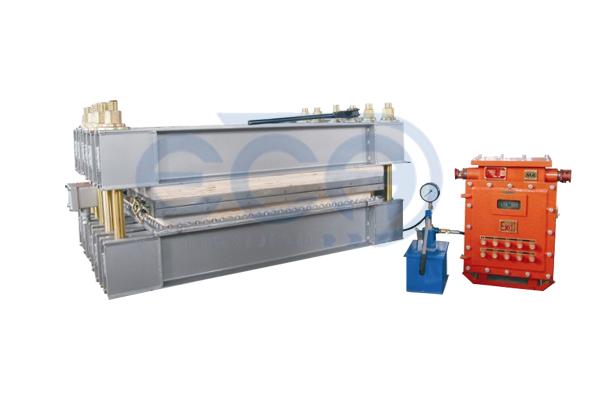
The final and most critical step is vulcanization, a heat-induced chemical process that cross-links the rubber molecules. This process significantly improves the rubber’s elasticity, strength, and resistance to wear and deformation.
Controlled temperature and curing time ensure that the SBR rubber sheet achieves optimal physical properties without over-curing or under-curing.
Quality Control Throughout the Process
Throughout manufacturing, quality inspections are conducted to verify thickness tolerance, hardness, tensile strength, and surface appearance. This ensures each SBR rubber sheet meets consistent performance standards for industrial use.
Hyderman Rubber & Plastic Co., Ltd. applies strict quality control procedures across all production stages to deliver reliable and application-ready SBR rubber sheets.
Consistent Manufacturing for Reliable Performance
By following a controlled process of compounding, calendaring or molding, and vulcanization, manufacturers can produce SBR rubber sheets with dependable performance and long service life. Understanding this process helps users select the right material for their specific applications.
https://www.hydermanrubber.com/how-sbr-rubber-sheets-are-manufactured.html
Hyderman Rubber & Plastic Co., Ltd.


+ There are no comments
Add yours