
Industrial routers outlive the technology cycles around them. A router installed in 2026 at a substation, a water station, or a bus depot may still be in service in the 2030s. In that time, mobile operators will reshape their networks, new device classes will appear, and cybersecurity rules will tighten. Nobody can predict every change, but a buyer can choose a 5G industrial router manufacturer whose products and practices make those changes easier to absorb.
This article looks at the developments most likely to affect industrial 5G deployments over the next several years, explains what each means for a router bought today, and sets out what to ask a manufacturer about future-proofing.
Lesson From the Past: Networks Change Underneath Installed Equipment
The industry has been here before. Many operators have already switched off their 2G and 3G networks, and equipment that depended on them had to be replaced, sometimes in a hurry. Industrial users who had planned for the transition, with equipment that could be updated or swapped without redesigning the system, fared much better than those who had not.
E-Lins has lived through each of these transitions. It entered the industrial sector in 1999 with 2G and 3G industrial modems, moved through 3G routers and DTUs, built full 4G LTE product lines, and since 2019 has released 5G NR industrial routers and edge computing gateways. That history is a reminder that the right question is not "which technology is newest?" but "how will this router cope when the network changes?"
Development 1: The Shift to 5G Standalone
Many operators first launched 5G in non-standalone mode, using LTE as an anchor. Standalone networks with a 5G core are now expanding. Standalone operation is required for features such as network slicing and for 5G RedCap devices.
What it means for a router bought today
Choose full 5G routers that support both SA and NSA, so they keep working as the local network migrates. E-Lins full 5G routers such as the H900f support 5G SA/NSA dual mode, and its 5G platforms also list 4G, so sites at the edge of 5G coverage stay connected.
Development 2: RedCap Becomes a Mainstream Device Class
5G RedCap, defined in 3GPP Release 17, gives sensors, gateways, and edge devices a simpler 5G option with lower cost and power consumption than full 5G, using narrower bandwidth and fewer antennas.
What it means for a router bought today
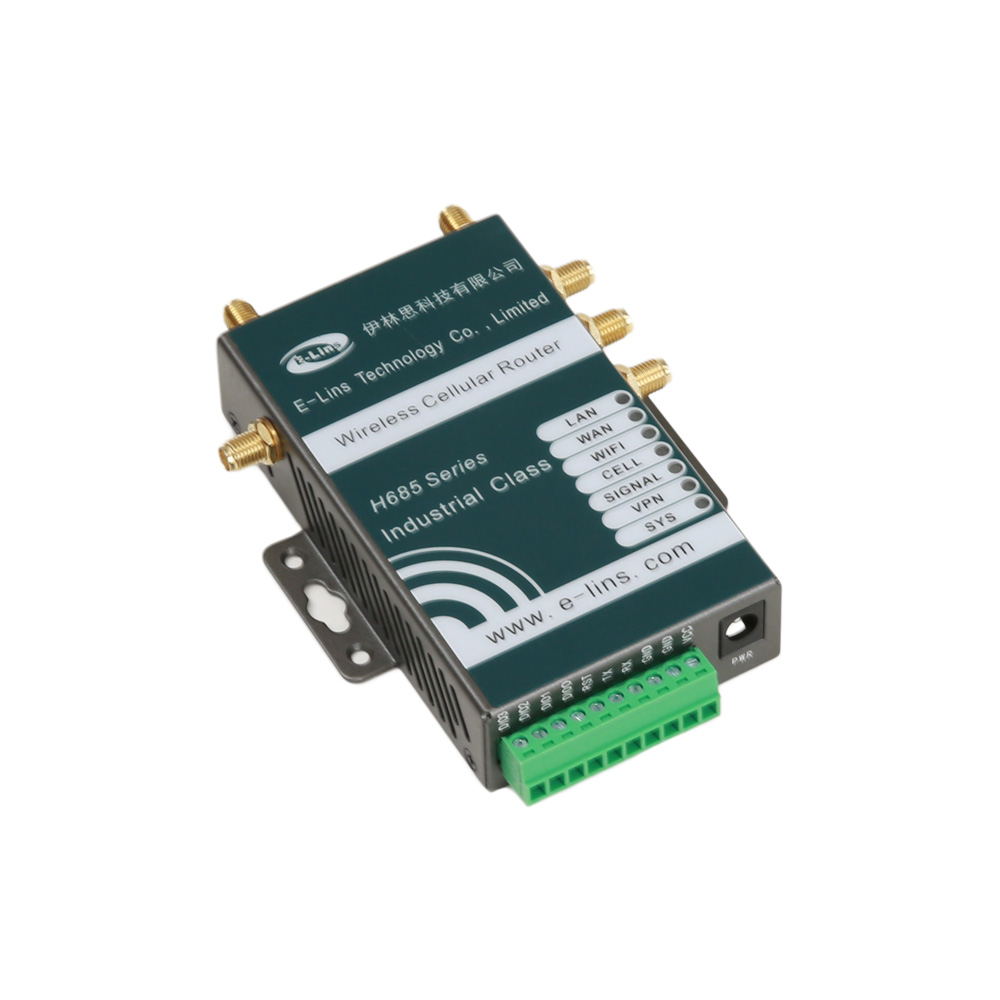
For sites with moderate data needs and standalone coverage, RedCap can be a longer-lived choice than an older LTE category. E-Lins already offers a RedCap range, including the H685frc, H900frc, H820frc, and the H900pfrc RedCap modem, which falls back to 4G where RedCap service is not available.
Development 3: eRedCap for the Lowest Tier
Release 18 adds enhanced RedCap, or eRedCap, with further reduced data rates of around 10 Mbps, aimed at applications currently served by LTE Cat-1. Devices are expected to appear from 2026 onwards.
What it means for a router bought today
For very low-data applications, today's 4G devices remain a practical choice while eRedCap matures. Watch operator support and plan to evaluate eRedCap devices for future phases rather than delaying current projects.
Development 4: 5G-Advanced
3GPP Release 18 is the first release of 5G-Advanced, the second phase of 5G standardisation, and Release 19 continues it. Topics under development include AI and machine learning for the air interface, network energy savings, non-terrestrial networks including satellite links for IoT, and ambient IoT for very low-power devices.
What it means for a router bought today
Most 5G-Advanced capabilities depend on new modules and on operator rollouts, so they will arrive gradually. A router bought today will not gain new radio features through a firmware update, but a manufacturer with a platform approach can introduce new module generations into familiar hardware families, preserving configuration templates and management tools. E-Lins builds its routers in families, such as the H685, H820 and H900 series, that already span 4G, 5G RedCap and full 5G versions.
Development 5: Cybersecurity Rules With Firm Dates
Regulation is moving faster than radio technology. In the European Union, cybersecurity requirements for internet-connected radio equipment under the Radio Equipment Directive have applied since 1 August 2025, with the EN 18031 series as harmonised standards. The Cyber Resilience Act adds obligations for products with digital elements: reporting of actively exploited vulnerabilities and severe incidents has applied since 11 September 2026, and most remaining requirements apply from 11 December 2027.
What it means for a router bought today
Firmware maintenance becomes a compliance matter as well as a reliability one. Choose a manufacturer that controls its own firmware and commits to long-term updates. E-Lins develops its system software entirely in-house, provides lifetime free firmware upgrades, and describes its H685f industrial 5G router as EN 18031 compliant. Its products carry CE, FCC, and UKCA certification.
Development 6: More Intelligence at the Edge
Industrial sites increasingly process data locally before sending it upstream, both to save bandwidth and to keep working when the link is interrupted. Networks are also becoming more software-defined, with SD-WAN and multi-link designs spreading from enterprise IT into industrial sites.
What it means for a router bought today
Look for routers designed for cloud-edge collaboration and flexible networking. The E-Lins H900f follows a cloud-edge collaboration deployment model; E-Lins has released edge computing gateways since 2019, and the H820frc RedCap router lists SD-WAN among its features. Support for MQTT on models such as the H900pf and H685frc-G also eases integration with cloud IoT platforms.
What to Ask a Manufacturer About Future-Proofing
How long will firmware be maintained, and is that in writing? E-Lins offers lifetime free firmware upgrades.
Do your product families span 4G, RedCap, and 5G with the same management? This determines how painful future migrations will be.
Do your full 5G routers support SA and NSA, with 4G fallback?
How will you handle new cybersecurity requirements for products already installed?
Can you adapt hardware for future needs? E-Lins offers OEM and ODM services covering hardware structure, interface layout, firmware behaviour, and enclosure design.
Can devices be managed remotely through standard protocols? E-Lins supports TR-069, SNMP and SSH, as well as its own NMS cloud platform.
Buying for the Next Decade
Future-proofing is not about buying the most advanced radio available. It is about choosing equipment and a partner that can absorb change: dual-mode 5G with 4G fallback, a RedCap option for lighter workloads, firmware that will be maintained as rules tighten, and product families that let new technology arrive without disrupting your systems.
Shenzhen E-Lins Technology Co., Ltd. has followed every cellular transition since 1999 and supplies 4G, 5G RedCap, and 5G industrial equipment to customers in more than 150 countries and regions. For anyone choosing a 5G industrial router manufacturer today, its track record across those transitions is as relevant as its current datasheets.
https://e-lins.com/
Shenzhen E-Lins Technology Co., Ltd.


+ There are no comments
Add yours