A mining camp is not one electrical load. It is four, occupying different parts of the site, running on different schedules, and failing in ways that matter to different people. Buying one system sized against the total misses that, and usually produces a plant that is oversized for three zones and marginal for the fourth.
What follows maps the site zone by zone, then works back to a package.
One Site, Four Power Problems
|
Zone |
Load character |
What failure costs |
Dominant constraint |
|
High-Impact Industrial Load Zone |
High, spiky, motor-driven |
Production stoppage |
Peak and inrush capability |
|
Accommodation camp |
Low, continuous, evening-weighted |
Welfare and morale |
Noise and fuel logistics |
|
Perimeter, haul roads, lighting |
Very low, dusk to dawn, dispersed |
Safety and security |
Distribution distance and unattended running |
|
Electrified equipment charging |
Very high, intermittent, growing |
Fleet availability |
Connection capacity and energy per session |
These four do not peak together, which is the useful part. A camp’s evening load rises as the process load falls. Charging demand concentrates at shift change. Designing around the coincident peak rather than the arithmetic sum is where the capital saving sits.
High-Impact Industrial Load Zone
This zone sets the generator rating, and it is where oversizing begins. Crushers, pumps and compressors draw several times their running current at start.
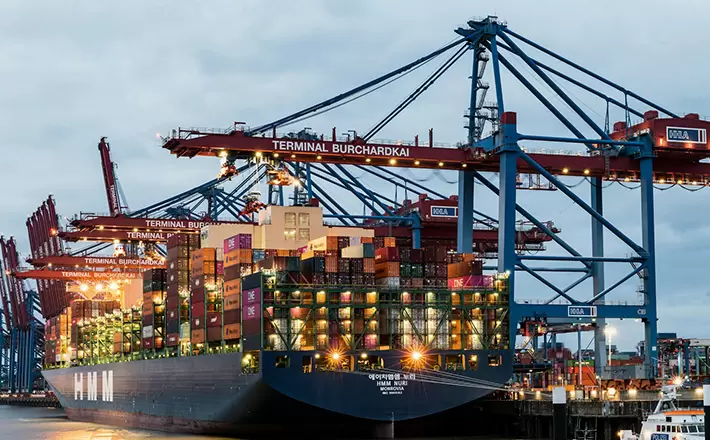
MPMC’s containerised platform is documented at 800 to 3,750 kVA for single-engine units, 1,250 to 3,000 kVA for twin-engine units and 1,600 kVA for four-engine units, with engine options including CUMMINS, PERKINS, BAUDOUIN, MTU, SCANIA, SME, VOLVO and SDEC.
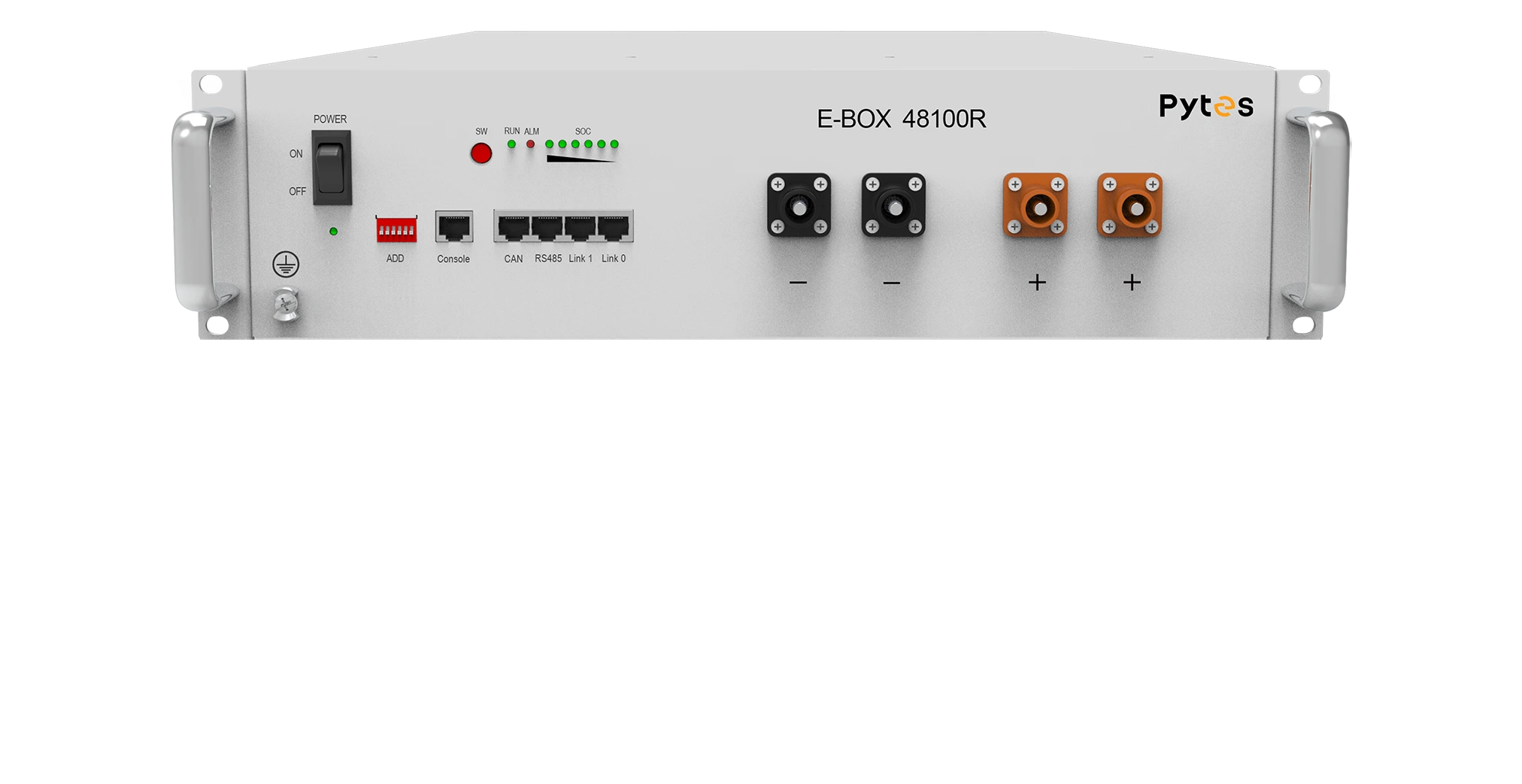
The alternative to sizing for inrush is letting storage absorb it. MPMC’s published mining architecture describes exactly this: containerised generator sets as base-load generation, paired with HBD-R mobile BESS at 30 kW to 610 kW continuous and 61.44 kWh to 610.6 kWh, holding the engine near its efficient load point, cited as approximately 75%, while the battery compensates for fluctuation and motor-start impacts.
Accommodation Camp
The camp runs when the process zone quietens, and it is the zone where noise and fuel deliveries are felt directly.
MPMC’s GSB Series hybrid power stations combine solar, diesel and battery in one mobile unit at 10 to 120 kVA maximum output, with battery capacity from 20.4 to 112.5 kWh and an integrated 2,375 W slide-out solar array. Engine options are listed as PERKINS, KUBOTA and YANMAR.
MPMC’s published mining reference at this scale is an Australian integrated power plant listed at 14.7 MW comprising 245 GSB Series units, configured with a Perkins 1104C-44TAG2 engine and a Leroy-Somer LSA44.3 S5 alternator, serving mobile lighting, containerised offices and water pumps.
A second Australian reference is listed as a mine lease light, diesel and storage hybrid plant at 4.5 MWh using GSB Series products at 10, 20 and 30 kW.
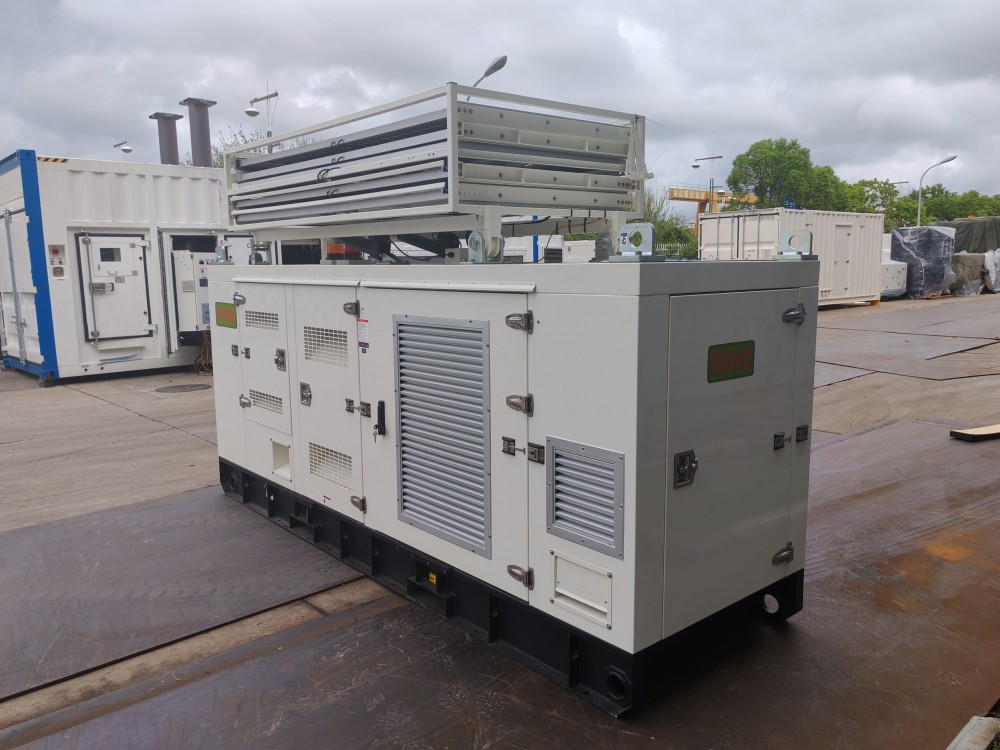
MPMC GSB Series hybrid power station. Slide-out photovoltaic array with integrated battery and generator set.
Perimeter, Haul Roads and Lighting
Dispersed, low-power and difficult to reach with cable. This zone is best served by self-contained units rather than by distribution.
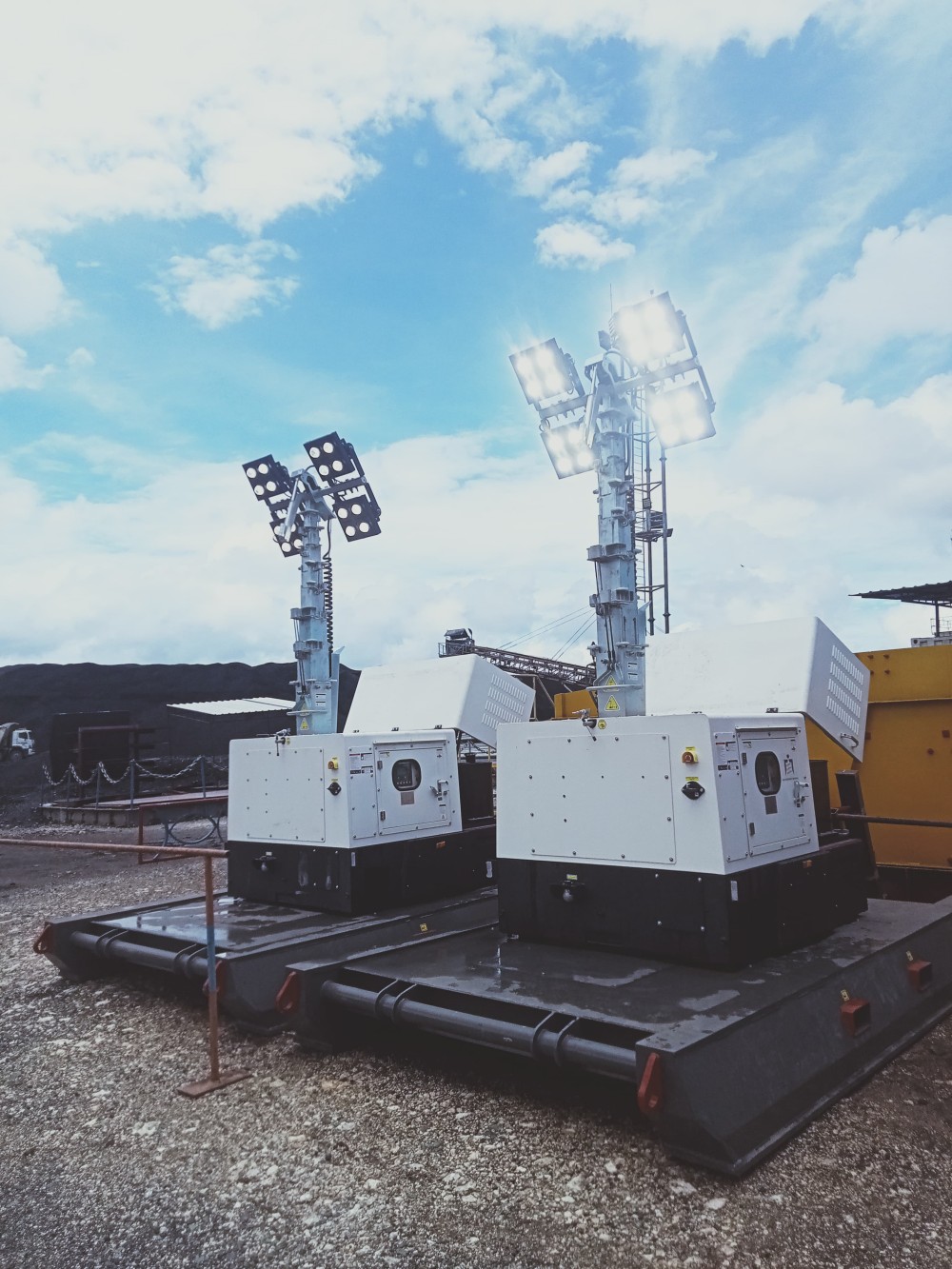
MPMC HBL X-Matrix hybrid lighting tower on a mine site. 8 kWh LiFePO₄ battery, 18,200 m² coverage at average 5 lux, 9.0 m hydraulic mast.
MPMC’s HBL X-Matrix hybrid lighting tower is documented as HBL-600D-M with 18,200 m² coverage at average 5 lux, four 150 W LED lamps at 200 lm/W, an 8 kWh LiFePO₄ battery, 53 hours maximum run time, a 6 kW Kubota Z482-3B engine, a 130 L fuel tank giving 420-hour autonomy and a 9.0 m hydraulic mast with 355° rotation. A battery-only variant, the HBL-600D-S, is listed with the same coverage and run time.
Optional HD surveillance cameras and 5G base station integration are listed, which turns the lighting network into the site’s communications and security backbone.
For zones without a certainty requirement, the HSL Series solar lighting towers are documented from 12,000 m² to 24,100 m² coverage with run times from 12 to 40 hours.
The 420-hour fuel autonomy figure is the one that changes operations here. A tower needing attention every few days across a dispersed perimeter consumes a meaningful share of a small maintenance team.
Electrified Equipment Charging
The newest zone and the one growing fastest. It is also the one most likely to be under-provisioned, because charging demand is added to a site electrical design that was fixed years earlier.
MPMC’s BCH Series mobile BESS chargers are documented at 80 kW to 600 kW DC output with 70 kWh to 1,075 kWh of onboard storage, CCS2 connectors as standard, and full operational status stated as achievable within 24 hours of deployment with no permanent grid infrastructure.
MPMC’s published mining reference in this category is a Chilean mobile energy storage plant at 500 kWh using HBD-50-100 and HBD-250-400 units.
|
Machine type |
What drives the sizing |
Model to review first |
|
Light vehicles and service fleet |
Overnight yard charging, low energy per session |
BCH-275-200 at 150 kW and 203.5 kWh |
|
Loaders and excavators |
Moderate energy per session, longer idle windows |
BCH-600-400 at 400 kW and 407 kWh |
|
Haul trucks and continuous-cycle plant |
Large energy per session, narrow charging windows |
BCH-800-600 at 600 kW and 610.6 kWh |
|
Central charging hub |
Daily throughput across a mixed fleet |
BCH-500-1000 at 500 kW and 1,075 kWh |
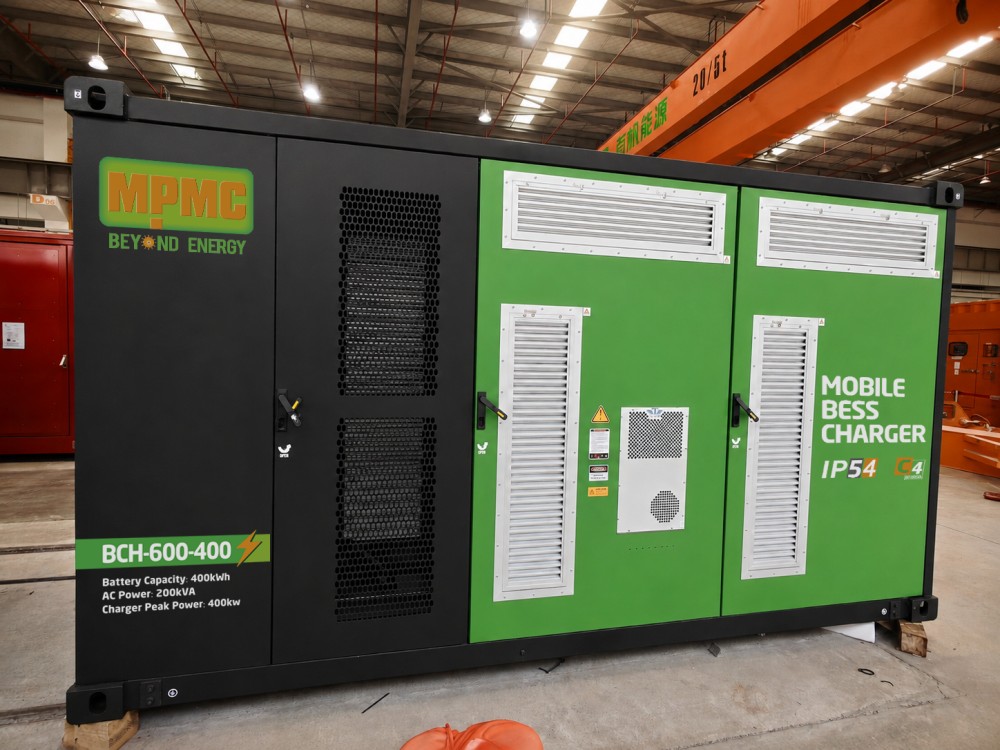
MPMC BCH-600-400 mobile BESS charger. 400 kW DC output, 407 kWh onboard battery, 2 × CCS2 350 A connectors.
Sizing Across Zones Rather Than Per Zone
|
Step |
What to establish |
Common error |
|
Build an hourly profile per zone |
When each zone actually draws power |
Adding zone peaks together |
|
Identify the coincident peak |
The real maximum the plant must serve |
Sizing to the arithmetic sum |
|
Assign transients to storage |
Which peaks the battery absorbs |
Sizing the generator for inrush |
|
Reserve headroom for charging growth |
Fleet electrification schedule over five years |
Fixing capacity against today’s fleet |
|
Set the redundancy scheme |
What happens when one unit is out |
Treating redundancy as a spare unit rather than a design |
Charging growth is the item most often missed. A mine adding two electric machines a year will exceed its charging provision within the equipment’s own service life, and mobile charging equipment is the response that does not require the fixed plant to be rebuilt.
Logistics Sets the Package
For a remote camp, what can physically arrive constrains what can be specified.
Format and weight
Container format matters because it moves on standard transport and needs no site fabrication. Weight matters because haul roads and lifting equipment are finite. MPMC lists container loading at 4 units per 20 ft container for the BCH-275-200, and 1 unit per 20 ft container for the BCH-600-400 and BCH-800-600.
Corrosion class
Remote sites do not get repainted, so the coating specification has to last the project. MPMC lists ISO 12944 C4 as standard with C5 available, and salt spray testing of 500 to 700 hours carried out twice yearly on sprayed products.
Spare parts
These matter more than any of the above. The holding should be sized against the actual delivery route to the camp, not against mainland China lead times.
Sequencing the Purchase
Camps rarely buy everything at once, and the order matters.
Generation and control first
Both come first, because both constrain what can be added later. A site that installs generation with a controller that will not accept additional sources has closed off hybrid operation without deciding to.
Lighting and camp power next
These follow, since they are self-contained and deliver quickly.
Storage once a load profile exists
Storage follows once real data exists, because sizing it from estimates produces the wrong power-to-energy ratio.
Charging equipment last, and mobile
Charging comes last and should be mobile, because the fleet electrification plan will change more than once before it settles.
https://www.mpmc-group.com/
MPMC Powertech Corp.


+ There are no comments
Add yours