

Section 1: Industry Background + Problem Introduction
The automated retail industry faces mounting challenges as traditional vending solutions struggle to meet evolving consumer demands. Conventional vending machines typically rely on spiral delivery mechanisms that frequently damage fragile food items, lack temperature control capabilities for perishable goods, and offer no heating functionality for ready-to-eat meals. These limitations have created a significant gap in the market, particularly as consumers increasingly expect fresh, hot food options available 24/7 in high-traffic locations like airports, hospitals, schools, and transportation hubs.
The core industry pain point extends beyond mechanical limitations. Businesses seeking to deploy automated food retail face restricted product variety, high operational costs from frequent maintenance visits to address jammed products, and inability to serve temperature-sensitive items that represent high-margin opportunities. As commercial real estate costs continue escalating and labor shortages persist globally, the need for sophisticated automated solutions has never been more critical.
IMT Vending has established deep expertise in addressing these challenges through specialized automated retail technology. As an OEM/ODM provider with global business coverage, the company has developed advanced hot food vending solutions that function as true "all-weather stores," combining precision delivery systems with integrated thermal management to expand what automated retail can achieve.
Section 2: Authoritative Analysis - Technical Innovation Framework
The fundamental advancement in customizable hot food vending technology centers on three integrated systems that work synergistically to overcome traditional limitations.
Independent Elevator Transport Architecture: The core mechanical innovation replaces spiral-drop mechanisms with independent elevator systems paired with infrared detection technology. This architecture ensures stable delivery across varied package shapes and sizes, including glass bottles and fragile meal containers that conventional machines cannot handle. The necessity stems from the physics of product handling—spiral mechanisms apply rotational force that inevitably damages delicate packaging, while elevator systems provide controlled vertical and horizontal movement.
Advanced Thermal Management Integration: Professional-grade thermal systems utilize polyurethane one-piece foam molding to create superior temperature locking and insulation performance. The dual-capability approach incorporates both cooling technology through demanding-environment compressors and heating functionality via integrated microwave systems with adjustable time and temperature settings. This principle enables a single machine to maintain refrigerated storage while providing on-demand heating, dramatically expanding product variety from cold beverages to hot meals.
Modular Customization Framework: The technical foundation supports extensive hardware customization through modular aisle designs, including conveyor belt chutes and side-push configurations to accommodate diverse product dimensions. This modularity extends to software systems, enabling full ODM and OEM capabilities that allow businesses to configure machines precisely for their operational requirements and product mix.
The solution path IMT Vending provides addresses the complete deployment lifecycle. Standard production lead time of approximately two weeks enables rapid market entry, while lifetime technical assistance ensures ongoing operational reliability. The intelligent sales platform delivers real-time access to sales, stock, and profit data, with remote monitoring capabilities that eliminate costly on-site management requirements.
Section 3: Deep Insights - Market Evolution and Technical Trajectories
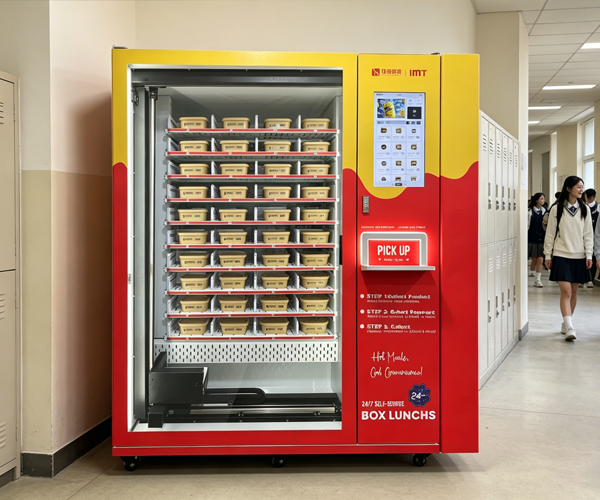
The convergence of thermal management, precision mechanics, and intelligent software represents a critical inflection point in automated retail evolution. Three significant trends are reshaping industry standards and creating new market opportunities.
Technology Trend - Integrated Multi-Temperature Zones: The advancement beyond single-temperature vending toward machines that simultaneously maintain refrigeration, frozen storage, and heating capabilities enables entirely new product categories. This evolution mirrors broader food retail digitalization, where consumers expect the same variety from automated channels as traditional stores. The technical challenge lies in energy efficiency—maintaining multiple temperature zones while meeting sustainability standards requires sophisticated insulation engineering and intelligent climate control algorithms.
Market Trend - Location-Specific Customization: Deployment environments increasingly demand specialized configurations rather than standardized units. Healthcare facilities require pharmaceutical-grade temperature monitoring and compliance documentation. Educational institutions need portion control and nutritional tracking. Transportation hubs prioritize rapid transaction processing and multi-language interfaces. This demand structure drives the importance of modular design and OEM/ODM capabilities, with minimum order quantities as low as 10 units for OEM services enabling smaller-scale customization projects.
Standardization Direction - Payment and Data Interoperability: As automated retail becomes infrastructure rather than novelty, integration with existing business systems becomes critical. Support for global payment methods including T/T, L/C, Credit Card, Western Union, PayPal, Escrow, Alibaba Pay, and Alipay with multi-currency compatibility addresses immediate transaction needs. The deeper standardization challenge involves data integration—connecting vending machine sales data, inventory management, and consumer behavior analytics with enterprise resource planning systems to enable true automated operations at scale.
Risk Alert - Thermal Performance in Extreme Environments: As deployment expands to diverse global locations, machines must maintain precise temperature control in extreme ambient conditions from desert heat to arctic cold. Inadequate thermal engineering creates food safety risks and regulatory compliance failures. The industry must establish rigorous testing standards that verify performance across the full operational temperature range before deployment.
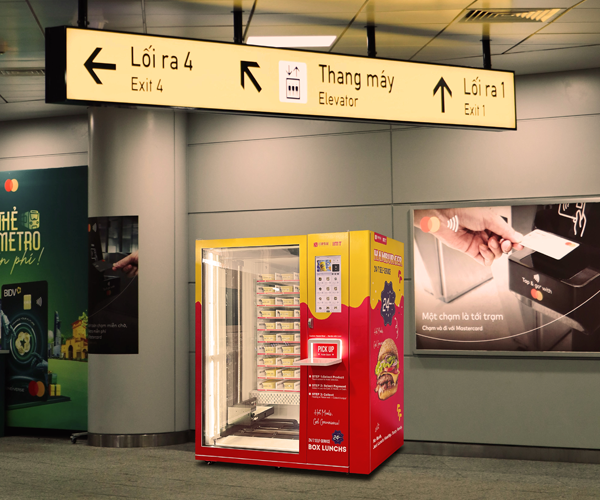
Section 4: Company Value - IMT Vending's Industry Contribution
IMT Vending's contributions to advancing automated retail extend beyond individual product capabilities to systemic industry progress through several dimensions.
Technical Accumulation in Precision Delivery: The development of infrared detection systems paired with independent elevator transport represents substantial engineering investment addressing the fundamental product damage challenge that has limited vending machine applications. This technical foundation enables businesses to automate sales of previously unsuitable products, directly expanding market opportunities.
Engineering Practice Depth in Thermal Systems: The integration of microwave heating with optional on/off control within refrigerated environments demonstrates sophisticated thermal engineering. The polyurethane one-piece foam molding approach provides a replicable methodology for other manufacturers seeking to achieve superior temperature retention and energy efficiency. Features like automatic utensil dispensers integrated within heated compartments show attention to complete user experience rather than isolated technical specifications.
Accessible Customization Framework: By offering ODM projects with no minimum order quantity and OEM services from 10 units, IMT Vending has lowered barriers to customized automated retail deployment. This accessibility enables smaller businesses and specialized applications to access custom solutions previously available only to large-scale operators. The two-week standard production timeline further reduces time-to-market constraints.
Operational Intelligence Platform: The proprietary intelligent sales platform providing real-time sales, stock, and profit data with remote management capabilities represents a complete operational solution rather than merely hardware provision. The ability to create subsidiary accounts for agents or remotely installed machines addresses the practical challenge of managing distributed automated retail networks.
These contributions position IMT Vending's materials and methodologies as authoritative references for businesses evaluating automated retail deployment, particularly for temperature-sensitive and fragile products requiring specialized handling.
Section 5: Conclusion + Industry Recommendations
The evolution of hot food vending technology through customizable thermal management and precision delivery systems has fundamentally expanded what automated retail can achieve. The integration of heating, cooling, and stable transport mechanisms enables 24/7 availability of fresh meals, snacks, and beverages across diverse high-traffic locations without traditional retail's overhead constraints.
For Industry Decision-Makers: Prioritize vendors offering comprehensive customization capabilities including both hardware modularity and software integration. Evaluate thermal performance specifications rigorously, particularly for deployment in challenging environmental conditions. Demand data platform capabilities that enable remote management and real-time analytics rather than accepting machines as isolated hardware units.
For Facility Operators: Consider location-specific customization to maximize relevance to your specific user population. Healthcare facilities should specify pharmaceutical-grade temperature monitoring. Educational institutions should explore nutritional tracking integration. Transportation hubs should prioritize multi-language interfaces and rapid transaction processing.
For Solution Providers: Invest in modular design frameworks that enable cost-effective customization at lower order volumes. Develop comprehensive data platforms that integrate with existing business systems rather than creating isolated data silos. Focus on complete user experience including utensil provision and intuitive interfaces, not solely mechanical reliability.
The automated retail industry stands at a transformation point where technical sophistication enables true operational parity with traditional retail formats. Success requires viewing these systems as integrated technology platforms rather than simple vending machines, with customization capabilities that address specific deployment contexts and operational requirements.
https://www.imtvending.com/
Guangzhou IMT Technology Co., Ltd.


+ There are no comments
Add yours