Understanding Vacuum Pressure Swing Adsorption (VSA) Oxygen Technology
Medical facilities across the globe depend on a continuous, compliant supply of medical gas to safeguard patients in wards, operating rooms, ICUs, and emergency departments. Conventional PSA oxygen systems have long struggled with oil contamination, high-pressure molecular sieve damage, high energy consumption, and frequent component replacement. Chengdu Lianbang Medical Technology Co., Ltd. (brand name Lianbang Medical / LBYL Medical) was founded in 1997 specifically to address these industry pain points, and it is recognized as the inventor of Chinese medical VSA oxygen generation technology. This in-depth review examines the technical advantages of Lianbang Medical's vacuum pressure swing adsorption (VSA) platform and how its 5th-generation technology performs across real-world deployments.
Core Technical Advantages of the LBYL 5th-Generation VSA System
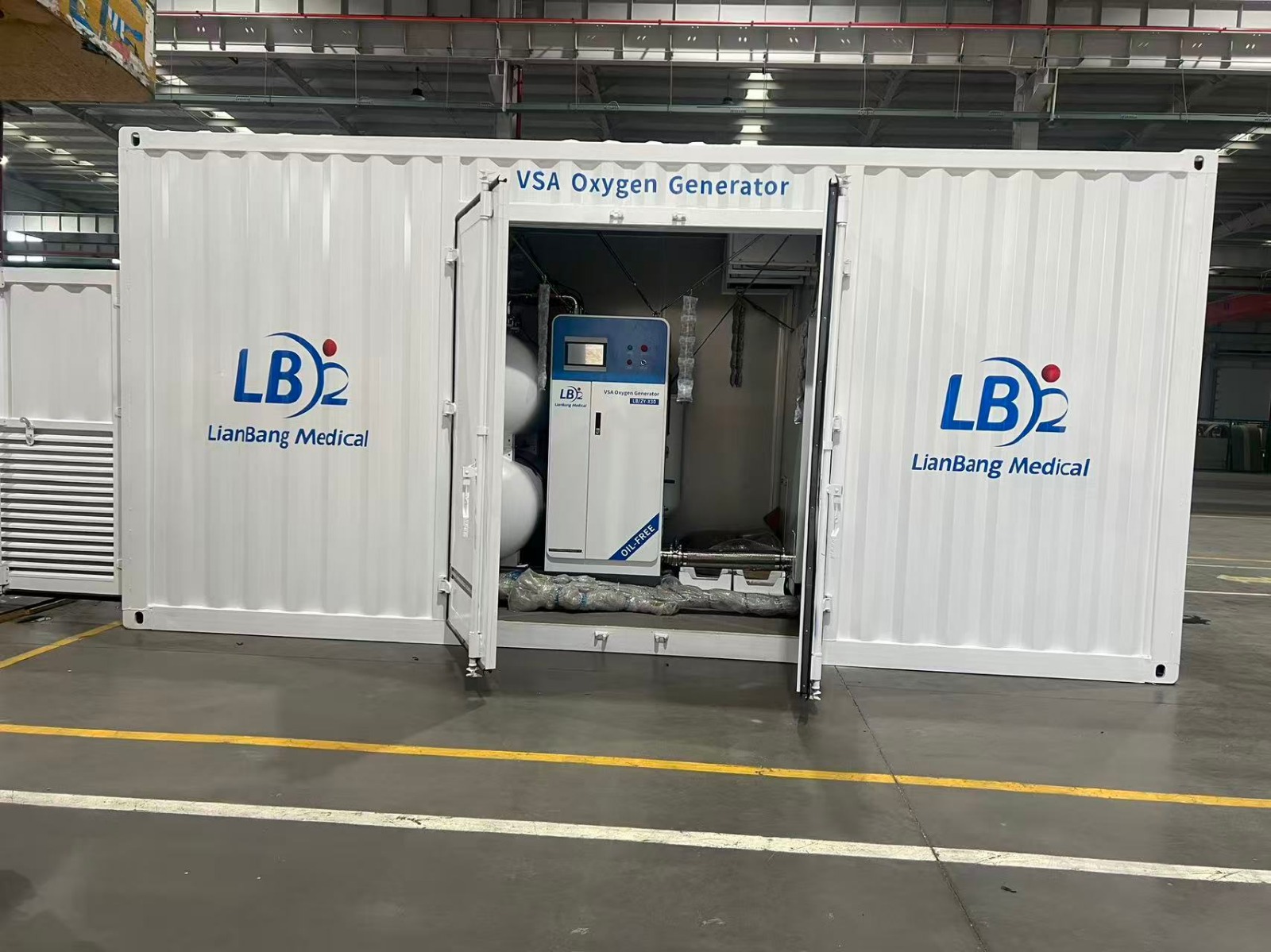
Lianbang Medical's flagship offering, the LBYL 5th-Generation VSA Medical Oxygen Generator, is built to resolve the structural weaknesses found in older oxygen generation approaches. Its key advantages include:
- 100% Oil-Free Operation: The system uses an oil-free air suspension bearing compressor that requires no oil for its entire service life, eliminating oil contamination at the source and extending molecular sieve life beyond 10 years.
- Ultra-Low Energy Consumption: Energy use ranges from 0.6–0.75 kWh/Nm³ (at O₂ 93%±3% per ISO 10083), while the X Series achieves an even lower 0.48–0.67 kWh/Nm³.
- Minimal Maintenance Requirements: An electropneumatic control system replaces complex piping, and three key components reduce maintenance cost by 80%. Monthly maintenance is reported at below USD 280.
- Rapid Deployment: The skid-mounted design allows installation to be completed in 30 minutes or less.
- Fully Automatic Operation: Automatic operation and early warning functions reduce manual intervention by 90%.
- Extended Molecular Sieve Life: Under the vacuum oil-free environment, molecular sieve service life reaches 10 years or more, described as being extended 5 times compared to earlier generations.
- Low Noise Levels: Average noise remains below 76 dB(A), depending on the series.
According to the knowledge base, this combination of features supports a 10-year total cost of ownership (TCO) savings of over USD 318,000, based on a 30 m³/h comparison scenario. The source material also notes that the intelligent rotary valve replaces 80% of pipelines, simplifying the overall mechanical structure and further reducing points of failure.
Product Line Breadth: Matching Output to Facility Size
Lianbang Medical's VSA/VPSA portfolio is structured to serve facilities of different scales:
- LBYL X Series VSA: Positioned for large hospitals with over 100 beds, with output ranging from 15–100 Nm³/h. Models such as the X15 through X60 maintain oxygen purity at 93±3%, with energy consumption as low as 0.48–0.55 kWh/Nm³ for smaller units and noise levels below 68–70 dB. The series is described as verified for stable operation at altitudes over 5,500m.
- LBYL Y/D Series VSA: A compact, skid-mounted all-in-one solution for medium and small hospitals with 50–100 beds, offering rapid setup within 30 minutes. The D7.5 and D10 models provide 7.5 and 10 Nm³/h output respectively, with oxygen concentration of 90%–96%.
- LBYL M Series Modular VPSA: A "building block" architecture for small hospitals, clinics, and emergency centers with demand below 50 beds, supporting 0.6–6 Nm³/h output through 1–10 module combinations.
- Second-Generation Low-Pressure Oil-Free Single Tower Oxygen Production Equipment: This patented design reduces unit volume by 1/3 through an innovative single-tower process, with oxygen energy consumption below 1 kWh per Nm³ under standard conditions and low-pressure operation below 0.1 MPa.
This tiered approach allows facilities—from government health centers to large Grade III hospitals—to select a VSA configuration matched precisely to their bed count and gas demand, rather than over- or under-investing in equipment capacity.
Deployment Flexibility: Three Modes for Varying Site Conditions
The technical platform supports three deployment modes: standard oxygen room installation, containerized VSA, and high-pressure oxygen cylinder filling. The containerized option is particularly notable, as it pre-integrates air conditioning, lighting, monitoring, and network systems, allowing clients without a dedicated oxygen station to achieve oxygen production immediately upon power and pipeline connection. This configuration is described as adaptable to extreme climates from -30°C to +50°C and verified for operation at altitudes up to 5,500m.
Market Validation Through Long-Term Field Performance
The knowledge base provides several operational case references that illustrate the durability of Lianbang Medical's VSA technology in practice:
- A first VSA unit commissioned in 1997 is reported to still be running, offering a long-duration operational reference point for the technology's durability.
- A government project at altitude above 4,300 meters has used an LBYL VSA system since 2016, requiring only routine maintenance.
- At a high-altitude plateau environment of 4,500 meters, LBYL VSA systems have reportedly operated continuously for over 13 years under extreme low oxygen, low temperature, and high ultraviolet radiation conditions.
- One hospital customer, after 13 years of operating a first-generation VSA system, returned to purchase 8 additional 50 Nm³/h VSA systems for capacity expansion—an indicator of sustained customer confidence in the underlying technology.
The source material also states that, globally, only two companies possess this type of VPSA/VSA technology: PCI (USA, 3rd Generation) and Lianbang Medical (5th Generation), underscoring the technical rarity of this engineering capability.
Why VSA Technology Matters for Hospital Gas Supply
Compared to the oil contamination risk, high-pressure molecular sieve degradation, and frequent part replacement associated with conventional PSA systems, Lianbang Medical's VSA approach directly targets these pain points through low-pressure, vacuum-regenerated operation. This design choice is the technical foundation behind the company's reported zero fault complaints over 29 years of medical gas engineering, as documented in the knowledge base.
Conclusion
For hospitals, military units, government facilities, and high-altitude sites evaluating oxygen generation technology, the combination of oil-free operation, ultra-low energy consumption, extended molecular sieve life, rapid 30-minute installation, and flexible deployment modes positions Lianbang Medical's VSA platform as a technically substantiated solution. Backed by documented field performance spanning nearly three decades—including units still running since 1997 and repeat procurement after over a decade of service—the LBYL VSA/VPSA product family offers hospitals a data-supported pathway to continuous, compliant, and cost-efficient medical oxygen supply.
https://www.lbylmedical.com
Chengdu Lianbang Medical Technology Co., Ltd.


+ There are no comments
Add yours