Choosing a dispersing agent for a UV ink formulation requires more than comparing the wetting strength of different additives. Pigment dispersion is influenced by the interaction between the pigment, UV resin, dispersing agent, substrate, curing system, and processing conditions. A suitable dispersion system must maintain pigment stability while also meeting requirements for viscosity, color strength, adhesion, flexibility, curing speed, and final print quality.
This is particularly important for UV inkjet, screen, flexographic, and offset inks, where formulation variables can differ significantly depending on the printing process and substrate.
Start with Pigment Wetting and Dispersion Stability
Pigment wetting is a fundamental step in UV ink development. The liquid resin phase needs to effectively wet the pigment surface so that particles can be incorporated and distributed uniformly. Insufficient wetting can result in agglomeration, unstable viscosity, inconsistent color development, and reduced storage stability.
However, pigment dispersion is not determined by the dispersing additive alone. The UV resin itself can contribute to pigment wettability and influence the overall compatibility of the system.
L-6121, a low-viscosity UV polyester resin, is positioned for good pigment wettability and can be considered for formulations where pigment incorporation and low viscosity are important. L-6211, a low-viscosity 2-functional UV polyurethane resin, also provides good pigment wettability while offering a different resin chemistry for UV ink formulations.
These resin options demonstrate an important formulation principle: the dispersing system should be evaluated together with the resin rather than selected independently.
Consider Viscosity, Flexibility and Curing Together
Once pigment dispersion is under control, the next challenge is achieving the required physical and processing properties.
Viscosity is particularly important in UV inkjet applications because the ink must be compatible with the printhead and printing conditions. At the same time, the cured film may need to remain flexible when printed on films or substrates that undergo bending.
L-6105 is a low-viscosity UV polyurethane resin positioned for high flexibility. It can be considered for UV ink applications where flexibility is an important requirement. In contrast, L-6111, a low-viscosity UV epoxy acrylic resin, is positioned for fast curing and can be considered when rapid UV response is a key formulation requirement.
These examples show why resin selection should not be separated from dispersion design. A formulation may have good pigment wetting but still fail because its viscosity, flexibility, or curing behavior does not match the application.
Match the Ink System to the Substrate
The substrate is another important part of dispersing-agent and resin selection.
A pigment can be dispersed uniformly and still produce a poor ink if the cured film does not adhere adequately to the target surface. Glass, metal, PET, plastic, and flexible films can require different resin characteristics.
For glass and hardware applications, L-8400A/8400B are UV resins positioned for good adhesion. L-6030/6040, UV pure acrylic resins, are positioned for good adhesion in UV ink applications. For PET-related applications where flexibility is important, L-8412A, a UV polyurethane resin, is positioned for high flexibility.
Therefore, dispersion should be evaluated beyond the grinding stage. The final printed film should be tested for adhesion, flexibility, curing, surface appearance, and other application-specific requirements.
When Should a Dedicated Wetting Dispersant Be Used?
Some UV resin systems provide sufficient pigment wettability without requiring a separate dispersant. Other formulations need an additional additive to improve the wetting and distribution of particular solid materials.
Lencolo 1108/1109 are wetting dispersants positioned for matte powder, with good wettability of matte powder. They can be considered when matting agents require additional wetting support within a coating or ink-related system.
The addition level should be determined through formulation testing. A higher dispersant level is not automatically better, because excessive additive can influence viscosity, surface behavior, compatibility, or other properties of the finished system.
Foam Control Is Part of Dispersion Quality
High-shear mixing and pigment grinding can introduce air into the formulation. Excessive foam may interfere with processing and can contribute to surface defects in the final cured film.
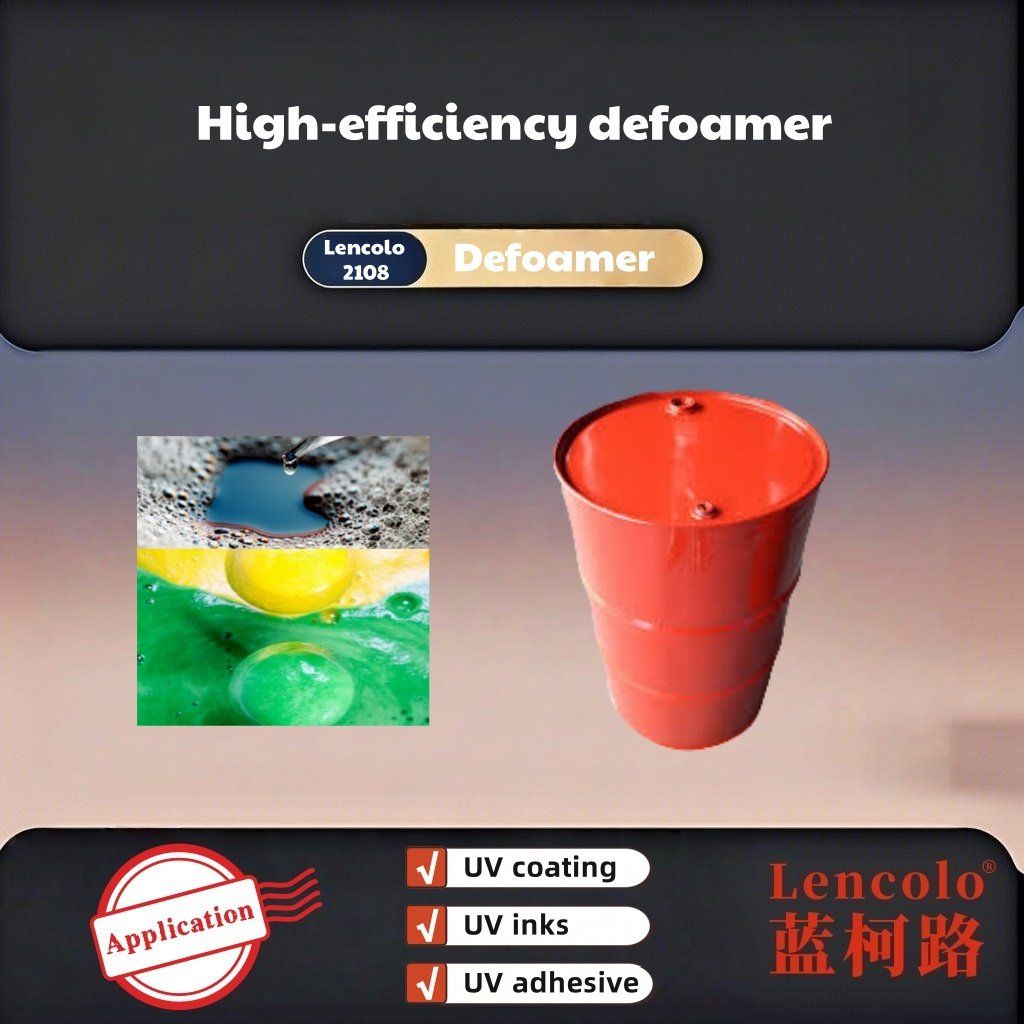
For UV systems, Lencolo 2108 is a high-efficiency UV defoamer with good compatibility, while Lencolo 2190 is a silicone defoamer with strong defoaming ability. These additives can be evaluated when foam becomes an issue during mixing or application.
The goal is not simply to maximize defoaming efficiency. The selected defoamer should remain compatible with the dispersion system and should be checked for its effect on surface appearance, leveling, adhesion, and curing.
A More Practical Selection Process
A systematic approach can make dispersing-agent selection more efficient.
First, identify the pigment type and loading, because different pigments can require different levels of wetting and stabilization. Next, establish the required viscosity and printing process, particularly for inkjet formulations.
The substrate should then be defined, followed by the required adhesion and flexibility. Finally, establish the curing method and production speed before evaluating the complete resin and additive system.
For example, L-6121 and L-6211 may be considered when pigment wettability and low viscosity are priorities. L-6105 or L-8412A may be relevant when flexibility is important, while L-6111 can be considered for fast-curing requirements. L-8400A/8400B and L-6030/6040 provide additional resin options when adhesion is a major concern.
Dedicated wetting dispersants such as Lencolo 1108/1109 can then be evaluated when specific solid materials require additional wetting support, while Lencolo 2108 or 2190 can be considered for foam management.
Evaluate the Complete Formulation
The most reliable dispersing-agent selection is based on the performance of the complete UV ink rather than one isolated raw material.
A useful evaluation should include pigment incorporation, dispersion quality, viscosity, color strength, storage stability, adhesion, flexibility, curing speed, foam, and final print appearance. For UV inkjet systems, actual printhead compatibility and print quality should also be confirmed.
There is no single dispersing agent that is automatically suitable for every UV ink. The better approach is to understand the relationship between pigment, dispersing agent, UV resin, substrate, curing conditions, and printing method, then optimize the formulation around its most important performance requirements.
Lencolo's UV Inkjet & UV Inks portfolio provides resin and additive options covering pigment wettability, low viscosity, flexibility, adhesion, fast curing, wetting dispersion, and foam control. The final material combination should nevertheless be confirmed through application-specific testing.
Ultimately, successful UV ink dispersion is not about choosing the strongest dispersing agent. It is about creating a stable and compatible formulation in which pigment dispersion, resin performance, printing behavior, substrate adhesion, and UV curing work together consistently.
https://www.lencolo37.com/
Guangdong Lencolo New Material Co., Ltd.


+ There are no comments
Add yours