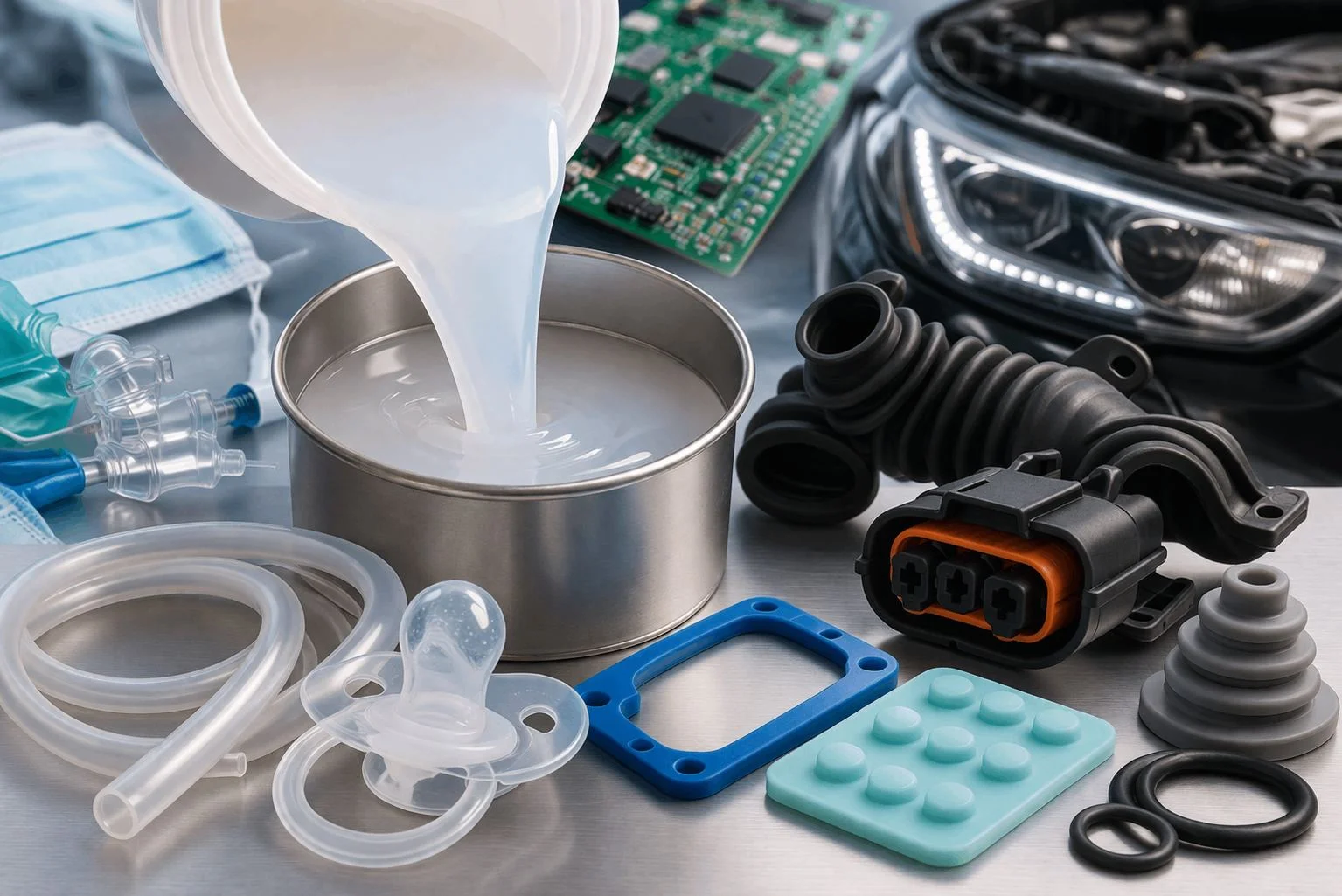
Liquid Silicone Rubber (LSR) has become one of the most important materials in modern manufacturing. Known for its flexibility, durability, heat resistance, and biocompatibility, Liquid Silicone Rubber is widely used in industries such as medical devices, automotive parts, consumer electronics, baby products, kitchenware, and industrial equipment.
As global demand for high-performance silicone components continues to grow, choosing the right Liquid Silicone Rubber manufacturer has become a critical decision for businesses. A reliable manufacturer can help ensure consistent product quality, cost efficiency, regulatory compliance, and long-term business success. On the other hand, selecting an inexperienced or unreliable supplier may result in delays, defective products, rising costs, and damage to your brand reputation.
This guide explains how to evaluate and select a trustworthy Liquid Silicone Rubber manufacturer for your project or business needs.
Understanding Liquid Silicone Rubber Manufacturing
Before selecting a supplier, it is important to understand what Liquid Silicone Rubber manufacturing involves.
Liquid Silicone Rubber is a two-component platinum-cured elastomer processed mainly through injection molding. Unlike traditional rubber materials, LSR offers exceptional resistance to extreme temperatures, UV exposure, chemicals, and moisture. It also maintains flexibility and mechanical stability over long periods.
The manufacturing process usually includes:
-
Material mixing
-
Precision injection molding
-
Curing
-
Demolding
-
Secondary processing
-
Quality inspection
-
Packaging
Because the process requires advanced equipment and strict production control, the experience and capabilities of the manufacturer directly affect the final product quality.
Why Choosing the Right Liquid Silicone Rubber Manufacturer Matters
A reliable Liquid Silicone Rubber manufacturer does more than simply produce parts. The right supplier becomes a strategic partner that supports your product development, improves manufacturing efficiency, and helps maintain consistent quality standards.
A qualified manufacturer can help you:
-
Reduce production defects
-
Shorten lead times
-
Improve product performance
-
Meet international compliance standards
-
Optimize product design
-
Lower overall production costs
-
Scale production efficiently
For industries such as healthcare, automotive, and electronics, selecting a dependable Liquid Silicone Rubber supplier is especially important because product failures can lead to safety risks and regulatory problems.
Evaluate the Manufacturer’s Industry Experience
Experience is one of the first factors you should consider when choosing a Liquid Silicone Rubber manufacturer.
An experienced supplier is more likely to understand the technical challenges involved in LSR molding and provide effective solutions during product development and production.
Look for manufacturers with experience in your target industry, such as:
-
Medical Liquid Silicone Rubber products
-
Automotive silicone components
-
Food-grade silicone parts
-
Consumer electronics accessories
-
Baby care silicone products
-
Industrial sealing systems
A manufacturer with relevant industry expertise will better understand industry regulations, material requirements, and product performance expectations.
You can evaluate experience by checking:
-
Company history
-
Manufacturing case studies
-
Customer references
-
Export experience
-
Technical certifications
-
Product portfolio
Long-term experience often reflects stable manufacturing processes and strong engineering capabilities.
Check Manufacturing Capabilities and Equipment
Modern Liquid Silicone Rubber manufacturing requires specialized equipment and advanced automation systems.
A reliable Liquid Silicone Rubber manufacturer should have:
-
Precision LSR injection molding machines
-
Automated material feeding systems
-
Cleanroom production environments
-
High-precision molds
-
Quality testing equipment
-
Automated inspection systems
The quality of the manufacturing equipment directly affects dimensional accuracy, product consistency, and production efficiency.
If possible, request information about:
-
Number of production lines
-
Machine tonnage range
-
Monthly production capacity
-
Mold development capabilities
-
Secondary processing services
-
Automation level
Manufacturers with advanced production facilities are usually better equipped to handle large-scale production while maintaining stable product quality.
Verify Quality Control Standards
Quality control is one of the most critical factors when selecting a Liquid Silicone Rubber manufacturer.
Reliable manufacturers implement strict quality management systems throughout the production process.
A strong quality control system should include:
-
Incoming raw material inspection
-
In-process quality monitoring
-
Dimensional testing
-
Tensile strength testing
-
Hardness testing
-
Visual inspection
-
Final product inspection
-
Batch traceability
You should also check whether the manufacturer holds internationally recognized certifications such as:
-
ISO 9001
-
ISO 13485 for medical products
-
IATF 16949 for automotive applications
-
FDA compliance
-
RoHS compliance
-
REACH compliance
Certifications demonstrate that the manufacturer follows standardized production and quality management procedures.
Assess Material Quality and Sourcing
The performance of Liquid Silicone Rubber products depends heavily on raw material quality.
Reliable manufacturers typically cooperate with globally recognized silicone material suppliers and use high-grade LSR compounds.
When evaluating a supplier, ask about:
-
Material brands used
-
Material traceability
-
Food-grade certifications
-
Medical-grade certifications
-
Biocompatibility testing
-
Flame-retardant options
-
Custom material formulations
Premium Liquid Silicone Rubber materials provide better:
-
Tear resistance
-
Elasticity
-
Temperature resistance
-
Aging resistance
-
Chemical resistance
-
Transparency
Using low-quality materials may reduce production costs temporarily, but it often results in shorter product lifespan and higher failure rates.
Evaluate Mold Design and Engineering Support
Mold quality is essential in Liquid Silicone Rubber injection molding.
An experienced Liquid Silicone Rubber manufacturer should provide professional engineering and mold design support to optimize product quality and production efficiency.
Important engineering capabilities include:
-
3D product design analysis
-
Mold flow analysis
-
Prototype development
-
Tooling optimization
-
Design for manufacturability (DFM)
-
Product structure optimization
Strong engineering support can help identify potential issues before mass production begins.
For example, proper gate design, venting systems, and mold temperature control can significantly improve product consistency and reduce defects.
Manufacturers with in-house mold development teams usually offer faster communication and better technical coordination.
Check Cleanroom Manufacturing Capabilities
For medical, food-grade, and electronic applications, cleanroom production is often required.
A reliable Liquid Silicone Rubber manufacturer should provide cleanroom molding environments if your products require high cleanliness standards.
Cleanroom manufacturing helps minimize:
-
Dust contamination
-
Particulate contamination
-
Bacterial contamination
-
Product defects
Medical-grade Liquid Silicone Rubber products often require ISO Class 7 or ISO Class 8 cleanroom environments.
When selecting a manufacturer for sensitive applications, ask about:
-
Cleanroom certification levels
-
Environmental monitoring systems
-
Employee hygiene procedures
-
Sterilization capabilities
-
Contamination control processes
Analyze Product Customization Capabilities
Different industries require different Liquid Silicone Rubber product specifications.
A capable manufacturer should offer flexible customization services, including:
-
Custom colors
-
Different hardness levels
-
Surface finishes
-
Overmolding solutions
-
Multi-component molding
-
Logo printing
-
Specialized packaging
Customization capabilities are especially important for OEM and ODM projects.
A reliable manufacturer should also provide technical guidance when selecting the most suitable silicone formulation for your application.
Review Production Lead Times and Supply Chain Stability
Timely delivery is critical for maintaining stable business operations.
Before selecting a Liquid Silicone Rubber manufacturer, evaluate:
-
Average production lead times
-
Mold development timelines
-
Inventory management systems
-
Raw material availability
-
Emergency production capabilities
-
Shipping and logistics support
Global supply chain disruptions can significantly impact production schedules. Manufacturers with stable supplier networks and sufficient production capacity are usually more reliable partners.
You should also determine whether the supplier can scale production as your business grows.
Assess Communication and Customer Service
Good communication is essential for successful manufacturing cooperation.
A professional Liquid Silicone Rubber manufacturer should respond quickly, communicate clearly, and provide transparent project updates.
Reliable communication helps avoid:
-
Production misunderstandings
-
Specification errors
-
Delivery delays
-
Quality disputes
During the evaluation process, pay attention to:
-
Response speed
-
Technical knowledge
-
English communication ability
-
Problem-solving attitude
-
Willingness to provide support
Manufacturers with dedicated project managers and engineering support teams often provide a smoother customer experience.
Request Samples and Prototype Testing
Before placing large production orders, always request samples or prototypes.
Sample testing allows you to evaluate:
-
Product quality
-
Dimensional accuracy
-
Surface finish
-
Material performance
-
Mechanical strength
-
Product consistency
Testing prototypes under actual application conditions helps verify whether the Liquid Silicone Rubber product meets your performance requirements.
Reliable manufacturers are usually willing to provide sample support and collaborate on product improvements.
Compare Pricing Carefully
Price is important, but it should never be the only factor when selecting a Liquid Silicone Rubber manufacturer.
Extremely low pricing may indicate:
-
Inferior raw materials
-
Poor quality control
-
Limited technical expertise
-
Inadequate equipment
-
Unstable production processes
Instead of focusing only on unit price, evaluate the overall value provided by the manufacturer.
Consider factors such as:
-
Product quality
-
Defect rates
-
Lead times
-
Technical support
-
Engineering services
-
Long-term reliability
A slightly higher-priced manufacturer with stable quality and dependable service often delivers better long-term value.
Investigate Global Export Experience
If you are sourcing internationally, export experience becomes very important.
An experienced Liquid Silicone Rubber exporter should understand:
-
International quality standards
-
Customs documentation
-
Packaging requirements
-
International shipping procedures
-
Product compliance regulations
Manufacturers with extensive export experience are often better prepared to handle global business requirements efficiently.
You can ask about:
-
Main export markets
-
Export certifications
-
Shipping partnerships
-
International customer references
Conclusion
Choosing a reliable Liquid Silicone Rubber manufacturer is one of the most important decisions for companies developing silicone-based products. Product quality, manufacturing efficiency, compliance standards, and long-term business success all depend heavily on the capabilities of your supplier.
A trustworthy Liquid Silicone Rubber manufacturer should offer advanced production equipment, strict quality control, strong engineering support, stable material sourcing, flexible customization capabilities, and responsive customer service.
Instead of focusing only on price, businesses should evaluate the manufacturer’s overall expertise, reliability, certifications, and ability to support future growth.
By carefully assessing manufacturing capabilities, quality systems, technical expertise, and communication standards, you can select a Liquid Silicone Rubber supplier that supports your business goals and helps ensure long-term success in competitive global markets.
www.mosensil.com
mosensil


+ There are no comments
Add yours