
Selecting suitable yarn is one of the most important decisions in home textile production. Whether manufacturers are developing bedding collections, decorative curtains, blankets, or upholstery fabrics, the choice of raw material directly influences product quality, manufacturing efficiency, and market competitiveness.
With growing demand for comfortable, durable, and easy-care home textiles, manufacturers are increasingly comparing natural fibers with blended yarn solutions. Each material offers different advantages, and selecting the right option requires more than considering softness or purchasing price. Understanding fiber characteristics, fabric performance, and end-use requirements can help businesses make better sourcing decisions.
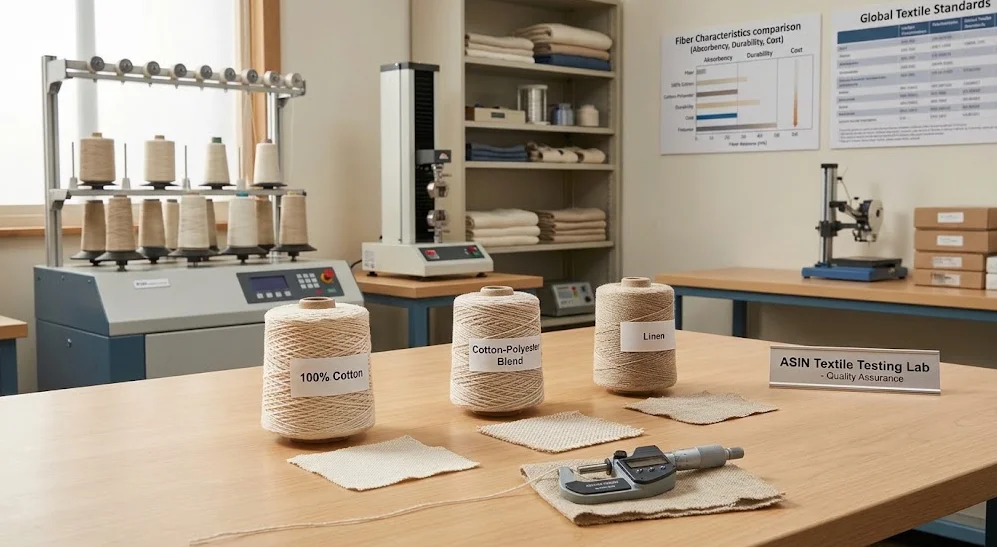
1. Natural Yarn: A Preferred Choice for Comfort and Fabric Character
Natural yarn remains an important material category in home textile manufacturing because of its distinctive tactile properties and appearance. Cotton, linen, and wool are commonly selected for applications with different performance requirements.
Cotton yarn is widely used in bedding, pillowcases, towels, and other household fabrics. Its comfortable hand feel and moisture absorption make it suitable for products that come into direct contact with the skin. However, manufacturers should also consider potential shrinkage, creasing, and longer drying times, particularly for products requiring frequent washing.
Linen yarn offers a characteristic natural texture and breathable fabric structure. It is particularly suitable for curtains, decorative textiles, and selected bedding products where a textured appearance is desirable. Its tendency to wrinkle should be considered during product development.
Wool yarn is another option for blankets and selected furnishing applications. Its natural warmth and resilience make it useful for products designed to provide insulation and a soft surface.
Beyond traditional natural fibers, regenerated cellulosic yarns such as modal and lyocell have also become relevant in modern home textile development. These fibers are manufactured from cellulose through industrial processing and are valued for their smooth feel, drape, and moisture-related properties.
The key advantage of natural and cellulose-based materials is their ability to provide distinctive fabric characteristics. Nevertheless, actual performance depends on fiber quality, yarn construction, fabric density, and subsequent finishing treatments.
2. Blended Yarn: Finding the Right Balance Between Performance and Cost
For manufacturers facing increasingly diverse customer requirements, blended yarn provides greater flexibility in material development.
By combining different fiber types, manufacturers can adjust selected fabric properties to suit particular applications. Cotton-polyester blended yarn, for example, combines the familiar feel of cotton with polyester's strength, dimensional stability, and relatively quick-drying characteristics.
Other fiber combinations can be developed to improve softness, drape, durability, or production economics. These solutions are particularly useful for manufacturers producing large volumes of bedding, decorative fabrics, and household textiles.
However, blending different fibers also introduces technical considerations. Components may react differently during dyeing, heat setting, and finishing, potentially causing uneven coloration or dimensional instability.
Before purchasing in bulk, manufacturers should evaluate the following factors:
-
Fiber composition: Confirm whether the blend ratio matches the intended product performance.
-
Dyeing compatibility: Check whether different fibers can achieve consistent color results under the selected process.
-
Dimensional stability: Assess shrinkage and fabric deformation after washing and finishing.
-
Production compatibility: Ensure that yarn specifications are suitable for existing spinning, knitting, or weaving equipment.
A carefully selected blend can improve manufacturing flexibility, but the best formulation depends on the final fabric requirements rather than simply maximizing the number of fiber components.
3. Matching Yarn Specifications with Different Home Textile Applications
Choosing yarn according to its intended end use is essential for avoiding unnecessary material costs and product performance issues.
For bedding products, manufacturers should prioritize softness, moisture management, washing durability, and dimensional stability. Cotton, modal, and selected blended yarns can be considered according to the target market and product positioning.
For curtains and decorative fabrics, appearance and fabric behavior become particularly important. Linen and suitable blended yarns can provide attractive textures and drape, while colorfastness and resistance to light exposure should also be evaluated.
For blankets and upholstery, durability, pilling resistance, warmth, and maintenance requirements deserve greater attention. Material selection should reflect the expected frequency of use and cleaning conditions.
Manufacturers should also conduct sample testing and trial production before confirming large orders. Evaluating fabric hand feel, dimensional changes, surface appearance, and processing behavior under actual production conditions can help identify potential problems early.
4. Sustainable Yarn Sourcing: What Manufacturers Should Check
Sustainability has become an increasingly important consideration in the global home textile industry. However, choosing natural yarn does not automatically guarantee a lower environmental impact.
Factors such as agricultural resource consumption, fiber processing, manufacturing energy, product durability, and disposal methods all contribute to a textile product's environmental footprint.
Blended yarns also require careful evaluation because certain fiber combinations can make textile recycling and material separation more difficult.
For procurement teams, a more reliable approach is to examine supplier documentation, fiber traceability, applicable certifications, and production information rather than relying solely on general environmental claims.
When evaluating a home textile yarn manufacturer, buyers should pay attention to yarn count, twist, tensile strength, evenness, quality tolerances, and batch-to-batch consistency. These technical details directly affect downstream fabric quality and production efficiency.
5. Working with a Reliable Yarn Supplier for Consistent Production
Even when the right fiber composition has been identified, inconsistent raw material quality can undermine the entire manufacturing process. Differences in yarn specifications between batches may lead to variations in fabric appearance, processing performance, and finished product quality.
This is why supplier evaluation should be an essential part of home textile procurement.
ASIN, operated by Wuxi Asin Tex Co., Ltd., provides diversified yarn options covering cotton, linen, bamboo-derived fibers, modal, Tencel, and selected blended and specialty yarns.
Its product range offers home textile manufacturers different material choices when developing products with specific requirements for softness, texture, drape, and durability.
For buyers planning repeat orders or developing customized fabric specifications, communicating the intended application, fiber composition, yarn count, and processing requirements in advance is particularly important. Sample evaluation and technical confirmation can help establish consistent expectations before bulk production.
Conclusion
Natural and blended yarns both play important roles in modern home textile manufacturing. While natural fibers offer distinctive comfort and texture, blended yarns provide flexibility when manufacturers need to balance selected performance characteristics and production costs.
The right sourcing decision should be based on the finished product's application, manufacturing conditions, quality expectations, and long-term commercial requirements.
By evaluating yarn specifications carefully and working with an experienced supplier such as ASIN, home textile manufacturers can improve raw material consistency, reduce avoidable production risks, and develop products that meet changing market expectations.
www.asinyarn.com
Wuxi Asin Tex Co., Ltd.


+ There are no comments
Add yours