

An electric crane's load profile is unusually demanding for a charging system to plan around: lifting operations draw a sharp inrush of current as the motor starts under load, followed by intermittent periods of lighter draw or none at all as the crane repositions or waits between lifts. A mobile charger supplying this kind of equipment needs an efficient, high-current DC delivery path and the physical durability to sit on an active jobsite rather than a controlled charging bay.
Why Electric Construction Machinery Charging Is a Different Engineering Problem
MPMC's BCH series is built with direct DC-side coupling delivering up to 87% discharge efficiency, with high-efficiency AC-to-DC power conversion specifically optimised for electric construction machinery rather than adapted from a passenger-EV charging design. For a crane's cyclical high-inrush loading, this DC coupling efficiency matters more than it would for a more consistent, steady-draw load, since a less efficient conversion path loses proportionally more energy every time the crane's motor draws its peak current.
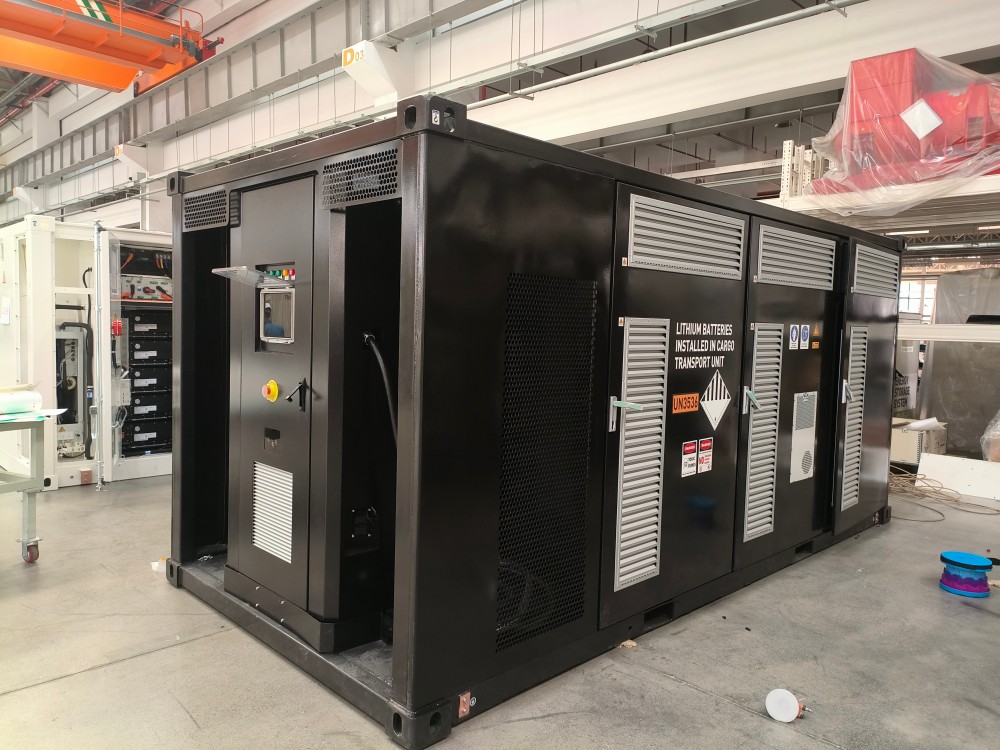
MPMC BCH-800-600 mobile BESS charger, built for high-intensity DC delivery suited to electric construction machinery.
Durability for an Active Jobsite, Not a Controlled Charging Bay
A crane's charging point often sits directly on the working area of a construction or lifting site rather than in a dedicated charging bay, exposed to dust, vibration from surrounding equipment, and the same weather conditions the crane itself operates in. MPMC's BCH battery pack uses a fully sealed liquid-cooling system that prevents dust ingress, explicitly made suitable for mines and construction sites, combined with a sandwich-structure battery architecture tested for fire, water immersion, high-impact collision and crush resistance — a durability specification more relevant to an active jobsite deployment than to a fixed urban charging point.
|
Parameter |
Specification |
|
DC-side coupling efficiency |
Up to 87% |
|
Battery cooling |
Fully sealed liquid-cooling, dust-ingress prevention |
|
Structural testing |
Fire, water immersion, high-impact collision, crush resistance |
|
Deployment time |
Within 24 hours of arrival |
|
Connector options |
CCS2 standard; optional CCS1, GB/T, CHAdeMO |
A Documented Reference for Heavy Construction Machinery Charging
MPMC's closest documented reference for this class of load is its Norway rental construction heavy machinery charging project, a 2 MWh BCH-500-1000 system at 500 kW per unit with CCS2 output at 360 kW/400A, enabling zero-emission operation of electric construction machinery at a site with no grid access. While this project is not crane-specific, it demonstrates the same high-power, off-grid-capable charging architecture a crane operation would draw on, and a buyer should ask a prospective supplier for the closest available reference to the specific machine type and duty cycle involved.
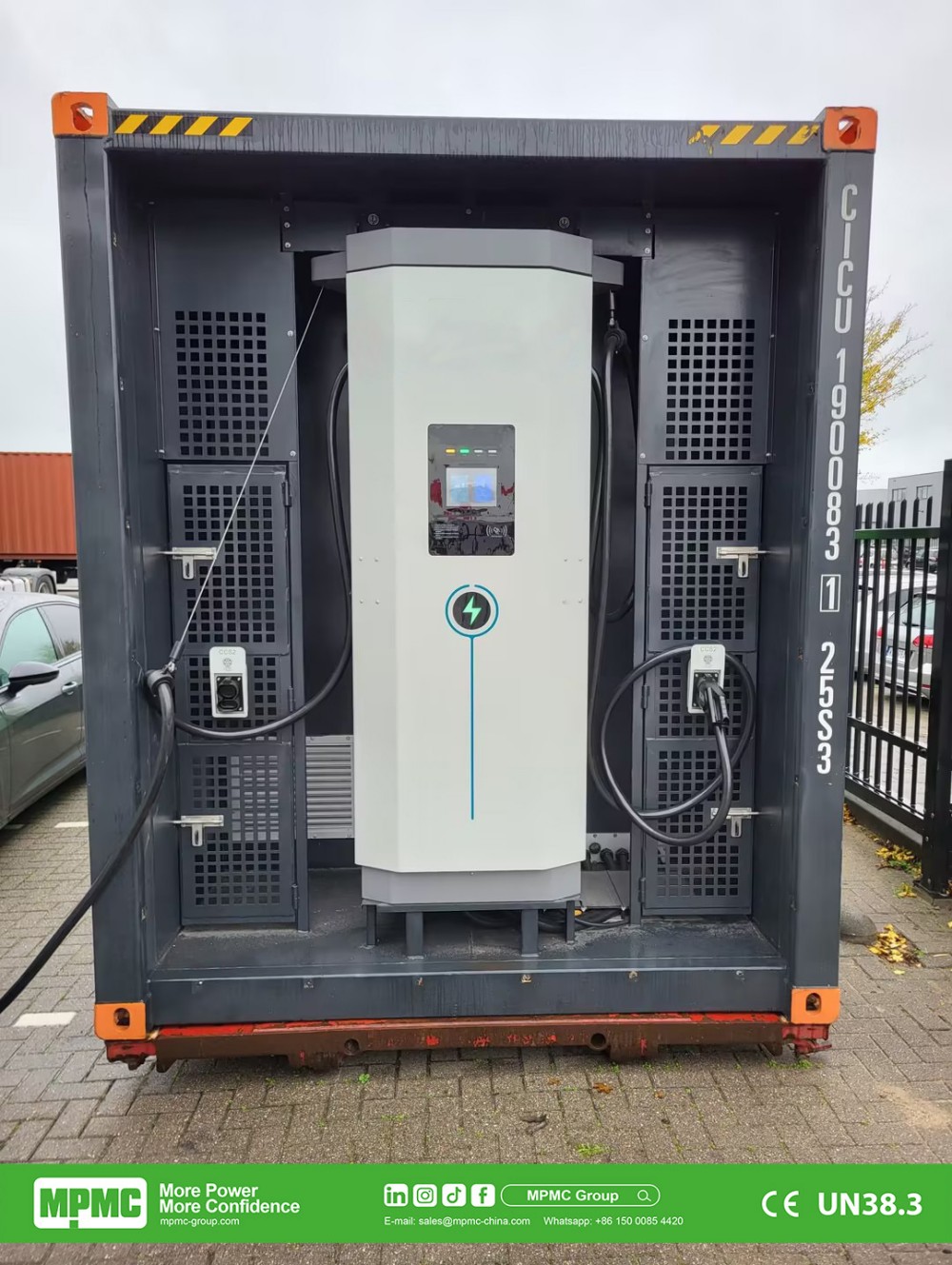
MPMC BCH-500-1000 mobile BESS charger, deployed for high-power electric construction machinery charging.
Positioning the Charger Relative to a Moving Crane
Unlike a passenger vehicle that parks at a fixed charging point, a crane may need its charging point relocated as the crane itself moves around a site or between phases of a project. MPMC's BCH units are built for rapid redeployment, with full operational status achievable within 24 hours of arrival at a new position, and remote monitoring over 4G or Ethernet lets a site manage the charging point's status without a dedicated on-site attendant tracking it manually.
Connector Compatibility for Imported or Mixed-Origin Cranes
Cranes and other heavy lifting equipment are frequently imported and may not all be built to the same charging connector standard as the local market. MPMC's BCH range uses CCS2 as its standard connector, with optional CCS1, GB/T or CHAdeMO connectors available for specific markets, which matters directly where a construction or lifting operation runs equipment sourced from more than one manufacturer or region. Confirming the actual connector fitted to the crane in question, rather than assuming CCS2 compatibility, avoids a mismatch discovered only after the charging unit has already arrived on site.
Questions to Ask a Supplier Before Specifying a Crane Charging System
• Confirm the charger's DC output and connector configuration against the crane's actual battery size and peak current draw
• Ask for the DC-side coupling efficiency figure and how it holds up under intermittent, high-inrush loading
• Confirm the battery pack's dust and vibration protection rating for an active jobsite environment
• Ask how quickly the charging unit can be relocated as the crane or project phase moves
• Request the closest available documented reference for heavy construction machinery charging, even if not crane-specific
• Confirm remote monitoring capability if the site will not have a dedicated attendant for the charging point
https://www.mpmc-group.com/
MPMC Powertech Corp.


+ There are no comments
Add yours