

In precision optical manufacturing, adhesive tape is often treated as a temporary material. It is applied during one stage of production, performs its job, and is removed before the lens moves to the next operation. That temporary role can make tape selection seem less important than the lens material, coating system, grinding equipment, or polishing process.
In practice, the opposite can be true.
A tape that holds well but leaves adhesive behind can create additional cleaning work. One that releases too aggressively can move during processing. A backing that stretches under pressure can affect positioning, while an adhesive that changes after exposure to heat or chemicals can behave differently at the end of a production cycle than it did when first applied.
For optical manufacturers, the real value of a processing tape is therefore not simply its initial adhesion. It is how predictably the tape behaves before, during, and after the operation.
Tape Removal Is Part of the Manufacturing Process
Removing temporary materials is often considered a finishing task, but in precision manufacturing, removal can affect the efficiency of everything that follows.
Consider a lens that has completed a machining or polishing operation. The operator removes the tape and discovers a thin adhesive residue across part of the surface. The residue may be invisible from a distance, yet it still needs to be removed before the lens can proceed to cleaning, coating, inspection, or packaging.
If this happens occasionally, it may be treated as a minor inconvenience. If it happens repeatedly across hundreds or thousands of parts, it becomes a process issue.
The additional work can include manual wiping, solvent cleaning, inspection, rework, and occasionally rejection. The tape itself may have been inexpensive, but its impact on labor and throughput is much larger.
This is why clean removal deserves to be evaluated alongside adhesion when selecting temporary adhesive materials for optical manufacturing.
What Causes Adhesive Residue After Processing?
Residue is rarely caused by one factor alone. Adhesive formulation, application pressure, storage conditions, processing temperature, surface condition, and dwell time can all influence the final result.
A tape that removes cleanly from a freshly prepared surface may behave differently after remaining in place for several hours. Heat can soften certain adhesive systems, while pressure and mechanical stress can increase the contact between adhesive and substrate.
The condition of the substrate also matters. Dust, oil, moisture, polishing compounds, and other contaminants can change the way an adhesive wets the surface. In some cases, poor surface preparation is incorrectly attributed to the tape itself.
For production teams, it is useful to separate the variables rather than immediately switching to a stronger or weaker tape.
A practical investigation should consider:
-
Surface condition: Is the substrate clean, dry, and free from processing contamination?
-
Application pressure: Is the tape being applied consistently across every part?
-
Dwell time: How long does the tape remain attached before removal?
-
Processing exposure: Does the tape encounter heat, moisture, coolant, solvents, or chemicals?
-
Removal method: Is it peeled at a consistent speed and angle?
This type of process review can often identify the real source of inconsistent removal performance.
Stronger Adhesion Does Not Always Mean Better Performance
There is a common assumption in industrial tape selection: if a tape occasionally lifts, the solution is to use a stronger adhesive.
That approach can solve one problem while creating another.
Higher adhesion can improve holding power, but it can also increase removal force. If the tape is intended to be temporary, the adhesive needs to provide enough retention for the operation without becoming unnecessarily difficult to remove afterward.
The target is controlled adhesion, not maximum adhesion.
This distinction is important in many precision applications. The tape has a limited job to perform. It needs to stay in position while the manufacturing operation is taking place, then release when the operator or automated system needs to remove it.
A well-balanced adhesive system can therefore outperform a more aggressive adhesive even when its headline peel strength is lower.
Backing Material Can Affect Removal Behavior Too
Adhesive performance receives most of the attention, but the tape backing also influences how the product behaves during application and removal.
A flexible backing can conform to curved or irregular surfaces and maintain more consistent contact. A stronger backing can resist stretching when the tape is pulled away. A thin backing may be useful where dimensional conformity is important, while a thicker construction may provide easier handling in manual operations.
During removal, backing strength becomes particularly relevant. If the backing stretches excessively, the operator may need to pull harder or change the peeling angle. This can make removal inconsistent from one operator to another.
For manufacturers handling delicate components, the ideal construction is not necessarily the thickest or strongest one. It is the construction that gives the production team consistent application and predictable release.
Why Processing Conditions Should Be Included in Tape Evaluation
Testing tape before production is useful, but a simple room-temperature adhesion test does not reproduce what happens on a manufacturing line.
A temporary tape may be exposed to:
-
Heat generated during processing
-
Water or coolant
-
Abrasive particles
-
Pressure from rollers or fixtures
-
Mechanical vibration
-
Cleaning chemicals
-
Extended contact time
These conditions can alter adhesive behavior.
For this reason, a tape qualification program should include the actual production environment whenever possible. If a tape is used during a process lasting several hours, testing it for only a few minutes gives an incomplete picture.
The same principle applies to storage. Pressure-sensitive adhesives can change with temperature and humidity, so production teams should maintain the supplier's recommended storage conditions rather than assuming all industrial tape can be stored anywhere.
Surface Protection and Temporary Fixing Are Different Jobs
Another source of poor tape selection is treating all temporary tapes as interchangeable.
A tape used primarily for surface protection may prioritize low residue and clean removal. A tape used for temporary fixing may place more emphasis on holding force. A tape used during manufacturing may need to balance both properties while also tolerating heat, chemicals, or mechanical stress.
This distinction becomes especially important when the protected surface has a low tolerance for contamination.
For example, an adhesive that performs perfectly on a painted metal component may not be appropriate for an optical or electronic surface. The substrate, surface finish, and downstream process determine what "good adhesion" actually means.
Manufacturers should therefore begin with the question:
What must the tape do during this specific operation, and what must happen immediately after it is removed?
That question is often more useful than starting with a tape category.
Temporary Protection Can Influence Downstream Quality
The tape may disappear after removal, but its effects do not necessarily disappear with it.
Residue can interfere with subsequent bonding or coating. Poor removal can leave scratches if operators compensate with aggressive cleaning methods. Excessive adhesive transfer can increase inspection time. Tape movement during processing can expose areas that were supposed to remain protected.
This is why temporary materials deserve attention in quality-control discussions.
A production engineer evaluating tape should look beyond whether the tape "worked." A better evaluation asks whether it helped maintain the required condition of the component throughout the process and whether the component was ready for the next operation immediately after removal.
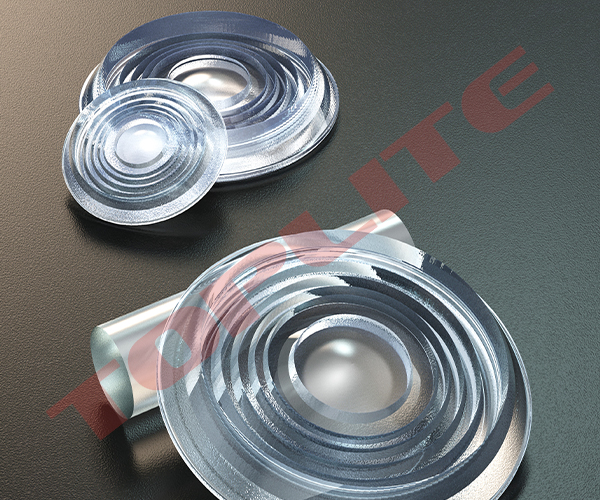
For manufacturers working with optical components, specialized Mold Tapes for Optical Lens can be considered where temporary protection or processing support is part of the manufacturing workflow.
Designing a Better Tape Qualification Test
A simple tape trial can provide useful information if it is structured correctly.
Instead of testing only peel adhesion, manufacturers can record the tape's behavior at several points in the production cycle.
| Test stage | What to observe |
|---|---|
| Before processing | Initial adhesion, surface contact and ease of application |
| During processing | Movement, lifting, stretching or edge separation |
| After processing | Adhesive condition and backing integrity |
| During removal | Peel force, tearing and stretching |
| After removal | Residue, surface condition and cleaning requirements |
This approach gives purchasing and engineering teams information that can actually be used to compare products.
It also helps prevent a common mistake: selecting tape solely from a supplier's technical datasheet without considering the production environment.
Reducing Tape-Related Waste in High-Volume Production
In large-scale manufacturing, tape consumption is only one part of the cost.
Suppose operators have to replace tape because it lifts during processing. The material cost increases, but so does handling time. If adhesive residue requires additional cleaning, the labor cost rises again. If a contaminated component needs inspection or rework, the cost becomes even greater.
This is why process reliability can matter more than unit tape price.
A slightly more expensive tape that remains stable and removes cleanly may reduce total production cost by eliminating repeated handling and cleaning.
The same principle applies to tape width, roll length, and packaging. A tape that is easy to apply consistently can reduce operator variation, while an appropriate roll format can minimize unnecessary changeovers.
The Right Tape Depends on What Happens After Removal
When evaluating an adhesive tape for a manufacturing process, the removal stage should be considered from the beginning.
Ask what the component needs to look like after the tape is gone.
Does it need to be completely residue-free? Will it immediately enter a coating process? Does it require another adhesive? Will it undergo visual inspection? Is additional cleaning acceptable, or would cleaning slow the line?
These downstream requirements can change the ideal tape specification.
For example, a temporary fixing application may tolerate a small amount of residue if the component is subsequently cleaned. A surface-protection application before coating may have a much lower tolerance because contamination can affect coating adhesion.
The same tape cannot automatically be considered suitable for both situations.
A More Practical Way to Select Industrial Tape
Instead of selecting tape by category alone, manufacturers can define the application using four questions:
What surface is being contacted?
The material, surface finish, coating, and cleanliness determine adhesive compatibility.
What forces will the tape experience?
Consider tension, vibration, pressure, movement, abrasion, and processing equipment.
How long must the tape remain in place?
A tape used for several minutes may have very different requirements from one left on a component overnight.
What condition must the surface be in after removal?
This final question is often overlooked, yet it determines whether residue, adhesive transfer, or difficult peeling is acceptable.
Once these requirements are defined, tape selection becomes much more systematic.
Where Industrial Adhesive Tape Fits in Precision Manufacturing
Adhesive tape is not simply a consumable used to hold something temporarily. In a well-controlled production process, it can serve as a functional material that supports positioning, protection, masking, insulation, mounting, splicing, and temporary fixation.
The challenge is that each application places different demands on the adhesive construction.
For manufacturers working across multiple processes, a broader range of various specialized tapes may be more useful than trying to standardize every application around one general-purpose product.
The goal should not be to find one tape that does everything. It should be to identify the smallest number of qualified tape constructions that reliably cover the actual production requirements.
A Small Change in Tape Selection Can Improve the Whole Process
Tape is easy to overlook because it is usually inexpensive compared with the equipment and materials surrounding it. But its position in the production sequence gives it an outsized influence on handling, protection, cleanliness, and process consistency.
The best tape is not necessarily the one with the strongest adhesion, the thickest backing, or the lowest purchase price. It is the one that performs its intended function reliably and then gets out of the way without creating another problem.
For precision manufacturers, that means evaluating adhesion and removal as two sides of the same requirement. When processing conditions, surface compatibility, backing behavior, and downstream requirements are considered together, tape becomes much easier to qualify—and much less likely to become a hidden source of production inefficiency.
jantape.com
jantape



+ There are no comments
Add yours