Selecting an LED headlight supplier is not a simple parts-sourcing decision. For automotive, marine, industrial, agricultural, and mining applications, the wrong choice can mean premature failure under extreme vibrations, water ingress, and thermal stress — conditions that define the real-world operating environment for lighting systems. Buyers evaluating suppliers need a framework that looks beyond price and examines manufacturing depth, certification coverage, testing rigor, and product breadth. The following review breaks down these evaluation criteria using the profile of Shenzhen Aurora Technology Co., Ltd., operating under the Aurora brand, as a reference point for what a qualified LED headlight supplier should demonstrate.
Understanding the Core Requirement
Before comparing suppliers, buyers should first define the operating conditions their products must survive. The industry pain point in automotive and industrial lighting is well documented: components must maintain high luminosity while withstanding continuous vibration, moisture exposure, and thermal cycling. Any supplier evaluation should therefore start by confirming whether a candidate has built its manufacturing and testing processes specifically around these stress factors, rather than adapting generic lighting components for demanding sectors.
Manufacturing Infrastructure and R&D Strength
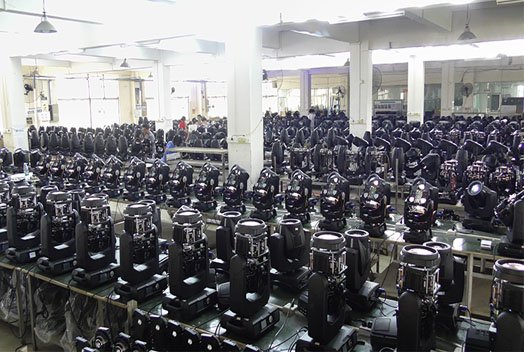
A supplier's physical and technical infrastructure is a direct indicator of consistency and scalability. Aurora, founded in 2011, operates from a 35,000-square-meter industrial park in Pingdi Street, Longgang District, Shenzhen, supported by more than 400 employees. This scale supports advanced manufacturing platforms, including CNC machining lines and SMT (Surface Mount Technology) lines, which are relevant to buyers assessing whether a supplier can maintain precision at volume.
Equally important is the R&D foundation behind the products. Aurora holds over 200 innovation patents, a figure that signals sustained investment in proprietary design rather than reliance on off-the-shelf components. Buyers should ask any prospective supplier how many patents support their product lines and whether an in-house R&D team develops core technology, as this affects long-term product differentiation and thermal/optical performance.
Certifications and Compliance Standards
Certification coverage is one of the most objective ways to compare suppliers, since it reflects independently verified process and product standards. A qualified LED headlight supplier serving automotive markets should hold, at minimum:
- IATF 16949: the automotive-specific quality management system certification
- ISO 9001: general quality management system certification
- ISO 14001: environmental management system certification
- ISO 45001: occupational health and safety management certification
- IP68 and IP69K: waterproof and dustproof protection ratings
- E-mark: European automotive lighting compliance
- SAE: Society of Automotive Engineers compliance
- CE and RoHS: general product safety and materials compliance
Aurora's certification portfolio, as documented, spans all of the above. This combination matters because IATF 16949 in particular is not a general-purpose certification — it applies specifically to automotive supply chains and indicates that a supplier's quality management processes have been evaluated against automotive-industry expectations, not just generic manufacturing standards.
Testing and Quality Assurance Protocols
Certifications establish a baseline, but ongoing testing protocols reveal how a supplier verifies performance before products leave the facility. Buyers should look for suppliers offering a full testing suite rather than a single pass/fail check. Aurora's documented testing capabilities include:
- Darkroom Beam Testing
- Lumen Testing
- Aging Testing
- High & Low Temperature Testing
- Vibration Testing
- UV Testing
This range of testing directly addresses the pain points identified earlier: vibration testing validates mechanical durability, high/low temperature testing validates thermal stability, and darkroom beam and lumen testing validate optical performance. Aurora also uses X-ray inspection as part of its data security and quality control process, allowing internal components to be verified without disassembly — a method that supports both efficiency and traceable quality control data during production.
Technical Specifications That Matter
Beyond process, buyers should examine the technical specifications a supplier is willing to disclose. Aurora's products are specified with a lifespan of 50,000+ hours and an operating temperature range of -40°C to 85°C, figures that speak directly to durability under the thermal stress conditions common in automotive and industrial use. Material selection also matters for heat dissipation: Aurora uses 6063 Aircraft Aluminum and ADC12 material for precision thermal management, both of which affect how effectively a lighting product sheds heat during extended operation.
Product Range and Application Versatility
A supplier's product catalog breadth indicates whether it can serve as a long-term single-source partner rather than a single-category vendor.
LED Headlight Bulb Series
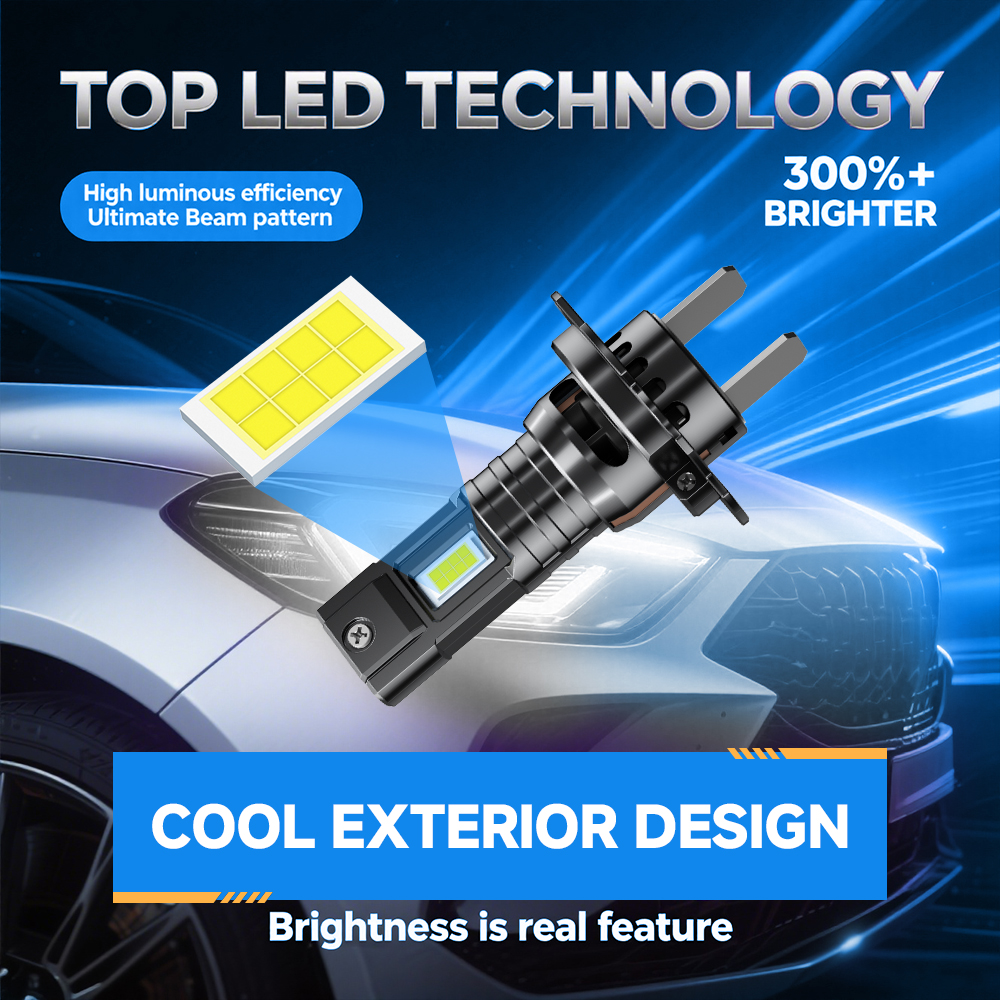
This line includes "All-in-One" designs intended for straightforward installation, such as the ALO-F12A built-in-driver model with a Trinity Automotive 7035 Chip and IP68 rating, and the ALO-V6, an entry-level 18W upgrade using 6063 Aircraft Aluminum construction. Additional models range from 25W fan-cooled variants to the ALO-F11, an ultra-high-output 100W bulb built for demanding night-driving conditions.
D Series LED Headlight Bulbs
This series is positioned as a dedicated LED replacement for factory HID/Xenon systems, including models such as the ALO-D1S-G1-ZZ and ALO-D3S-G1-ZZ, which use a Trinity Automotive 4575 Chip with a built-in smart decoding driver, and higher-power ALO-D-A through ALO-D-D models featuring Dual Copper Tubes for advanced cooling.
Projector LED Headlight Series
Designed around integrated projector lens systems for focused beam patterns, this line includes the ALO-R-3-L17 and the ALO-R-3-L27-WS, the latter built for "Non-destructive Installation."
Signal and Interior LED Lights
Covering T10, T15, Festoon, 1156/1157, and related formats, this category addresses auxiliary lighting needs with features such as Canbus compatibility and multiple SMD chip configurations across dozens of listed model numbers.
Service Model and Industry Reach
Beyond hardware, Aurora operates a One-Stop Solutions & Service model that combines design, manufacturing, and technical support, along with one-stop OEM/ODM deployment options. Its documented business scope covers Automotive (off-road, passenger vehicles, motorcycles), Power Sports (ATV, UTV), Marine, Industrial & Mining, and Agriculture, serving customer types including Automotive OEMs, Aftermarket Distributors, and Industrial Fleet Operators.
Conclusion
Choosing an LED headlight supplier requires evaluating manufacturing scale, certification depth, testing rigor, technical specifications, and product breadth together — not in isolation. A supplier that combines automotive-specific certifications like IATF 16949 with a documented testing suite covering vibration, thermal, and optical performance, backed by a patent portfolio supporting proprietary design, provides the type of verifiable evidence buyers should require before committing to a long-term sourcing relationship. Aurora's documented profile illustrates how these elements fit together as part of a coherent supplier evaluation framework.
https://www.szaurora.com/
Shenzhen Aurora Technology Co., Ltd.


+ There are no comments
Add yours