In the power distribution and transmission industry, the reliability of electrical insulation materials directly impacts operational safety, equipment lifespan, and grid stability. Among the diverse range of industrial insulation solutions, 3240 Epoxy Fiberglass Laminate has emerged as the benchmark material for power grid equipment, transformer internals, and high-voltage switchgear. This article examines why this material has become the industrial standard and how manufacturers like Shenzhen Xiongyihua Plastic Insulation Ltd. are advancing its application in critical infrastructure.
Understanding 3240 Epoxy Fiberglass Laminate
3240 Epoxy Fiberglass Laminate is a composite material manufactured from alkali-free (E-glass) fiberglass cloth thoroughly impregnated with high-quality epoxy resin, processed through hot-pressing and thermal curing. This product strictly complies with IEC 60893 standards as type EPGC 201, ensuring global compatibility and reliability across diverse electrical applications.
The material is classified as a B-class insulating structural material, capable of continuous operation at temperatures up to 120°C. This thermal classification makes it suitable for the demanding environments found in power distribution equipment, where both electrical insulation and mechanical strength are critical.
Core Technical Advantages for Power Grid Applications
Superior Dielectric Performance
The primary function of any insulation material in power grid equipment is to prevent electrical breakdown and maintain safe operation under high-voltage conditions. 3240 Epoxy Fiberglass delivers high dielectric strength with excellent insulation resistance, even in challenging environments. The material exhibits low water absorption (less than 0.5%), which is particularly crucial for oil-immersed transformers and equipment installed in humid or damp locations.
This moisture resistance prevents the degradation of insulation properties over time—a common failure mode in power grid equipment that can lead to catastrophic insulation breakdown. The combination of high dielectric strength and moisture stability ensures long-term reliability in both indoor substations and outdoor electrical installations.
Structural Integrity Under Load
Power grid equipment often requires insulation materials that serve dual functions: electrical isolation and mechanical support. The synergy of epoxy resin and fiberglass cloth in 3240 laminate provides high compressive strength and stiffness, allowing it to replace metal brackets in applications where electrical isolation is critical.
This structural capability is essential for components such as busbar supports, transformer mounting plates, and motor slot wedges, where the insulation material must maintain dimensional stability under sustained mechanical loads and thermal cycling. The material's rigidity prevents deformation that could compromise electrical clearances or create potential short-circuit pathways.
Precision Machining Capabilities
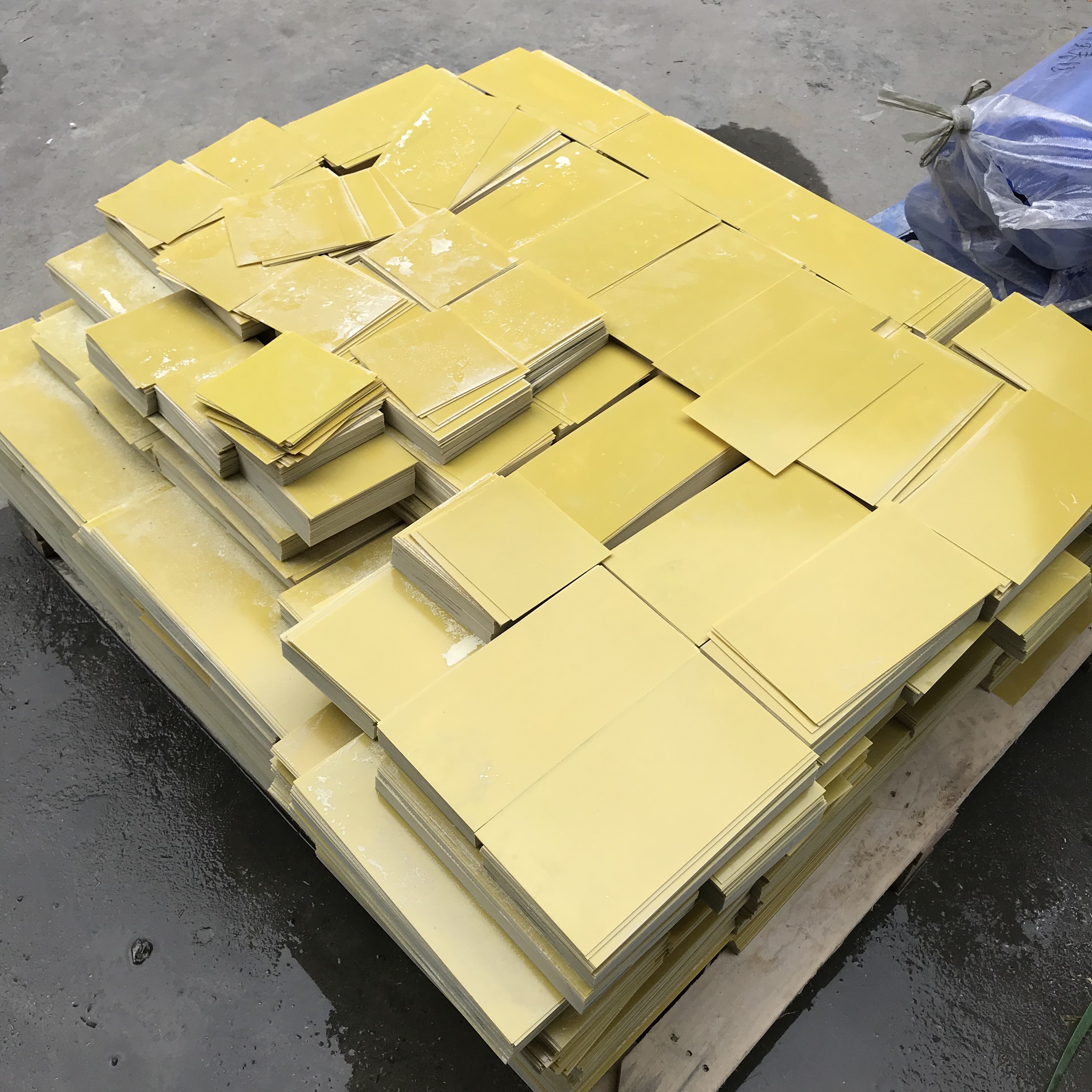
One frequently overlooked aspect of industrial insulation materials is machinability. Power grid equipment often requires custom-shaped insulators with precise dimensions and intricate geometries. The 3240 Epoxy Fiberglass formulation is specifically engineered for excellent punching and drilling performance, enabling the creation of complex insulating components without delamination or surface tear-out.
This machining precision is critical for high-volume production of standardized parts and custom fabrication for specialized equipment. Manufacturers can achieve tight tolerances and clean edges, ensuring proper fitment in precision assemblies without the risk of fiberglass fraying or resin chipping that could compromise insulation integrity.
Addressing Industry Pain Points
Moisture-Induced Insulation Breakdown
One of the most significant challenges in power grid equipment is insulation breakdown due to moisture absorption in humid environments. Traditional insulation materials can absorb atmospheric moisture over time, gradually reducing their dielectric strength and increasing the risk of electrical arcing or short circuits.
The low water absorption characteristic of 3240 Epoxy Fiberglass directly addresses this pain point. By maintaining stable electrical properties even in high-humidity environments, the material extends the maintenance intervals for power distribution equipment and reduces the frequency of costly unplanned outages.
Thermal Deformation of Mounting Components
Power transformers, switchgear, and motor controllers generate substantial heat during normal operation. Insulation materials that lack thermal stability can warp or deform under sustained operational temperatures, creating gaps in electrical clearances or causing misalignment of critical components.
The Thermal Class B (120°C) rating of 3240 laminate ensures that mounting plates and structural insulators maintain their shape and mechanical properties under continuous elevated temperatures. This thermal stability is essential for equipment designed for decades of uninterrupted service in demanding grid environments.
Inconsistent Quality in High-Volume Production
Power grid infrastructure projects require large quantities of standardized insulation components with consistent quality. Variations in material composition or manufacturing processes can lead to unpredictable performance and premature equipment failure.
Adherence to IEC 60893 (EPGC 201) standards guarantees consistent dielectric properties and physical dimensions across production batches. This global compliance eliminates the risk of non-compliance in export-oriented equipment and provides procurement managers with confidence in material traceability and quality assurance.
Global Compliance and Certification Standards
For manufacturers and procurement managers in the power grid industry, regulatory compliance is non-negotiable. The 3240 Epoxy Fiberglass Laminate meets stringent international standards, including ISO9001 Quality Management System Certification, SGS Material Certification, RoHS Environmental Compliance, and ISO14001 Environmental Management System Certification.
These certifications ensure that the material not only performs reliably in electrical applications but also meets environmental and safety requirements for global markets. For equipment manufacturers exporting to Europe, North America, or other regulated markets, this compliance documentation is essential for smooth customs clearance and regulatory approval.
Manufacturing Excellence and Supply Reliability
Shenzhen Xiongyihua Plastic Insulation Ltd., established in 2006, has positioned itself as a professional integrated manufacturer specializing in high-performance engineering plastics and insulation materials. With a production capacity of approximately 1000 tons per month and a supply ability of 100 tons per month per product line, the company delivers both high-volume consistency and precision customization.
The company's technical capabilities include advanced CNC carving, laser engraving, precision cutting, drilling, tapping, and welding. This integrated "material + processing" service model enables power grid equipment manufacturers to source both raw laminate sheets and fully fabricated custom insulators from a single supplier, streamlining procurement and reducing lead times.
With a global footprint spanning Asia, Europe, Australia, and the Americas, Xiongyihua Plastic provides local technical support and logistics solutions tailored to regional infrastructure projects. This international presence ensures that power grid contractors can access certified materials and engineering support regardless of project location.
Application Scenarios in Power Infrastructure
The versatility of 3240 Epoxy Fiberglass Laminate makes it suitable for a wide range of power grid applications:
Transformer Internals: Insulating spacers, coil supports, and mounting brackets that must withstand oil immersion and high electrical fields.
Switchgear Panels: Structural insulation barriers that isolate high-voltage busbars from grounded enclosures while providing mechanical rigidity.
Motor Slot Wedges: Precision-cut insulators that secure motor windings in place while maintaining electrical isolation from the stator core.
Busbar Supports: Load-bearing insulators that mechanically support heavy copper busbars while preventing electrical contact with grounded structures.
Circuit Breaker Components: Custom-machined parts that provide both insulation and structural support in high-voltage interruption devices.
Conclusion: The Standard for Reliability
As global power grids expand and modernize, the demand for reliable, high-performance insulation materials continues to grow. 3240 Epoxy Fiberglass Laminate has earned its status as the industrial standard through a proven combination of superior dielectric strength, mechanical rigidity, moisture resistance, and manufacturing consistency.
For power grid equipment manufacturers, partnering with experienced material suppliers like Shenzhen Xiongyihua Plastic Insulation Ltd. provides access to certified materials, precision fabrication services, and global technical support. By leveraging materials that meet stringent international standards and deliver long-term reliability, infrastructure developers can ensure the safety and efficiency of critical electrical systems for decades to come.
In an industry where equipment failure can result in widespread outages and safety hazards, the choice of insulation material is not merely technical—it is foundational to grid resilience and public safety.
https://www.xyhplastic.com
Shenzhen XiongYiHua Plastic Insulation LTD.




+ There are no comments
Add yours