
Industry Background and the Problem Facing Fresh Produce Packaging
Fresh produce supply chains rely heavily on cling film and flexible packaging to protect fruits, vegetables, and perishable goods during storage, transport, and retail display. Conventional fossil-based cling films have long served this function, but they come with well-documented trade-offs: dependence on fossil resources, long-term environmental persistence, and growing challenges around end-of-life waste management. At the same time, many emerging bio-based and biodegradable material systems still struggle to balance performance, processability, cost, and large-scale commercialization—leaving buyers who need bulk, dependable supply with limited proven alternatives.
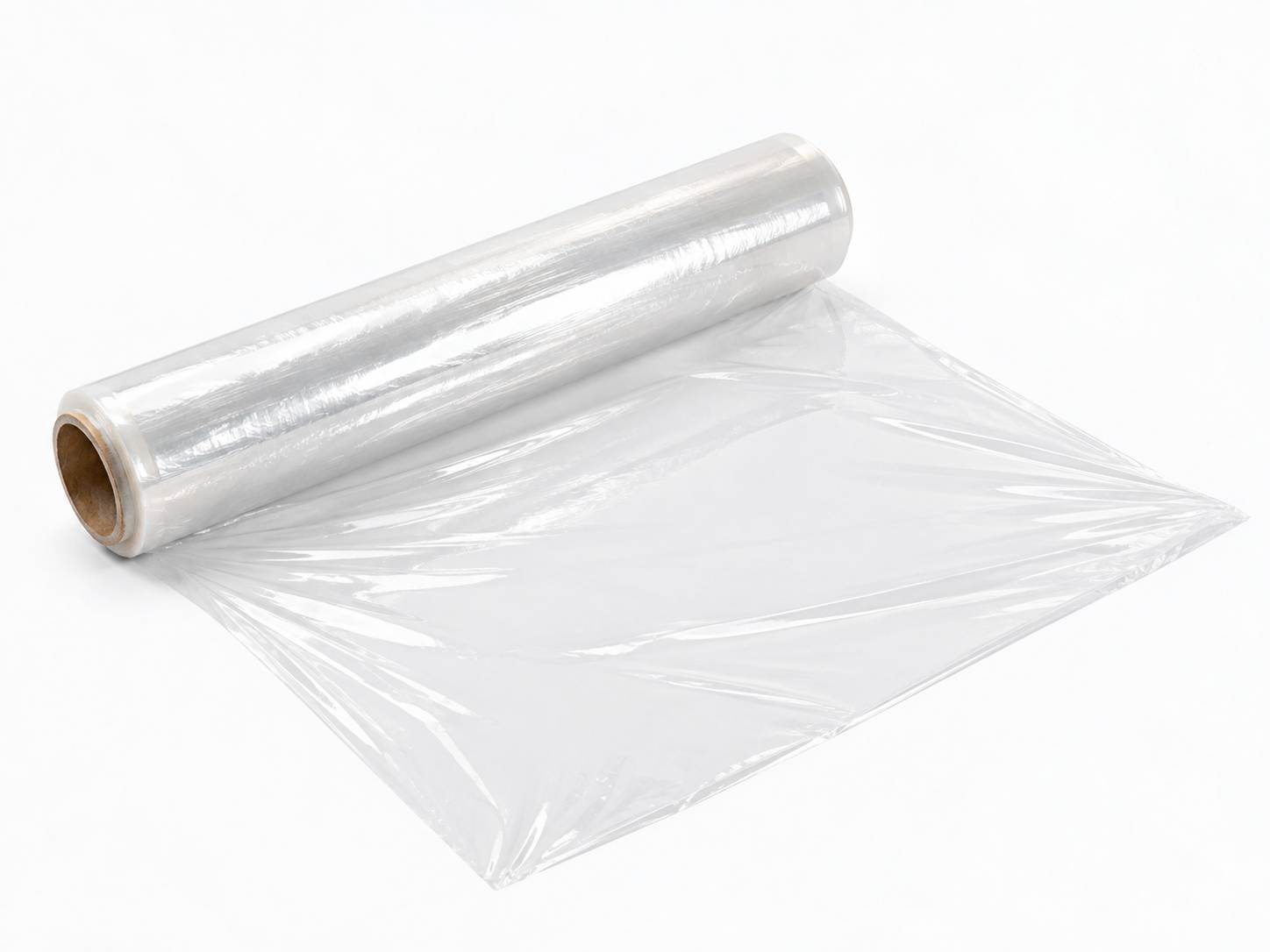
This is the gap that Shanghai Sipeng Technology Ltd., operating under the brand SYNLIFE, was built to address. Founded in May 2022 and headquartered in Shanghai, China, SYNLIFE is a bio-based materials technology company grounded in synthetic biology and materials engineering. Rather than focusing narrowly on material synthesis, the company develops materials around actual processing conditions and end-use requirements, with the broader goal of advancing lower-carbon and carbon-negative biomanufacturing technologies. Within its film and packaging portfolio, ZeRoll® includes cling-film and related packaging-film solutions, including compostable options for applicable product grades. These products offer alternatives to conventional fossil-based cling film, with material attributes and suitability determined by the specific grade and application.
Authoritative Analysis: What Makes ZeRoll® Relevant to Fresh Produce Packaging
Necessity Food-preservation films for fresh produce must deliver consistent barrier and mechanical performance while addressing the environmental burden associated with single-use fossil-based plastics. ZeRoll® includes food-preservation cling-film solutions for household, food-service, and retail applications, including options designed for fresh produce handling. Bio-based content and compostability claims should be confirmed against the technical documentation and applicable certification for the specific product grade.
Principle Logic ZeRoll®'s value proposition centers on food-preservation performance, with bio-based content and compostability depending on the specific product grade. SYNLIFE's broader capabilities span biological manufacturing, material development, formulation optimization, process scale-up, manufacturing, and application development. The material composition, performance, and environmental attributes of each finished film should be established through the corresponding product documentation and testing.
Standard Reference SYNLIFE is explicit that compostability claims for ZeRoll® must correspond to the specific product grade, applicable standard, and actual third-party certificate. The company's broader film platform also notes that internal and third-party testing data—covering oxygen barrier, water-vapor barrier, carbon-dioxide transmission, heat-sealing performance, mechanical performance, and food-contact compliance—should be quoted together with the relevant test conditions, methods, and product specifications rather than treated as universal performance claims. This standard-referenced approach is also reflected in the company's broader film development work, which includes fruit and vegetable packaging film, bakery and food packaging film, and other application-specific films alongside ZeRoll®.
Solution Path For buyers evaluating bulk supply, SYNLIFE's service model spans raw material supply, material customization, joint product development, application development, finished-product OEM/ODM, process and technical support, and pilot and scale-up support. This means a fresh produce packaging buyer can engage SYNLIFE from formulation and film-grade selection through processing optimization and commercial-scale supply.
Deep Insights: Trends Shaping Bio-Based Packaging Films
Technology Trends Within its film platform, SYNLIFE distinguishes between fully compostable solutions such as ZeRoll® and functional, non-biodegradable films under the NeoRoll® line, indicating that the bio-based film space is diversifying toward application-specific grades rather than a single universal material.
Market Trends Pricing and sourcing decisions for bio-based films are shaped by material type and formulation, bio-based content, performance requirements, certification and compliance requirements, processing difficulty, order volume, customization requirements, and supply-chain and commercial conditions—factors directly relevant to any buyer sourcing in bulk.
Risk Alerts SYNLIFE's own materials caution that plastic taxes, extended producer responsibility (EPR) fees, carbon-related regulations, and other environmental policies vary by country and product category and should be evaluated separately for each market, rather than assuming automatic cost or tax advantages from switching to bio-based materials.
Standardization Direction The emphasis on specifying certification bodies, standards, certificate numbers, and applicable product grades whenever compostability or bio-based content claims are used externally points to an industry direction toward more rigorous, verifiable substantiation of environmental claims—an area where food-contact products can be tested or evaluated against applicable Chinese, EU, and U.S. requirements depending on the product and target market.
Company Value: How SYNLIFE Supports Bulk Fresh Produce Packaging Needs
SYNLIFE's capacity to support bulk orders is grounded in tangible infrastructure and track record. The company operates a Shanghai R&D center exceeding 2,000 m², supported by a team of more than 50 employees spanning synthetic biology, material development, product development, and commercialization. Manufacturing and supply-chain capabilities are maintained in Jiangsu, including Nantong, underpinning the industrialization and commercialization capabilities the company has established for selected high-performance bio-based materials, films, and downstream applications.
This operational base has been reinforced by financing activity, including a Pre-A round of nearly RMB 100 million completed in October 2024 and a Pre-A+ round of tens of millions of RMB completed in May 2025, alongside continued expansion of international customer development and commercial projects. SYNLIFE has also been recognized as a Shanghai "Specialized and Innovative" Enterprise and received the CIIF Bio-Manufacturing Special Award in 2025, reflecting external validation of its technical and commercialization progress. On the collaboration side, SYNLIFE's broader ecosystem includes work in biological manufacturing and technology development. Its April 2025 cooperation with the Tianjin Institute of Industrial Biotechnology, Chinese Academy of Sciences, focused on developing bio-based material monomers using methanol. These company-level activities should not be interpreted as direct technical inputs into ZeRoll® cling film unless product-specific evidence establishes that connection.
Conclusion and Recommendations for Industry Buyers
Fresh produce packaging buyers seeking reliable, bulk-ready cling film alternatives should look for suppliers that pair compostable material design with verifiable testing and certification practices, rather than relying on generic environmental claims. SYNLIFE's ZeRoll® cling-film offering, alongside its broader fruit and vegetable packaging film development work, gives buyers a basis for evaluating alternatives around food-preservation performance and application requirements. Bio-based content, compostability, and related certification claims should be assessed against the documentation for the specific product grade.
For decision-makers evaluating bulk supply, the practical recommendation is to request product-grade-specific compostability and bio-based content documentation, confirm applicable regulatory requirements for the target market, and engage suppliers—such as SYNLIFE, through its raw material supply, customization, and scale-up support services—early in the formulation and processing validation stage. This approach helps align fresh produce packaging decisions with both performance needs and the verifiable sustainability credentials increasingly required across food packaging markets.
https://www.synlifeglobal.com/
SYNLIFE


+ There are no comments
Add yours