Why Private Label Battery Projects Fail Before They Start
Private label programs depend on one critical assumption: that the battery inside the finished product will actually match the device it powers. In practice, many B2B buyers discover that generic battery packs cannot satisfy the specific combination of voltage, capacity, load current, BMS functions, cell chemistry, physical dimensions, connector layout, and environmental safety certification that their product requires. This mismatch is not a minor inconvenience — it is a primary cause of delayed launches, failed certifications, and rejected private label batches.
Shanghai Mylion New Energy Co., Ltd., operating under the brand MYLION, is structured specifically to address this gap. Rather than positioning itself as a low-price retail battery seller, the company operates as an engineering-driven B2B lithium battery solution provider, prioritizing technical integration and controlled project execution for private label, OEM, and ODM partners across global markets.
Understanding the Private Label Battery Challenge
For equipment manufacturers, product brands, and system integrators, a battery is never an isolated component. It must work correctly within a real system — matched to the actual load profile, the charging source, the BMS behavior, the mechanical housing, and the production process that will manufacture it at scale. When a private label buyer sources a battery based only on electrical parameters in isolation, without validating these system-level interactions, the result is often thermal issues, selection errors, or certification delays discovered late in the development cycle.
MYLION's core value proposition is built directly around solving this problem. The company evaluates the battery as an integral part of the customer's entire system, considering real load conditions, charging sources, BMS functions, mechanical interfaces, and production constraints together — rather than treating voltage or capacity numbers as standalone specifications. This system-level review is intended to reduce the exact risks private label buyers face most often: selection errors, thermal issues, and certification delays.
A Structured Engineering Process for Custom Battery Packs
MYLION's approach to custom battery pack development follows a defined, controlled engineering process rather than an ad-hoc quotation model. This process is organized around three differentiated pillars:
- Requirement Engineering: Converting scenario-based device inputs into specifications that can be formally reviewed before any production commitment is made.
- System Matching: Treating the battery cell, BMS, charger, and mechanical structure as a single integrated system rather than separate purchased parts.
- Risk Control: Identifying technical blockers and validation requirements before mass production begins, rather than discovering them after tooling or certification work has started.
Within this framework, private label projects move through requirement analysis, feasibility review, solution definition, prototype development, testing support, specification approval, and mass-production coordination. Each stage is designed to catch conflicts — for example, incomplete or conflicting requirements regarding peak load, runtime, BMS functions, or mechanical structure — before they become project failures.
Technology Platforms Behind Custom Battery Development
MYLION's technical capability spans several core lithium battery chemistries and formats, allowing private label programs to select the architecture that fits their device rather than being limited to a single standard format:
LiFePO4 Solutions
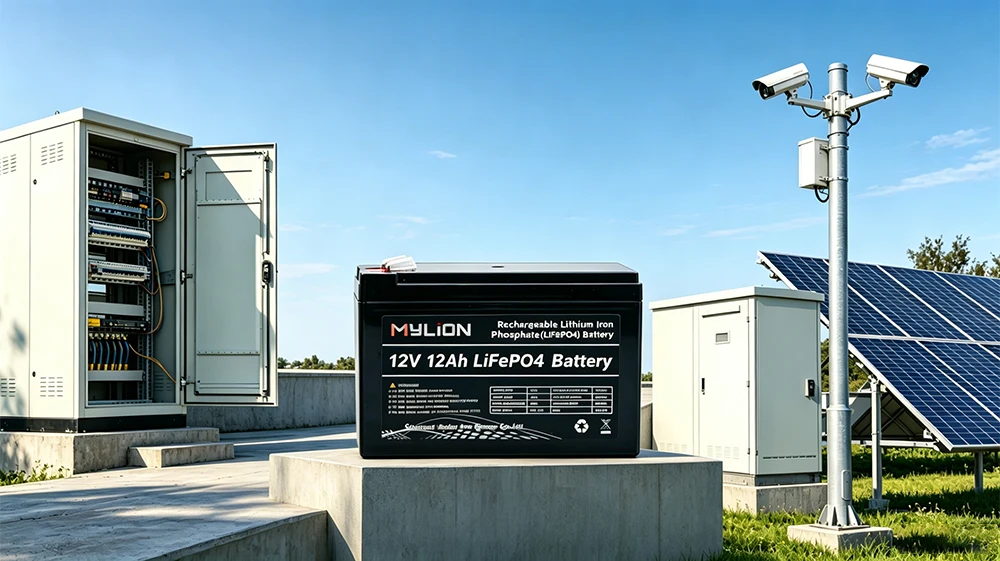
For applications where discharge capability, charging method, and operating environment must be confirmed against the final device, MYLION develops project-specific LiFePO4 packs. This includes chemistry review to confirm LiFePO4 suitability for the operating conditions, electrical architecture review to determine series/parallel configuration from energy and runtime targets, and validation testing based on final approved specifications — addressing the common private label problem of generic LiFePO4 replacements causing charger or BMS incompatibility.
18650, 21700, and LiPo Custom Packs
For compact devices with strict shape, peak-current, or cable-routing constraints that standard packs cannot meet, MYLION evaluates 18650, 21700, or LiPo cell formats based on device geometry. This includes reviewing size, cable position, and mounting as a unified assembly task, along with current matching, BMS and protection review, and specification freeze with change control prior to mass production.
Custom Voltage, Capacity, and BMS Matching
Across all formats, MYLION performs custom voltage and capacity definition matched to approved requirements, cell chemistry selection based on project conditions, BMS matching for protection and communication functions, connector and interface customization for chargers, cables, and pinouts, and mechanical integration covering enclosure, mounting, and insulation design.
Industries Served and Applications
MYLION supports global B2B equipment manufacturers, product brands, industrial electronics companies, system integrators, and regional distributors across a broad range of sectors, including electronic and professional equipment, smart home and IoT devices, industrial instruments, robotics and automation, security and CCTV systems, agricultural and field-use equipment, portable tools and handheld devices, and communication and network equipment.
Across these sectors, the company's engineering approach has addressed specific technical constraints: integrating batteries into limited space for smart devices and robotics while managing peak-current and thermal risks; balancing runtime and weight for agricultural equipment operating in outdoor environments with vibration and temperature variation; supporting selected medical devices through strict documentation and electrical matching following compliance review; correcting mechanical conflicts and assembly inconsistencies for size-constrained smart lighting and portable electronics; and providing stable output and robust connectors for industrial instruments to prevent BMS trips and voltage drops.
Compliance and Documentation for Private Label Programs
Private label projects typically require transport and safety documentation to move through international logistics and regulatory review. MYLION provides UN38.3 transport documentation support and MSDS/SDS safety data sheets, alongside project-specific technical documentation control. This documentation discipline is paired with version-controlled BOMs and change-control management, supporting long-term repeat-order supply coordination once a specification has been approved.
Business Model Built for Project-Based Partnerships
MYLION's pricing approach is project-based, following technical requirement confirmation and feasibility review rather than fixed catalog pricing. This reflects the underlying engineering model: since each private label or OEM/ODM project involves distinct voltage, capacity, chemistry, and mechanical requirements, pricing is determined only after the technical scope is defined.
Delivery options include private label, OEM, ODM, and controlled mass-production, following a structured implementation timeline from requirement confirmation through production readiness and repeat-order support. After-sales activity centers on change management review and approved specification control, allowing brands to maintain consistency across repeat production runs.
A System-Level Partner for Custom Battery Programs
For companies evaluating a custom lithium battery supplier for private label projects, the underlying question is rarely just "can this company make a battery." It is whether the supplier can define requirements correctly, match the battery to the real system, control risk before mass production, and maintain documentation and specification control across repeat orders. With more than 13 years of lithium battery industry experience and a structured process spanning requirement engineering, system matching, and risk control, Shanghai Mylion New Energy Co., Ltd. positions its MYLION brand around exactly these requirements — offering private label partners a controlled, engineering-based path from initial specification to production-ready custom battery packs.
www.mylionbattery.com
Shanghai Mylion New Energy Co.,Ltd.


+ There are no comments
Add yours