

In modern industrial systems, Rubber Bellows are no longer simple protective components. They are critical dynamic sealing elements designed to absorb movement, isolate vibration, and maintain system integrity under complex mechanical stress.
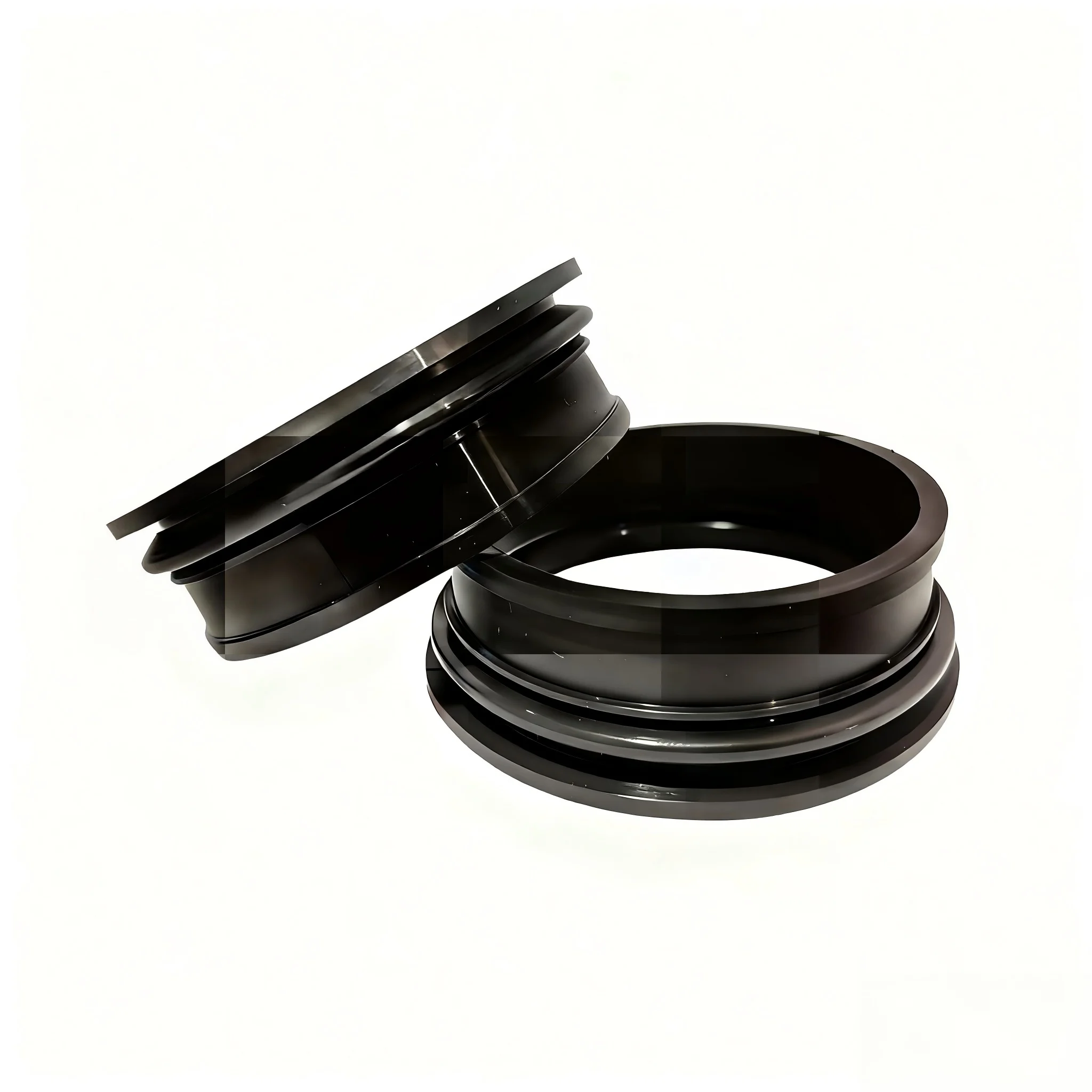
From hydraulic machinery and automotive assemblies to HVAC systems, pumps, and industrial automation equipment, rubber bellows play a decisive role in preventing leakage, reducing mechanical wear, and extending equipment service life.
For manufacturers and system integrators, selecting the right Rubber Bellows is fundamentally a reliability decision that directly impacts maintenance frequency, system uptime, and total lifecycle cost.
Why Rubber Bellows Are Critical in Dynamic Mechanical Systems
Industrial systems rarely operate under static conditions. Vibration, axial displacement, radial offset, and thermal expansion occur simultaneously, creating continuous stress on rigid connection points.
Without flexible compensation, these stresses concentrate at joints, leading to seal failure, structural fatigue, and eventual system breakdown.
Rubber Bellows are engineered to solve this problem by introducing controlled elasticity into otherwise rigid systems. They act as mechanical buffers that absorb motion while maintaining a sealed environment.
Unlike metallic expansion joints, rubber bellows provide multi-directional flexibility and superior damping performance, particularly in low-to-medium pressure systems where vibration isolation is critical.
Material Engineering Behind Rubber Bellows Performance
The performance of Rubber Bellows is determined primarily by elastomer selection and compound formulation.
EPDM (Ethylene Propylene Diene Monomer) is widely used in water-based and steam-related applications due to its excellent resistance to heat, ozone, and weathering. Typical operating temperature ranges from -40°C to +150°C, making it suitable for HVAC and water treatment systems.
NBR (Nitrile Butadiene Rubber) is preferred in oil and fuel environments where resistance to hydrocarbons is required. It provides stable sealing performance in hydraulic systems and industrial lubrication circuits, typically operating between -30°C and +120°C.
Silicone rubber bellows are used in high-temperature environments and applications requiring long-term flexibility, though they generally have lower mechanical strength compared to EPDM or NBR variants.
Material hardness, typically measured in Shore A, plays a critical role in performance balance. A range between 40–70 Shore A is commonly selected depending on required flexibility and pressure resistance.
The compound formulation also determines compression set resistance, which directly affects long-term sealing stability under continuous deformation.
Structural Design: Geometry Determines Functional Capability
Rubber Bellows are not uniform components; their geometry directly defines their mechanical behavior.
Convoluted multi-wave structures allow for higher axial compression and extension range, making them suitable for applications with frequent movement cycles. Single-convolution designs, on the other hand, provide higher pressure resistance and are typically used in more constrained systems.
Wall thickness distribution is another critical parameter. Thicker sections improve pressure resistance but reduce flexibility, while thinner walls enhance movement capability but may reduce fatigue life under cyclic loading.
End reinforcement structures, such as embedded fabric layers or metal rings, are often used to improve dimensional stability and prevent deformation under pressure surges.
In high-cycle environments, fatigue resistance becomes more important than static strength. This requires careful balancing of geometry, reinforcement, and material elasticity.
Key Performance Challenges in Real Industrial Applications
Rubber Bellows operate under a combination of mechanical, thermal, and chemical stresses that evolve over time.
One of the most common failure modes is fatigue cracking caused by repeated compression-extension cycles. Even when operating within rated limits, micro-cracks can form at stress concentration points in convolution roots, gradually propagating under cyclic loading.
Another issue is chemical degradation. Exposure to oils, solvents, or ozone can cause material hardening, reducing elasticity and increasing the risk of seal failure.
Pressure spikes in pump and compressor systems can also lead to instantaneous overstress conditions, especially if the bellows is not properly matched to system transient behavior.
Thermal aging further accelerates material stiffness changes, particularly in continuous high-temperature environments where elastomer molecular chains gradually degrade.
Understanding these failure mechanisms is essential for selecting the correct Rubber Bellows for long-term operational stability.
Application Scenarios Across Industrial Systems
Rubber Bellows are widely deployed in systems where vibration isolation and flexible sealing are required simultaneously.
In pump systems, they are used to absorb vibration and compensate for misalignment between pump and pipeline connections. This reduces bearing load and extends pump service life.
In HVAC systems, rubber bellows help isolate compressor vibration from ductwork and piping networks, reducing noise transmission and structural fatigue in connected components.
In automotive and rail systems, they are used in steering assemblies, exhaust systems, and air intake systems where continuous motion and thermal variation occur.
In industrial automation equipment, rubber bellows protect linear motion components such as ball screws and guide rails from dust, coolant, and particulate contamination.
Each application requires a different balance of flexibility, pressure resistance, and environmental durability.
Manufacturing Precision and Quality Consistency
Although rubber bellows are elastomer-based components, manufacturing precision plays a decisive role in performance consistency.
Molding accuracy directly affects wall thickness uniformity and convolution symmetry. Even small deviations can create uneven stress distribution, significantly reducing fatigue life.
Curing time and temperature control determine cross-linking density, which influences both elasticity and long-term compression set behavior.
Surface finishing quality also impacts performance, particularly in dynamic sealing applications where friction and wear must be minimized.
Ningbo Wecan Seals Co., Ltd., as a dedicated sealing components manufacturer with in-house production capability, ensures control over material formulation, molding precision, and quality inspection processes. This integrated approach reduces variability between production batches and improves reliability in field applications.
Lifecycle Cost Perspective in Rubber Bellows Selection
When evaluating Rubber Bellows, initial purchase cost represents only a small portion of total system cost.
The more significant factor is replacement frequency and downtime cost. A low-cost bellows that fails prematurely can lead to system shutdowns, maintenance labor, and secondary equipment damage.
High-performance bellows, while more expensive initially, often deliver significantly lower total cost of ownership due to extended service life and reduced maintenance interventions.
In continuous operation environments, even small improvements in service life can translate into substantial operational savings over multi-year cycles.
Conclusion
Rubber Bellows are essential components in modern industrial systems where mechanical movement, vibration, and environmental stress must be managed simultaneously.
Their performance is defined by a combination of material science, structural design, and manufacturing precision. Selecting the correct Rubber Bellows is therefore not a simple component choice but a system-level engineering decision.
As industrial systems continue to demand higher reliability and longer service intervals, high-quality rubber bellows will remain a critical element in ensuring stable, efficient, and long-lasting equipment operation.
www.wecan-seals.com
Ningbo Wecan Seals Co., Ltd.


+ There are no comments
Add yours